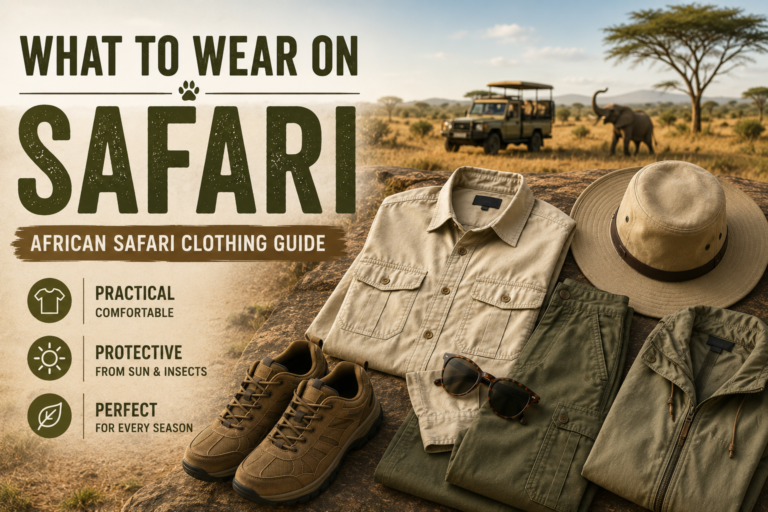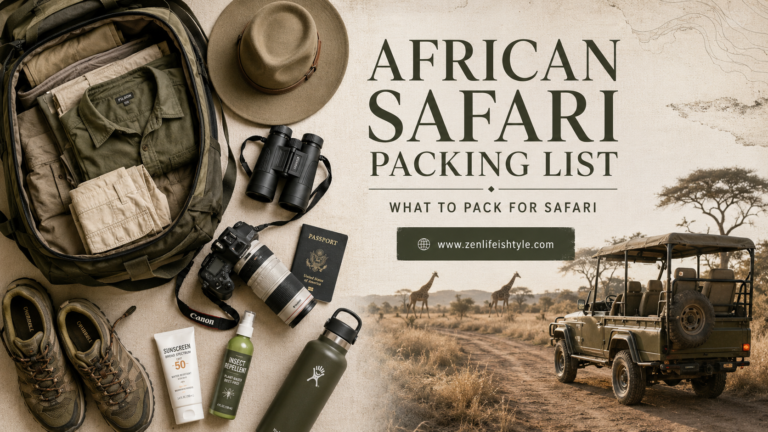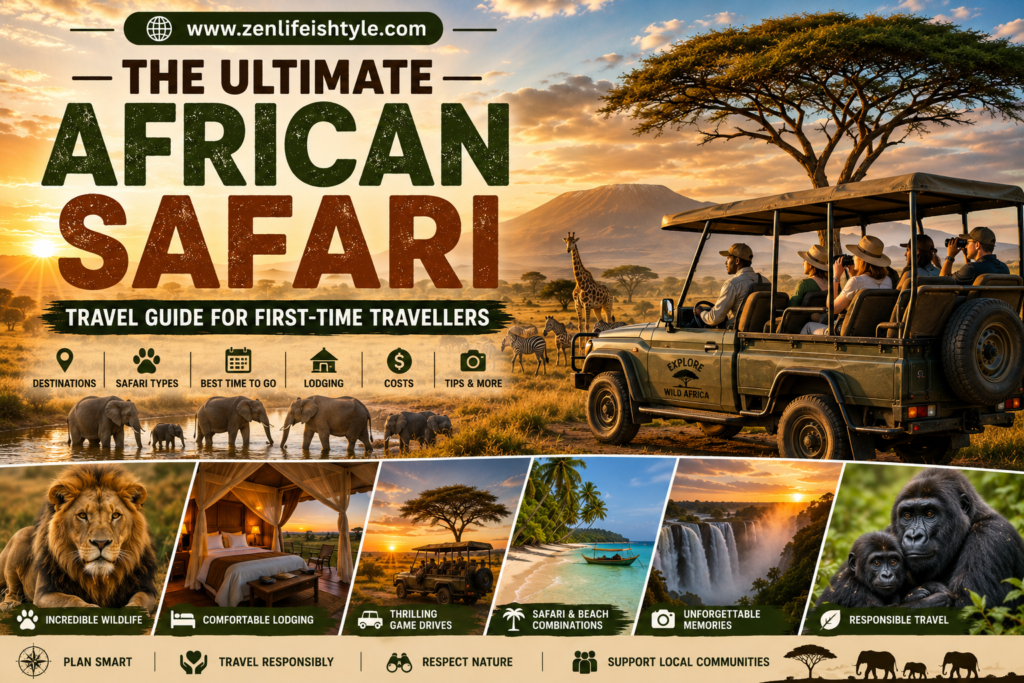
An African safari is one of the most exciting travel experiences in the world. For many travellers, it is a dream trip — waking up before sunrise, heading out on game drives, watching wildlife in its natural habitat, and ending the day at a safari lodge or tented camp under the stars.
But if you are planning your first safari, it can also feel confusing. There are so many countries, national parks, lodges, seasons, and safari styles to choose from. Should you go to Kenya or Tanzania? Is Kruger National Park better for beginners? When is the best time for wildlife viewing? Should you choose a luxury safari, a tented camp, walking safaris, or classic African safari tours?
The truth is that every safari experience is different. Your trip will depend on the country you visit, the season you travel, the national parks or game reserves you choose, your budget, your lodge style, and the activities included. Some safaris focus on Big Five game drives, some on the Great Migration, some on gorilla trekking, and others on peaceful river safaris or walking safaris.
If you are still deciding where to go in Africa, you may also find our Best Countries to Visit in Africa guide helpful for comparing safari, beaches, culture and wildlife destinations.
For travellers who want to make better choices while planning wildlife trips, our Eco Friendly Travel Guide for Beginners shares simple ways to travel more responsibly.
This ultimate African safari guide will help you understand the basics before you start planning. It will cover the best safari destinations, what animals you may see, how game drives work, when to travel, where to stay, what to pack, and how to choose the right safari for your travel style.
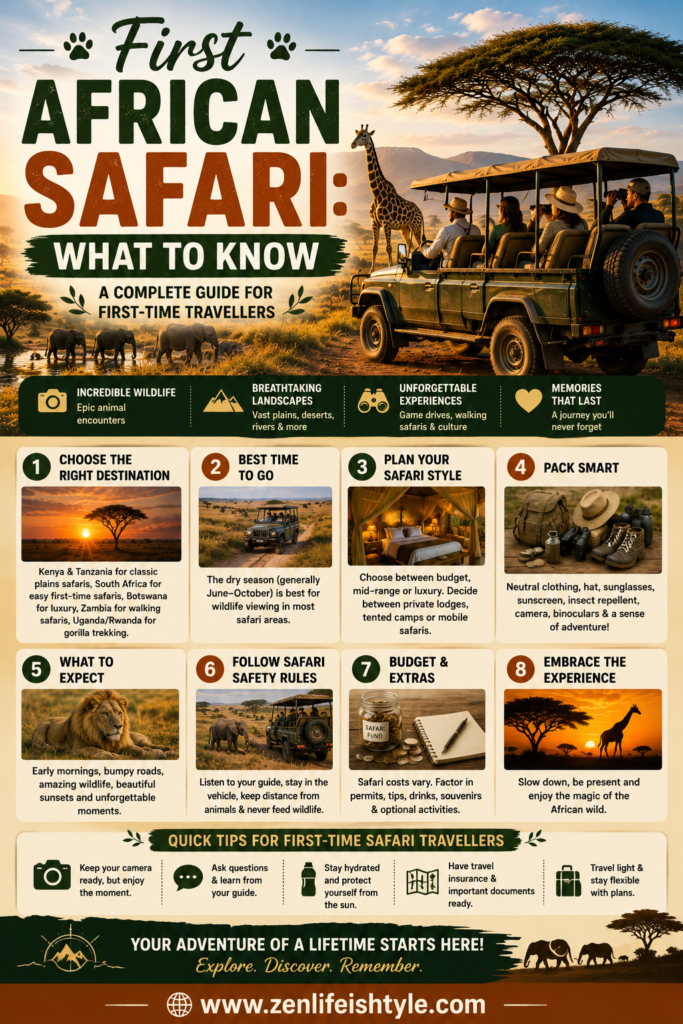
What Is an African Safari?
An African safari is a wildlife-focused journey where travellers visit national parks, game reserves, private concessions, or other natural habitats to see animals in the wild. It is one of the best ways to experience Africa’s landscapes, wildlife, and conservation areas up close.
Most safaris include wildlife viewing through guided game drives, usually in a 4×4 safari vehicle. You may go out early in the morning or late in the afternoon when animals are more active. In some destinations, you can also enjoy walking safaris, boat safaris, mokoro safaris, or cultural visits with local communities.
Where you stay also shapes the safari experience. Some travellers choose comfortable safari lodges, while others prefer tented camps that feel closer to nature. A luxury safari may include private guides, beautiful rooms, excellent food, and a more exclusive setting. A simpler safari may still offer great wildlife viewing, but with fewer extras.
A good safari also depends heavily on local guides. Guides understand animal behaviour, tracks, landscapes, and safety rules. They help you spot wildlife, explain what you are seeing, and make the experience more meaningful.
It is important to remember that a safari is not a zoo. Animals are moving freely in their natural habitat, so sightings are never guaranteed. You may see lions in the first hour, or you may spend days looking for a leopard. That patience is part of the adventure.
Safaris can also support conservation efforts and nearby local communities when they are planned responsibly. Park fees, lodge employment, guiding, and community projects can help protect wildlife areas and create value for people living close to national parks and reserves.
What Animals Can You See on an African Safari?
The animals you see on an African safari depend on where you travel, the season, your guide, and sometimes simple luck. Wildlife is never guaranteed because these animals live freely in their natural habitat. That is part of what makes every safari experience feel special.
Many travellers dream of seeing the Big Five: lion, leopard, elephant, rhino, and buffalo. These are some of Africa’s most iconic safari animals, and many African safari tours are built around Big Five wildlife viewing. Lions are often easier to see in open savannah areas, while leopard sightings can be more difficult because leopards are shy and often rest in trees or thick bush.
You may also see giraffes, zebras, cheetahs, hippos, crocodiles, antelopes, and many types of birds. In some parks, you may be lucky enough to see wild dogs, which are among the most exciting animals to spot on safari because they are active, social, and rare in many areas.
Rhinos are found in certain protected areas, especially where conservation efforts are strong. Some destinations are better for black rhinos, while others are known for white rhinos. Your chances depend heavily on the park or reserve you choose.
If your safari includes Uganda or Rwanda, you may also have the chance to see mountain gorillas. Gorilla trekking is very different from a classic game drive safari, but it is one of the most powerful wildlife experiences in Africa.
The best advice is to arrive with an open mind. You may dream of lions and leopards, but the smaller moments can be just as memorable — elephants crossing a river, giraffes feeding among acacia trees, hippos calling at sunset, or birds moving through the bush in the early morning light.
Best African Safari Destinations
Kenya — Best for Masai Mara and the Great Migration
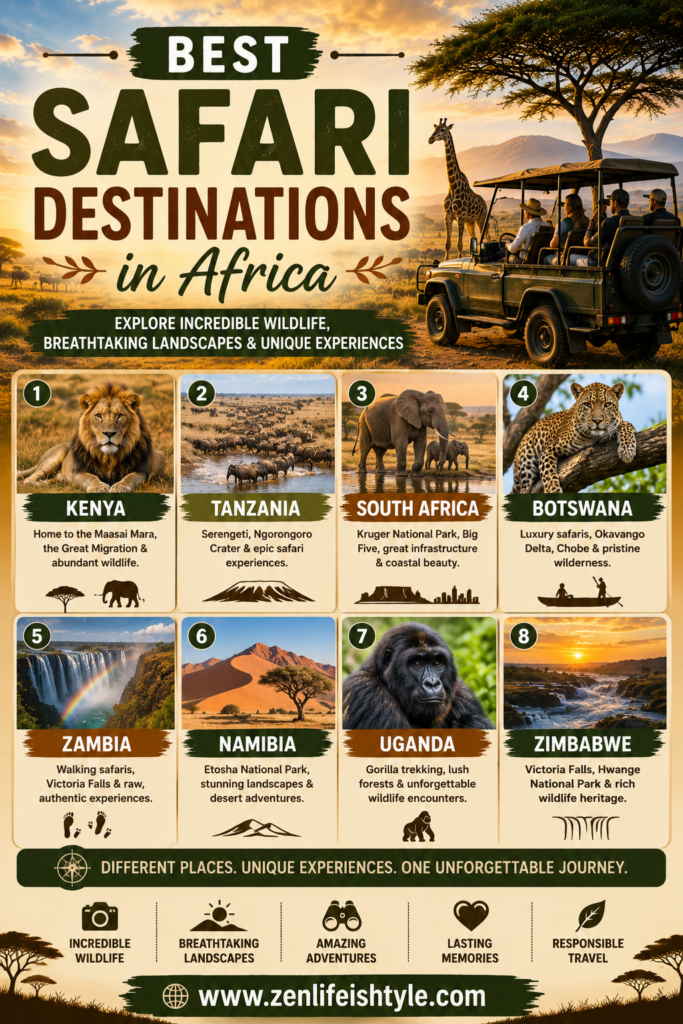
Kenya is one of the most famous African safari destinations, especially for travellers planning a classic safari experience. It is often one of the first countries people think about when they imagine open plains, big cats, safari lodges, tented camps, and dramatic wildlife viewing.
The biggest highlight is the Masai Mara National Reserve, also known simply as the Masai Mara. This is one of the best places in Africa for lions, cheetahs, elephants, giraffes, zebras, and other wildlife. It is also closely linked to the Great Migration, when huge numbers of wildebeest and zebras move between Tanzania’s Serengeti and Kenya’s Masai Mara.
Kenya is also home to Amboseli National Park, which is famous for elephants and views of Mount Kilimanjaro on clear days. It is a good choice if you want wide landscapes, strong wildlife viewing, and a classic East African safari feel.
Many Kenya safari trips include game drives, safari lodges, tented camps, and sometimes cultural visits with local communities. It is a strong option for a first safari because the country has well-established African safari tours, experienced guides, and a good range of accommodation styles.
Choose Kenya if you want a classic safari, the Masai Mara, the Great Migration, big cat sightings, cultural experiences, and a strong mix of safari lodges and tented camps.
If Kenya is high on your list, read our full Kenya Safari Guide for the best parks, wildlife, Great Migration tips, safari costs and travel planning advice.
Tanzania — Best for Serengeti and Ngorongoro Crater
Tanzania is one of the strongest African safari destinations, especially if your dream trip includes wide open plains, big herds, dramatic landscapes, and the Great Migration.
The main highlight is Serengeti National Park, one of the most famous safari areas in the world. The Serengeti spans around 5,700 square miles and is known for lions, cheetahs, leopards, elephants, zebras, wildebeest, and classic East African safari scenery. It is also one of the best places to experience the Great Migration, depending on the season and where the herds are moving.
Another major highlight is the Ngorongoro Crater, a dramatic natural landscape that is around 2,000 feet deep and covers about 100 square miles. Because of its shape and rich wildlife, it offers one of the most memorable safari experiences in Tanzania. Many travellers include it as part of a northern Tanzania safari route.
Tanzania is also home to Tarangire National Park, which is known for elephants, baobab trees, and beautiful dry-season wildlife viewing. It is often included with Serengeti and Ngorongoro for a fuller safari itinerary.
One of the best things about Tanzania is that you can easily combine safari with a beach holiday. After game drives in the Serengeti or Ngorongoro, many travellers fly to Zanzibar for beaches, Stone Town, spice tours, and Indian Ocean relaxation.
If you are planning a Tanzania safari and beach holiday, our guide on Where to Stay in Zanzibar can help you choose the best beach area after safari.
Choose Tanzania if you want the Serengeti, Ngorongoro Crater, the Great Migration, excellent wildlife viewing, and the option to end your African safari with a Zanzibar beach holiday.
If you are comparing the Serengeti, Ngorongoro, Tarangire and Zanzibar, our full Tanzania Safari Guide explains where to go, when to visit and how to plan the trip.
South Africa — Best for Kruger and First-Time Safaris
South Africa is one of the best safari destinations for first-time travellers because it offers strong infrastructure, a wide range of lodges, and the option to combine safari with Cape Town or the Garden Route.
The main safari highlight is Kruger National Park, one of Africa’s most famous national parks. Kruger covers over 7,500 square miles and is home to the Big Five: lion, leopard, elephant, rhino, and buffalo. It is a strong choice if you want a classic safari experience with good wildlife viewing and many accommodation options.
For a more exclusive safari, many travellers choose the private game reserves near Kruger, especially Sabi Sands. This area is famous for luxury safari lodges, skilled guides, off-road game drives in some reserves, and excellent leopard sightings.
South Africa is also practical because it works well as a Cape Town + safari combination. You can spend a few days in Cape Town for Table Mountain, beaches, food, wine regions, and culture, then add a Kruger or private game reserve safari.
Choose South Africa if you want an easy first safari, Big Five wildlife, good lodge choices, luxury safari options, and the ability to combine safari with Cape Town in one trip.
If Cape Town is part of your Africa itinerary, read our guide on Where to Stay in Cape Town before choosing your base.
Botswana — Best for Okavango Delta and Chobe
Botswana is one of the best African safari destinations if you want a quieter, more exclusive safari experience. It is especially known for the Okavango Delta, Moremi Game Reserve, and Chobe National Park.
The Okavango Delta offers a very different type of safari because much of the experience is water-based. Instead of only doing game drives, travellers can explore channels, lagoons, and floodplains by boat or traditional mokoro safaris. This gives the safari a slower and more peaceful feeling, with excellent chances to see birds, elephants, antelopes, hippos, and other wildlife in a unique wetland landscape.
Moremi Game Reserve is one of the best areas within the Okavango Delta for wildlife viewing. It offers a mix of dry land and water-based safari experiences, making it a strong choice for travellers who want variety.
Chobe National Park is another major highlight. It is famous for elephants, with around 50,000 elephants often linked to the greater Chobe area. The Chobe River is one of the best places for boat safaris, especially in the dry season when animals come to the river to drink.
Botswana is also known for private concession areas, luxury safari camps, and low-impact tourism. Many safaris here feel more exclusive, with fewer vehicles and a strong focus on conservation.
Choose Botswana if you want the Okavango Delta, Chobe River, mokoro safaris, private concessions, luxury safari camps, elephants, and a peaceful water-based safari experience.
If you want water-based safaris, mokoro trips, Chobe elephants and a wilder safari experience, read our full Botswana Safari Guide.
Zambia — Best for Walking Safaris and Victoria Falls
Zambia is one of the best African safari destinations if you want a wild, natural, and less crowded safari experience. It is especially known for walking safaris, strong wildlife viewing, river-based activities, and easy access to Victoria Falls.
The main safari highlight is South Luangwa, one of Africa’s best places for walking safaris. Instead of only seeing wildlife from a vehicle, walking safaris allow you to experience the bush on foot with expert guides. You learn about animal tracks, plants, birds, insects, and the smaller details that are easy to miss during regular game drives.
Another excellent safari area is Lower Zambezi, which is known for its river setting, beautiful scenery, game drives, boat safaris, and canoe safaris. Seeing elephants, hippos, crocodiles, and other wildlife along the Zambezi River gives this safari experience a very different feel from open savannah parks.
Zambia also pairs very well with Victoria Falls, one of Africa’s great natural wonders. Many travellers combine a safari in South Luangwa or Lower Zambezi with a few nights in Livingstone to see the falls, enjoy sunset cruises, visit local markets, or add adventure activities.
Many travellers combine safari with Victoria Falls. Our Victoria Falls Travel Guide explains the Zambia and Zimbabwe sides, best time to visit, viewpoints, activities and where to stay.
Choose Zambia if you want walking safaris, canoe safaris, game drives, Victoria Falls, excellent wildlife viewing, and a safari that feels close to nature.
If walking safaris, canoe safaris, South Luangwa, Lower Zambezi and Victoria Falls appeal to you, read our full Zambia Safari Guide.
Namibia — Best for Etosha and Desert Landscapes
Namibia is a great safari destination if you want wildlife viewing with dramatic desert landscapes. It feels very different from the greener safari areas of East Africa or Southern Africa because the scenery is dry, open, and almost otherworldly.
The main safari highlight is Etosha National Park, one of Namibia’s most famous national parks. Etosha covers around 8,600 square miles and is known for its wide salt pan, dry landscapes, and excellent wildlife viewing around waterholes.
During the dry season, animals often gather around the watering holes, making it easier to see elephants, lions, giraffes, zebras, antelopes, and sometimes rhinos. This makes Etosha a strong choice for travellers who want a self-drive safari or a guided safari with predictable wildlife viewing points.
Namibia is not only about animals. The country is also famous for desert scenery, sand dunes, open roads, and unique landscapes. A safari here can feel like a mix of wildlife, photography, adventure, and road-trip exploration.
Choose Namibia if you want Etosha National Park, watering holes, dry-season wildlife viewing, desert landscapes, and a safari experience that feels very different from the classic savannah safari.
Zimbabwe — Best for Hwange and Victoria Falls
Zimbabwe is a strong safari destination for travellers who want a classic safari experience combined with Victoria Falls. It offers excellent wildlife, beautiful landscapes, and some of the most rewarding game viewing in Southern Africa.
The main safari highlight is Hwange National Park, Zimbabwe’s largest national park and one of the best places in the region to see elephants. Hwange is known for big herds, wide open landscapes, and traditional game drives in a wild setting.
Zimbabwe also pairs very well with Victoria Falls, one of Africa’s most famous natural wonders. Many travellers spend a few nights near the falls, then continue to Hwange for safari. This makes Zimbabwe a good option if you want both adventure and wildlife in one trip.
A Zimbabwe safari can include elephants, lions, buffalo, giraffes, zebras, antelopes, and many bird species. Depending on the area and season, you may also have the chance to see predators and other special sightings.
Choose Zimbabwe if you want Victoria Falls, Hwange National Park, game drives, elephants, classic safari landscapes, and a strong Southern Africa safari experience.
Uganda and Rwanda — Best for Gorilla Trekking
Uganda and Rwanda are the best safari destinations if your dream is to see mountain gorillas in their natural habitat. This is not a classic game drive safari like Kenya, Tanzania, or South Africa. It is a forest-based experience where travellers trek on foot with expert guides to spend time near a gorilla family.
In Uganda, the main gorilla trekking destination is Bwindi Impenetrable Forest, one of the most important places in the world for mountain gorilla conservation. Uganda can feel more adventurous and varied, with forests, lakes, national parks, and wildlife experiences beyond gorillas.
In Rwanda, the main destination is Volcanoes National Park. Rwanda is often chosen by travellers who want a more organised, high-end gorilla trekking experience with easier logistics from Kigali.
For both countries, you need gorilla permits, and these should be booked in advance because visitor numbers are limited. Permit fees are an important part of conservation and help protect mountain gorillas and support nearby local communities.
Choose Uganda or Rwanda if you want gorilla trekking, rare wildlife encounters, conservation-focused travel, and a very different type of African safari experience.
Best Safari Parks and Game Reserves in Africa
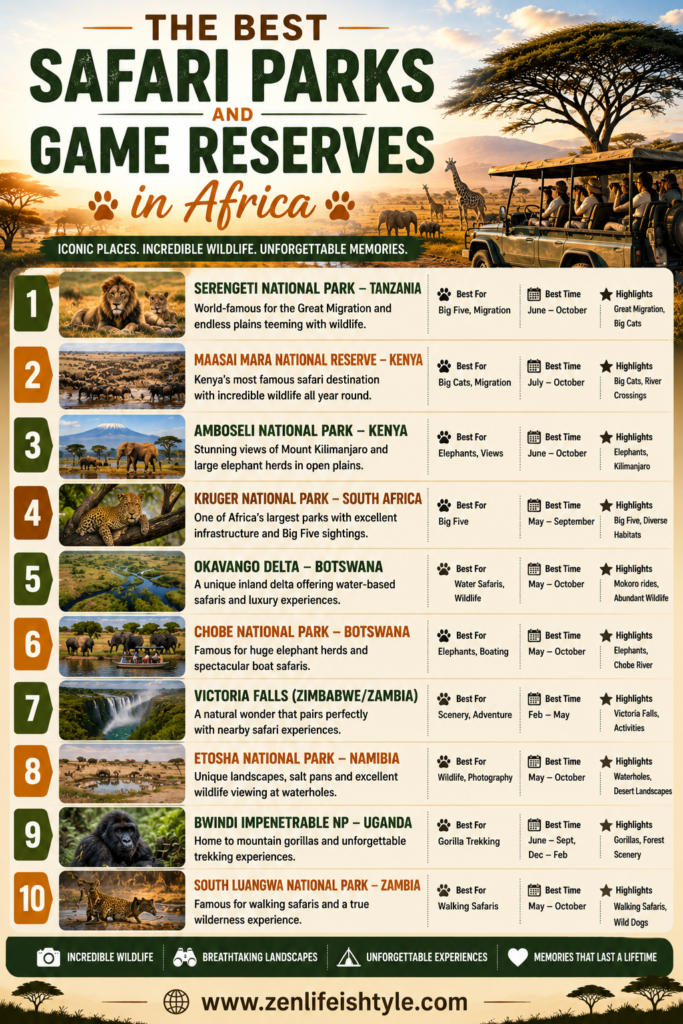
Africa has many incredible national parks, game reserves, and private concessions, but some are especially famous for first-time safari travellers. The right choice depends on what you want to see, how much time you have, your budget, and the kind of safari experience you prefer.
Park / Reserve | Country | Best For |
|---|---|---|
Kruger National Park | South Africa | Big Five, first safari, self-drive and lodges |
Serengeti National Park | Tanzania | Great Migration, big cats, open plains |
Masai Mara National Reserve | Kenya | Migration, lions, classic safari |
Ngorongoro Crater | Tanzania | Dense wildlife, dramatic landscape |
Chobe National Park | Botswana | Elephants, Chobe River, boat safaris |
Okavango Delta | Botswana | Mokoro safaris, water-based safari |
Etosha National Park | Namibia | Watering holes, dry season wildlife viewing |
South Luangwa | Zambia | Walking safaris, leopards, wild safari feel |
Hwange National Park | Zimbabwe | Elephants, classic Southern Africa safari |
Amboseli National Park | Kenya | Elephants and Kilimanjaro views |
For a first safari, Kruger National Park, Masai Mara, Serengeti, and Chobe are often easy places to understand because they are well known and have many African safari tours, safari lodges, and guided game drives.
If you want something more adventurous, South Luangwa is excellent for walking safaris, while the Okavango Delta is ideal for a water-based safari with mokoro trips and boat safaris. For dramatic landscapes, Ngorongoro Crater and Etosha National Park both offer very memorable settings.
The best park is not always the most famous one. It depends on your dream wildlife experience, the season, and how much time you want to spend in the bush.
Types of African Safari Experiences
Game Drives
Game drives are the most common safari activity and usually the main part of an African safari. They take place in 4×4 safari vehicles with a professional guide who drives through national parks, game reserves, or private concessions looking for wildlife.
Most game drives happen in the early morning or late afternoon. Early mornings are especially important because predators like lions, leopards, and hyenas can be more active just after dawn. This is also when the bush is cooler and many animals are moving before the heat of the day.
Depending on the destination, you may use an open 4×4 vehicle or a closed safari vehicle with a pop-up roof for better viewing and photography. In places like East Africa, pop-up roof vehicles are common, while many private reserves in Southern Africa use open safari vehicles.
A typical day may include a morning game drive, time to rest at the lodge, and an afternoon drive before sunset. On full-day safaris, your guide may arrange a picnic lunch in a safe area so you can stay out longer and explore more of the park.
Game drives are ideal for first-time safari travellers because they give you the best chance to cover more ground, see different animals, and enjoy a classic safari experience.
Walking Safaris
Walking safaris offer a more immersive safari experience because you explore the bush on foot instead of only watching wildlife from a vehicle. They are usually done with expert guides who understand animal behaviour, tracks, wind direction, safety rules, and the smaller details of the natural environment.
A walking safari is not about getting very close to dangerous animals. It is more about slowing down and noticing things you may miss during game drives. Your guide may point out animal tracks, birds, insects, plants, droppings, termite mounds, and signs of wildlife movement in the bush.
Zambia is especially famous for walking safaris, particularly in places like South Luangwa. This type of safari gives you a deeper connection to nature and helps you understand the landscape in a more detailed way.
Walking safaris are best for travellers who want a quieter, more personal and educational safari experience. They can feel exciting, but they should always be done with trained guides and in areas where walking safaris are professionally managed.
Mokoro and Boat Safaris
Mokoro and boat safaris offer a completely different safari experience because you explore wildlife from the water instead of only from a vehicle. These safaris are slower, quieter, and very peaceful, making them a great option if you want something beyond classic game drives.
The Okavango Delta in Botswana is one of the best places for a mokoro safari. A mokoro is a traditional dugout canoe, usually guided through shallow channels, reed beds, and lagoons. This type of safari is ideal for seeing birds, frogs, water plants, antelopes, elephants, and the small details of the wetland environment.
Boat safaris are also popular on the Chobe River in Botswana and the Lower Zambezi in Zambia. These areas are excellent for water-based wildlife viewing, especially during the dry season when animals come to the river to drink.
From the water, you may see elephants crossing channels, hippos in the river, crocodiles on the banks, and birds along the shoreline. It is a beautiful way to experience the bush from a different angle.
Gorilla Trekking
Gorilla trekking is one of the most special wildlife experiences in Africa. It is very different from a normal game drive because you do not sit in a vehicle looking for animals across open plains. Instead, you walk through forest trails with expert guides to find mountain gorillas in their natural habitat.
The main destinations for gorilla trekking are Uganda and Rwanda. In Uganda, many travellers visit Bwindi Impenetrable Forest, while in Rwanda, Volcanoes National Park is the main gorilla trekking area. Both countries offer a rare chance to spend time close to a gorilla family in the wild.
You need gorilla permits for this experience, and they should be booked early because the number of visitors is limited each day. Permit fees help support conservation and protect the gorillas, their forest habitat, and nearby local communities.
Gorilla trekking can be physically demanding because forest trails may be muddy, steep, or uneven. But for many travellers, seeing mountain gorillas in the wild is one of the most unforgettable moments of any African safari.
Hot Air Balloon Safaris
Hot air balloon safaris are a special safari activity that gives you a completely different view of the landscape. Instead of driving through the bush, you float above the savanna and enjoy a quiet, panoramic view of the plains, rivers, animals, and sunrise.
This experience is especially popular in places like the Serengeti in Tanzania and the Masai Mara in Kenya. From above, you may see herds moving across the open plains, acacia trees, winding tracks, and wildlife spread across the landscape.
Hot air ballooning is usually not included in standard safari packages. It often comes at an extra cost and needs to be booked separately in advance, especially during busy safari seasons.
This activity is good for travellers who want something memorable and romantic, or who want a different perspective on the safari landscape. It is not essential for every safari, but it can be a beautiful add-on if your budget allows.
Cultural Visits
Cultural visits can add a deeper human connection to your African safari. While wildlife is usually the main reason for travelling, many safari areas are also close to local communities with rich traditions, history, food, crafts, and daily life.
A good cultural visit should be respectful and well organised. It should not feel like people are being used as a tourist attraction. Look for experiences that involve local guides, community-owned projects, craft centres, village visits, schools, conservation education, or local businesses that benefit directly from tourism.
These visits can also help travellers understand how safari tourism connects with conservation efforts. When local communities benefit from wildlife tourism through jobs, guiding, lodge partnerships, or community projects, there is often more reason to protect wildlife and natural habitats.
Choose cultural visits that are ethical, respectful, and properly managed. Done well, they can make your safari experience more meaningful and help support the people who live near Africa’s national parks and game reserves.
What Is Usually Included in African Safari Tours?
What is included in African safari tours can vary a lot depending on the country, lodge, transport style, and package level. Some safaris are simple and practical, while others are fully all-inclusive luxury safari experiences.
In many standard safari packages, you can expect the main basics to be included:
Lodging at a safari lodge, tented camp, or hotel
Meals, often breakfast, lunch, and dinner
Professional guides
Park fees or conservation fees
Game drives
4×4 safari vehicles
Airport or lodge transfers, depending on the package
Sometimes internal flights
Sometimes gorilla permits, especially for Uganda or Rwanda packages
Most safari packages include daily game drives, usually in the morning and afternoon. Some packages use open 4×4 vehicles, while others use closed vehicles with pop-up roofs, especially in parts of East Africa.
Some safari tours are all-inclusive, meaning lodging, meals, game drives, park fees, guides, and transfers are bundled into one price. This can make planning easier, especially for first-time safari travellers.
However, not everything is always included. Some activities and costs may come at an extra charge, such as:
Hot air balloon rides
Premium drinks
Private safari vehicles
Special activities
Tips for guides and lodge staff
Visas
Travel insurance
Extra transfers
Optional cultural visits
Extra park fees for added activities
For example, a hot air balloon safari in the Serengeti or Masai Mara is often booked separately and can add a significant extra cost. Private vehicles may also cost more, but they can be useful for families, photographers, or travellers who want a more flexible safari experience.
Before booking, always check what is included and what is excluded. A cheaper safari package may look attractive at first, but if park fees, transfers, meals, or activities are not included, the final cost can become much higher.
Safari Lodging: Lodges, Tented Camps and Mobile Camps
Where you stay can change the whole feel of your safari. Some travellers want a comfortable safari lodge with a pool, private bathroom and full service. Others prefer tented camps that feel closer to nature. For more adventurous safaris, mobile camps may move with the wildlife or follow seasonal routes.
Safari Lodges
A safari lodge is usually the most comfortable and structured type of safari accommodation. Lodges can range from simple and practical to very high-end luxury safari properties.
Most safari lodges include private rooms or chalets, private bathrooms, meals, guides, game drives and shared guest areas. Many also have pools, viewing decks, lounges, restaurants and sometimes spa facilities. This makes them a good choice for first-time safari travellers who want comfort after a long day in the bush.
A lodge is ideal if you want a balance of wildlife, good food, professional guides and a comfortable place to rest between game drives.
Tented Camps
Tented camps give you a more classic safari feeling. They can range from rustic tents to beautiful luxury tents with proper beds, private bathrooms and stylish interiors.
The main appeal of a tented camp is that it often feels closer to nature. You may hear lions at night, birds in the morning or hippos calling from a nearby river. Some luxury tented camps offer excellent comfort while still keeping that special “in the wild” feeling.
For example, some safari lodges such as Mdluli Safari Lodge offer luxury tent-style accommodation with private bathrooms, giving guests a mix of comfort and closeness to the natural environment.
Mobile Tented Camps
Mobile tented camps are designed to move depending on the season, wildlife movements or safari route. These camps are popular in places like the Okavango Delta and in some Great Migration safari areas.
The idea is simple: instead of staying in one fixed place all year, the camp moves closer to the best wildlife areas at different times. This can create a more intimate and adventurous safari experience.
Mobile camps are a good choice if you want a close-to-nature experience, fewer crowds and a stronger feeling of being in the bush. They may be simpler than permanent luxury lodges, but many still offer good meals, comfortable beds, guides and proper camp service.
Gorilla Lodges
For gorilla trekking in Uganda, accommodation is usually based near the forest. A lodge such as Nkuringo Bwindi Lodge, which overlooks the Bwindi Impenetrable Forest, is an example of the type of stay travellers may choose when planning to see mountain gorillas.
Gorilla lodges are different from classic safari lodges because the main activity is forest trekking rather than game drives. The focus is usually comfort, location, early breakfast, packed lunches, guides and easy access to the gorilla trekking starting points.
Choose your safari lodging based on the experience you want. Lodges are best for comfort, tented camps are best for atmosphere, mobile camps are best for a more adventurous bush feeling, and gorilla lodges are best for mountain gorilla trekking trips.
Best Time to Go on African Safari
The best time to go on an African safari depends on the country, the park, and the type of safari experience you want. In many places, the dry season is best for classic wildlife viewing, but the rainy season and shoulder months can also offer good value, green landscapes, and fewer crowds.
Dry Season
The dry winter season is often the best time for classic game viewing across many safari destinations in Africa. During this period, grass is shorter, the bush is thinner, and animals often gather around rivers, watering holes, and permanent water sources.
This makes wildlife viewing easier because animals are less spread out. Predators may also be easier to track because guides can read the landscape more clearly.
In many Southern Africa destinations, including parts of Zambia, Botswana, Zimbabwe, Namibia, and South Africa, the dry season is generally from around May to October. This is a popular time for game drives, walking safaris, and river-based safaris.
Rainy Season
The rainy season can still be a beautiful time to go on safari, but the experience is different. Landscapes become green, birding can be excellent, and some lodges may offer lower rates compared to peak safari months.
There are also usually fewer crowds, which can make the safari feel more peaceful. However, wildlife may spread out because water is available in more places. This can make some animals harder to find.
In some parks, roads can also become muddy or difficult during heavy rains, especially in remote areas. If you are planning a rainy-season safari, choose your destination carefully and check whether the lodges and roads are fully operational.
Shoulder Months
Shoulder months can be a good balance between wildlife viewing, price, and fewer crowds. In some safari areas, October can offer strong wildlife viewing with fewer crowds and sometimes lower lodge rates than the busiest peak months.
However, timing changes by destination. October can be excellent in one country but very hot or less ideal in another. Always check the specific park, country, and safari style before booking.
Destination Timing Examples
Here are some simple timing examples to help you start planning:
Serengeti National Park: often strong from June to October
Great Migration: commonly viewed from July to October, depending on where the herds are
Kruger National Park: usually best from May to September
Chobe National Park: prime wildlife viewing is often from May to October
Ngorongoro Crater: often best from June to September
Zambia: the dry season is generally best for walking safaris and wildlife viewing
The best time for your safari depends on what matters most to you: wildlife sightings, budget, weather, crowds, photography, birding, or a specific event like the Great Migration.
How Many Nights Do You Need for a Safari?
The number of nights you need for an African safari depends on the destination, park size, travel time, and how deep you want the safari experience to be. A safari is not only about seeing animals quickly. It is also about slowing down, understanding the bush, and giving yourself enough chances for good wildlife sightings.
As a simple guide:
Length of Safari | Best For |
|---|---|
2 nights | A short introduction to safari |
3 nights | Better for one safari lodge or camp |
3 to 4 nights per lodge | Preferred if you want to absorb the surroundings properly |
5 to 7 nights | A strong first safari experience |
10+ nights | Two safaris, multiple parks, or safari + beach holiday |
For most first-time safari travellers, 3 nights in one safari lodge is a good minimum. This usually gives you enough time for several game drives, early mornings, afternoon wildlife viewing, and a better feel for the landscape.
If you want a more complete first safari, 5 to 7 nights is better. You could stay in one strong safari area or combine two parks, such as Serengeti and Ngorongoro, Kruger and Sabi Sands, or South Luangwa and Lower Zambezi.
A simple first safari plan could be:
3 nights in one safari lodge
3 nights safari + 3 nights beach or city
6 to 8 nights if combining two parks
If you have 10 nights or more, you can plan a deeper journey. This could include two safari regions, different types of safari experiences, or a safari and beach holiday such as Tanzania safari plus Zanzibar, Kenya safari plus Diani Beach, or South Africa safari plus Cape Town.
What to Expect on Your First Safari
Your first safari will probably feel different from any other trip you have taken. It is exciting, but it also requires patience, early mornings, and a willingness to spend long hours outdoors.
Most safari days start early. You may wake up before sunrise, have a quick coffee or light breakfast, and leave for your morning game drive while the bush is still cool. This is one of the best times for wildlife viewing because many animals are more active in the early morning.
Depending on your safari plan, you may spend several hours in a vehicle each day. Some days can include 6 to 8 hours moving through rugged terrain, especially on full-day drives. You may travel in open 4×4 vehicles or closed safari vehicles with pop-up roofs, depending on the country and safari style.
If you are doing a full-day drive, your guide may arrange a picnic lunch in a safe area inside the park. On other days, you may return to the lodge for lunch, rest during the heat of the day, and go out again in the afternoon.
One of the most important things to understand is that wildlife sightings are never guaranteed. A safari is not a zoo. You may see lions on your first drive, or you may search for days before finding a leopard. Good guides are trained to read tracks, listen to alarm calls, understand animal behaviour, and keep guests safe, but nature works on its own timing.
Always respect your guide’s instructions. Do not stand up, shout, feed animals, or try to get too close. The best safari experiences happen when you stay patient, quiet, and respectful of the animals and their natural habitat.
What to Pack for an African Safari
Packing for an African safari is all about comfort, practicality, and being ready for changing temperatures. You do not need to overpack, but you do need the right basics.
Choose neutral clothing in colours like khaki, beige, olive, brown, or grey. These colours blend better with the bush and are more practical for game drives. Avoid very bright colours when possible.
Because safari mornings can be cold, especially during the dry season, pack layers for early mornings. A light jacket, fleece, or warm sweater can make sunrise game drives much more comfortable. By midday, it can become warm, so light breathable clothing is useful too.
Comfortable shoes are important, especially if you are doing walking safaris or moving around camp. You do not always need heavy hiking boots, but closed comfortable shoes are better than sandals for most safari activities.
Useful safari items include:
Neutral clothing
Light layers for early mornings
Comfortable closed shoes
Hat
Sunglasses
Sunscreen
Insect repellent
Camera
Binoculars
Small day bag
Reusable water bottle
Medication
Travel documents
If your safari includes small bush planes, use soft-sided luggage instead of hard suitcases. Many bush flights have strict weight and size limits, and soft bags are easier to fit into small aircraft.
Also pack any personal medication you may need, plus copies of your passport, travel insurance, visas, vaccination records if required, and booking documents. A safari can take you far from shops and pharmacies, so it is better to be prepared before you leave the city.
Safari Safety and Responsible Travel Tips
Safari is exciting, but it is still a wild environment. The most important rule is to listen to your guide at all times. Safari guides are trained to understand animal behaviour, safe distances, vehicle positioning, and how to react in different situations.
During game drives, do not stand up in the vehicle unless your guide says it is safe. Avoid leaning out, shouting, waving, or making sudden movements around animals. Even calm-looking wildlife can react quickly if they feel threatened.
Always keep a respectful distance from animals. A good safari is not about getting as close as possible. It is about watching wildlife safely in its natural habitat. Never try to feed animals, call them, touch them, or disturb them for a better photo.
Keep noise low during wildlife sightings. Loud voices, music, and sudden sounds can stress animals and affect the experience for everyone. Quiet moments often lead to better sightings.
Responsible safari travel also means respecting local communities. Use local guides where possible, buy from community projects when appropriate, and choose safari operators that support fair employment, conservation efforts, and responsible tourism.
Before booking, look for operators and lodges that follow park rules, reduce waste, support conservation, and treat wildlife ethically. Avoid experiences that encourage feeding, chasing, touching, or disturbing animals.
Simple responsible safari rules include:
Listen to your guide
Follow lodge and park rules
Keep distance from wildlife
Do not feed animals
Avoid loud noise
Stay seated unless told otherwise
Respect local communities
Choose responsible operators
Support conservation efforts
A safe and responsible safari protects you, the animals, the guides, and the wild places you came to experience.
African Safari and Beach Holiday Combinations
One of the best ways to make an African safari feel more complete is to combine it with a beach holiday, city stay, or natural wonder. After early mornings, long game drives, and dusty safari roads, a few days by the ocean or near a famous landmark can be the perfect way to end the trip.
A popular option is Tanzania safari + Zanzibar. You can start with the Serengeti, Ngorongoro Crater, or Tarangire, then fly to Zanzibar for beaches, Stone Town, spice tours, and Indian Ocean relaxation. This is one of the easiest safari and beach combinations in East Africa.
Another strong option is Kenya safari + Diani Beach. After visiting the Masai Mara, Amboseli, or another safari area, travellers can continue to Kenya’s coast for white sand, warm water, and a slower pace.
For South Africa, a Kruger safari + Cape Town combination works very well. You can enjoy Big Five game drives in Kruger or a private game reserve, then continue to Cape Town for Table Mountain, beaches, restaurants, wine regions, and Cape Peninsula day trips.
In Southern Africa, Zambia or Zimbabwe safari + Victoria Falls is a powerful combination. You can enjoy game drives, walking safaris, canoe safaris, or classic wildlife viewing, then visit Victoria Falls, one of Africa’s most famous natural wonders.
Botswana also pairs well with Victoria Falls. A Botswana safari + Victoria Falls trip can include the Okavango Delta, Chobe National Park, the Chobe River, and a few nights near the falls. This works well for travellers who want a luxury safari, water-based wildlife viewing, elephants, and one of Africa’s most iconic landscapes.
For longer trips, Rwanda or Uganda gorilla trekking can also be combined with a beach extension. After seeing mountain gorillas, travellers can continue to Zanzibar, Kenya’s coast, Mauritius, or another Indian Ocean destination, depending on flight routes and time available.
Good safari and beach holiday combinations include:
Safari Combination | Best For |
|---|---|
Tanzania safari + Zanzibar | Great Migration, Serengeti, beach holiday |
Kenya safari + Diani Beach | Masai Mara, classic safari, coast |
South Africa safari + Cape Town | Kruger, Big Five, city and beaches |
Zambia or Zimbabwe safari + Victoria Falls | Wildlife, adventure, natural wonders |
Botswana safari + Victoria Falls | Okavango Delta, Chobe, elephants, luxury safari |
Uganda or Rwanda + beach extension | Gorilla trekking plus relaxation |
A safari and beach combination works best when you do not rush it. Try to give yourself enough nights for both parts of the trip, so you can enjoy the wildlife experience and still have time to rest before flying home.
Final Thoughts
An African safari can look very different depending on where you go, when you travel, and how you like to explore. Your safari experience may be shaped by the destination, budget, season, transport, lodging style, and the activities included in your trip.
For a first safari, it is usually better to choose one strong destination instead of trying to do everything at once. A slower safari gives you more time for game drives, quiet moments in the bush, and better chances of meaningful wildlife viewing.
Choose Kenya or Tanzania if you want classic plains safaris, big herds, the Masai Mara, the Serengeti, and the Great Migration. These destinations are ideal if your dream safari includes open savannah landscapes and strong wildlife action.
Choose South Africa if you want an easier first safari with good infrastructure, Kruger National Park, private game reserves, Big Five sightings, and the option to combine safari with Cape Town.
Choose Botswana if you want a more exclusive luxury safari, water-based experiences in the Okavango Delta, Chobe River boat safaris, and fewer crowds.
Choose Zambia if you want walking safaris, canoe safaris, game drives, Victoria Falls, and a wilder safari feeling that is close to nature.
Choose Namibia if you want Etosha National Park, desert landscapes, watering holes, photography, and a safari that feels very different from the classic green bush or savannah experience.
Choose Uganda or Rwanda if your dream is gorilla trekking and seeing mountain gorillas in their natural habitat.
The best African safari is not always the most expensive one or the most famous one. It is the safari that matches your dream wildlife experience, comfort level, budget, travel season, and the kind of memories you want to bring home.
Related Africa Safari Guides
Planning a safari in Africa? You may also find these guides helpful:
- Kenya Safari Guide — for Masai Mara, Great Migration, Amboseli and safari costs.
- Tanzania Safari Guide — for Serengeti, Ngorongoro, Tarangire and Zanzibar combinations.
- Botswana Safari Guide — for Okavango Delta, Chobe, Moremi and water-based safaris.
- Zambia Safari Guide — for walking safaris, canoe safaris, South Luangwa and Lower Zambezi.
- Victoria Falls Travel Guide — for planning the Zambia and Zimbabwe sides of the falls.
FAQs
What is the best country for a first African safari?
For a first African safari, South Africa, Kenya, and Tanzania are some of the easiest choices. South Africa is great for first-time travellers because Kruger National Park and nearby private reserves offer good infrastructure, Big Five sightings, and many lodge options. Kenya is excellent for the Masai Mara and classic safari landscapes, while Tanzania is ideal for the Serengeti, Ngorongoro Crater, and the Great Migration.
What is the best time to go on an African safari?
The dry season is usually the best time for classic wildlife viewing in many safari areas. During this period, the bush is thinner, grass is shorter, and animals often gather around rivers and watering holes. This can make wildlife easier to spot during game drives. The best months vary by country, so always check the timing for your specific safari destination.
How many days do you need for an African safari?
For one safari lodge, 3 nights is a good minimum. This gives you enough time for several game drives and a better chance of good wildlife sightings. For a stronger first safari, 5 to 7 nights is better, especially if you want to visit two parks or combine different safari experiences.
What animals can you see on safari in Africa?
On safari in Africa, you may see the Big Five: lion, leopard, elephant, rhino, and buffalo. You may also see giraffes, zebras, cheetahs, hippos, crocodiles, wild dogs, antelopes, and many bird species. The animals you see depend on the country, park, season, guide, and luck.
Are African safari tours expensive?
African safari tours can be expensive, but prices vary a lot. The cost depends on the country, lodge style, transport, park fees, season, and activities included. A luxury safari with private concessions and fly-in transfers will cost much more than a simpler lodge-based or road safari.
What is included in a safari package?
Many safari packages include lodging, meals, professional guides, park fees, and game drives. Some packages also include transfers, internal flights, drinks, or gorilla permits, but this varies. Extras such as hot air balloon rides, premium drinks, tips, visas, travel insurance, and special activities may cost more.
Is a luxury safari worth it?
A luxury safari can be worth it if you want more comfort, better service, fewer crowds, private concessions, excellent guides, beautiful lodges, and unique settings. It is not necessary for every traveller, but it can make the safari experience feel more personal and comfortable, especially for honeymooners or once-in-a-lifetime trips.
Can you combine safari with a beach holiday?
Yes, a safari and beach holiday is a popular combination. Good options include Tanzania safari + Zanzibar, Kenya safari + Diani Beach, South Africa safari + Cape Town, and Zambia, Zimbabwe or Botswana safari + Victoria Falls. This gives you wildlife, adventure, natural wonders, and time to relax after safari.