Introduction
If you’re planning your first African safari, one of the biggest questions you’ll probably ask is: What should I wear on safari?
The good news is that safari clothing is much simpler than many people think.
You do not need expensive safari fashion, a brand-new wardrobe or outfits that make you look like a professional wildlife guide. In fact, the best safari attire is usually practical, comfortable and designed to help you enjoy the experience rather than worry about what you’re wearing.
A typical African safari can involve chilly early mornings, hot afternoons, dusty roads, long game drives and sometimes even walking safaris. You might start the day wrapped in a fleece jacket, spend the afternoon in a lightweight shirt and finish the evening around a campfire under the stars. That is why choosing the right safari clothing is less about style and more about comfort, sun protection, insect protection and adapting to changing temperatures.
What you wear can also depend on the type of safari adventure you have planned. A traditional game drive in a safari vehicle requires different clothing from gorilla trekking in a rainforest or a walking safari through the African bush. The country, season and activities all play a role in deciding what belongs in your bag.
The key is to focus on breathable fabrics, comfortable footwear, practical layers and colours that work well in the safari environment. Once you understand a few simple principles, building the perfect safari outfit becomes surprisingly easy.
In this guide, I’ll walk you through exactly what to wear on safari, including the best colours, shoes, jackets and accessories for game drives, walking safaris, safari lodges and gorilla trekking adventures.
And before you start packing, I also recommend reading our African Safari Packing List and Best Time for an African Safari guides to help you prepare for every part of your trip.
What Should You Wear on Safari?
If you remember just one thing from this guide, let it be this: comfort and practicality always matter more than fashion on safari.
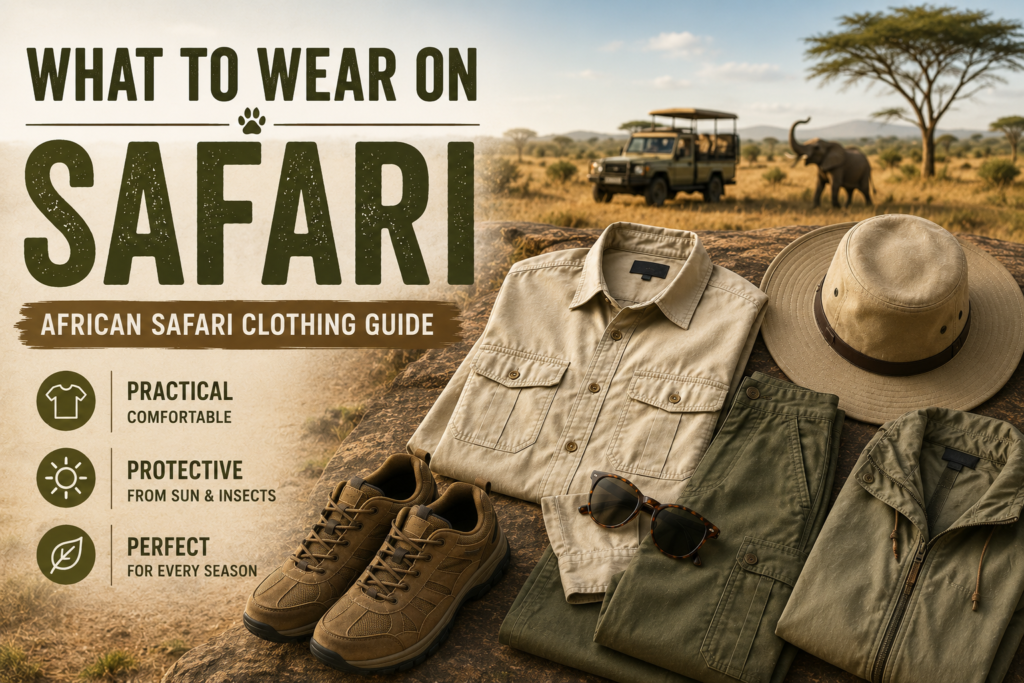
The best safari outfits are designed to keep you comfortable during long game drives, protect you from the sun and insects, and help you adapt to changing temperatures throughout the day. Most experienced safari travellers wear simple, neutral-coloured clothing that works well in both safari vehicles and safari lodges.
As a general rule, you should wear:
Neutral colours such as khaki, olive, beige and brown
Lightweight trousers
Breathable shirts
Comfortable closed-toe shoes
A wide-brim hat
Light layers that can be added or removed throughout the day
At the same time, there are a few things that are best left at home.
Try to avoid:
Bright colours
Pure white clothing
Black clothing
Camouflage clothing
Bright colours can stand out in the bush, while white tends to show dust almost immediately. Black and dark blue may attract tsetse flies in some safari regions, and camouflage clothing is restricted or discouraged in several African countries.
If you’re wondering what a typical safari outfit looks like, the table below provides a simple starting point.
Item | Recommended |
|---|---|
Shirt | Breathable long-sleeved shirt |
Trousers | Lightweight neutral-coloured trousers |
Shoes | Comfortable closed-toe shoes |
Hat | Wide-brim hat |
Jacket | Light fleece or lightweight jacket |
The good news is that you probably already own most of what you need. A safari wardrobe is usually built around practical clothing rather than specialised safari fashion. The goal is simply to stay comfortable, protected and ready for whatever wildlife encounter comes next.
Why Safari Clothing Is Different From Normal Travel Clothing
One of the biggest mistakes first-time safari travellers make is packing as if they are going on a typical beach holiday or city break.
A safari is different.
On a normal trip, you might spend most of your day indoors, moving between restaurants, hotels and attractions. On safari, you’re often outside for hours at a time, exposed to changing temperatures, dust, insects and the elements. What feels comfortable in a city can quickly become impractical in the African bush.
A typical safari day often starts before sunrise. While many people imagine Africa as being constantly hot, early morning game drives can be surprisingly cold, especially in Southern Africa during the dry season. Sitting in open safari vehicles before the sun rises can feel chilly enough to require a fleece or light jacket.
A few hours later, the situation changes completely. As the sun climbs higher, temperatures can rise quickly, particularly during warm weather and dry-season safaris. By midday, you may be looking for shade and wishing you had chosen lightweight, breathable clothing.
Then there is the dust. During game drives, safari vehicles and safari jeeps often travel along unpaved roads. In many national parks, especially during the dry season, fine dust becomes part of the experience. Clothing that is lightweight, comfortable and easy to wash tends to work much better than delicate fabrics or bright white outfits.
Insects are another factor that most travellers do not think about until they arrive. Long sleeves, lightweight trousers and appropriate colours can help reduce exposure to mosquitoes and other insects, particularly during early mornings and evenings.
Comfort also becomes far more important than style when you are spending long periods in safari vehicles. Some game drives can last several hours, and the wrong clothing can quickly become uncomfortable. Breathable fabrics, relaxed fits and practical layers make a noticeable difference during a long day in the bush.
The best safari clothing is designed to handle all of these conditions at once: cold mornings, hot afternoons, dusty roads, insects and long hours outdoors. That’s why experienced safari travellers tend to choose practical clothing over fashionable clothing every time.
When dressing for safari, think less about creating the perfect outfit and more about staying comfortable enough to enjoy every wildlife sighting that comes your way.
Best Colours to Wear on Safari
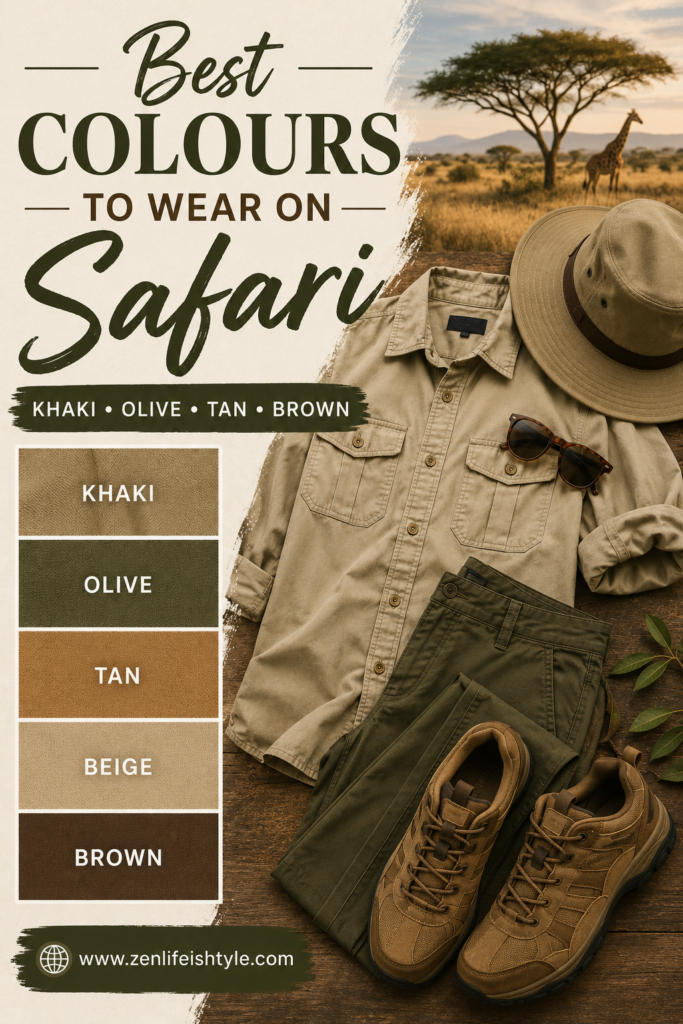
When it comes to choosing safari clothing, colour matters more than most people realise.
The best colours to wear on safari are neutral colours that blend naturally with the environment and remain practical throughout the day. You do not need to dress head-to-toe in khaki, but sticking to soft, earthy shades will help keep you comfortable and looking appropriate for the safari setting.
The most recommended safari colours include:
Khaki
Olive
Tan
Brown
Beige
Muted green
Other neutral tones inspired by the natural landscape
These colours work well because they blend into the surroundings of the African bush without being overly noticeable. They also tend to hide dust better than lighter colours and are practical for both game drives and walking safaris.
Another advantage of neutral colours is that they remain versatile. A khaki shirt or olive pair of trousers can be worn during a morning game drive, a walking activity and even a relaxed dinner at the lodge without looking out of place.
Dust is another reason experienced safari travellers favour neutral tones. During the dry season, safari vehicles often travel along dirt roads, and a fine layer of dust is almost unavoidable. Colours such as tan, olive and brown tend to disguise dust much better than brighter shades.
Neutral colours are also comfortable to wear in photographs. When you look back at your safari pictures years later, earthy tones usually complement the natural landscape without distracting from the wildlife and scenery.
The goal is not to look like a safari guide. The goal is to wear practical clothing that feels comfortable, works well in different conditions and allows the focus to remain on the incredible wildlife around you.
If you are unsure what to pack, a simple combination of a neutral-coloured shirt, lightweight trousers and comfortable shoes will work perfectly for most African safari adventures.
Colours to Avoid on Safari
While choosing the right colours for safari is important, knowing which colours to avoid can be just as useful.
In general, it is best to avoid:
Bright colours
White clothing
Black clothing
Dark blue clothing
Camouflage clothing
Clothing with a camouflage pattern
Bright colours such as neon yellow, bright red, fluorescent orange and vivid pink tend to stand out against the natural landscape. While wildlife is unlikely to run away simply because of a brightly coloured shirt, most safari travellers prefer more subtle colours that blend naturally into the environment.
White clothing is another colour that often looks appealing before a safari but becomes impractical very quickly. Dust is part of almost every safari experience, particularly during the dry season. A white shirt or pair of trousers can start the day looking crisp and clean and finish it covered in dust from safari vehicles and dirt roads.
Black and dark blue clothing are commonly discouraged in some safari destinations because they may attract tsetse flies. These biting flies are found in certain regions of Africa and are known to be attracted to dark colours. While this does not mean you must remove every dark item from your suitcase, many safari experts recommend choosing lighter neutral tones whenever possible.
Camouflage clothing deserves special attention. Many travellers assume camouflage is perfect safari attire because it resembles military or outdoor clothing. However, camouflage clothing is restricted, discouraged or even illegal for civilians in several African countries. Rules vary from country to country, but there is little reason to take the risk when neutral colours such as khaki, olive and brown work just as well.
Strongly coloured clothing may also attract insects in some environments, particularly around water or during warmer periods. Neutral colours generally remain the safest and most practical option.
If you are unsure whether an item belongs in your safari wardrobe, ask yourself a simple question: would this colour look natural in the African bush? If the answer is no, it may be better left at home.
Best Safari Shirts and Tops
When choosing what to wear on safari, your shirts and tops will do most of the work. They help regulate your body temperature, protect your skin from the sun and insects, and keep you comfortable during long hours outdoors.
The good news is that you do not need specialised safari clothing. A few well-chosen shirts made from the right materials will work perfectly for most safari adventures.
Why Long-Sleeved Shirts Are a Safari Favourite
Many first-time safari travellers assume that short sleeves are always the best choice because Africa is hot. In reality, experienced safari guides and frequent safari travellers often prefer long-sleeved shirts.
A lightweight long-sleeved shirt provides several advantages:
Protection from the hot sun
Protection from insects and mosquito bites
Reduced exposure to dust during game drives
Extra warmth during early morning safaris
Less need to constantly reapply sunscreen
The key is choosing lightweight, breathable fabrics rather than heavy materials that trap heat.
During a typical safari day, you can always roll up the sleeves when temperatures rise and roll them back down during cooler periods. This flexibility makes long sleeves one of the most practical items in any safari wardrobe.
Choose Breathable Fabrics
The fabric matters just as much as the style of shirt.
Safari days often involve long periods outdoors, changing temperatures and many hours inside safari vehicles. Clothing that breathes well will keep you far more comfortable than heavy cotton shirts or thick fabrics.
Look for:
Breathable fabrics
Lightweight materials
Quick-drying shirts
Moisture-wicking fabrics
Technical travel clothing designed for warm weather
Moisture-wicking fabrics are particularly useful because they help move sweat away from your skin, keeping you cooler during hot afternoons and reducing discomfort during active excursions.
Heavy fabrics such as denim or thick cotton can quickly become uncomfortable when temperatures rise and are much slower to dry if they get wet.
Collared Shirts Work Surprisingly Well
A collared shirt is often one of the most practical options for safari.
The collar provides additional protection for the back of your neck, which is one of the first places to get sunburned during long game drives. Many safari travellers also find that collared shirts look smart enough for both daytime activities and relaxed lodge dinners.
A simple neutral-coloured collared shirt in khaki, olive, beige or tan can easily take you from an early morning game drive to lunch at the lodge without feeling out of place.
How Many Shirts Do You Really Need?
One of the biggest safari packing mistakes is bringing too many clothes.
Most safari lodges offer laundry services, allowing you to wear the same practical clothing several times during your trip.
For most safaris, the following is usually enough:
Two or three lightweight short-sleeved shirts
Two lightweight long-sleeved shirts
One warmer top or mid-layer
This combination provides enough flexibility for changing weather while keeping your luggage light and manageable.
The best safari shirt is not necessarily the most expensive one. It is the one that keeps you cool during hot afternoons, warm during early morning game drives and comfortable enough to forget you’re even wearing it.
Best Safari Trousers and Shorts
When it comes to safari clothing, trousers are often more important than people expect. While many travellers focus on shirts and jackets, the right trousers can make a huge difference to your comfort during game drives, walking activities and long days in the African bush.
The best safari trousers combine three things: protection, comfort and flexibility.
Lightweight Trousers Are Usually the Best Choice
For most safaris, lightweight trousers are the most practical option.
They protect your legs from the sun, insects, dust and thorny vegetation while remaining comfortable in warm weather. Unlike heavy jeans, lightweight safari trousers are easier to move in, dry faster and remain comfortable even during long periods sitting in safari vehicles.
Look for trousers that are:
Lightweight
Breathable
Quick-drying
Comfortable for long hours of sitting
Made from stretch or flexible fabrics
Neutral-coloured trousers are usually the best choice because they work well with the safari environment and pair easily with the rest of your safari clothing.
Why Neutral-Coloured Pants Work Best
Just as with shirts, neutral colours are ideal for safari trousers.
Good choices include:
Khaki
Olive
Tan
Beige
Brown
Other natural earth tones
Neutral-coloured pants hide dust better than lighter colours and are practical for everything from morning game drives to relaxed afternoons at the lodge.
A simple pair of khaki or olive trousers is one of the most versatile items you can pack for an African safari.
Are Zip-Off Trousers Worth It?
Zip-off trousers divide opinion among safari travellers, but they can be surprisingly useful.
These convertible trousers allow you to remove the lower section of the leg and turn full-length trousers into shorts when temperatures rise.
The biggest advantage is flexibility. You can start a chilly morning game drive wearing full-length trousers and switch to shorts later when the day becomes warmer.
Zip-off trousers can be particularly useful for travellers who:
Want to pack light
Have limited luggage space
Expect large temperature changes throughout the day
Are travelling through multiple safari regions
Not everyone likes the look of zip-off trousers, but from a practical perspective they can save luggage space and reduce the number of clothing items you need to bring.
Should You Wear Shorts on Safari?
Shorts are perfectly acceptable in many safari destinations, particularly around lodges, during hot afternoons or on relaxed game drives.
However, they offer less protection than trousers.
Long trousers help shield your legs from:
Insects
Mosquitoes
Dust
Scratches from vegetation
Strong sunlight
For walking safaris, bush walks and gorilla trekking, long trousers are generally the better option.
Many experienced safari travellers follow a simple approach: wear trousers during game drives and outdoor activities, and keep shorts for the lodge or the hottest part of the day.
Ultimately, the best safari trousers are the ones you barely notice. They should keep you comfortable, protect you from the elements and allow you to focus on the wildlife rather than what you’re wearing.
Layering for Early Morning Game Drives
One of the biggest surprises for first-time safari travellers is how cold an early morning game drive can feel.
Many people picture Africa as being hot all the time, but temperatures before sunrise can be surprisingly chilly, especially in Southern Africa during the dry season. Add the wind created by moving safari vehicles, and a morning game drive can feel much colder than the actual temperature suggests.
This is why layering is one of the smartest safari clothing strategies.
Instead of wearing one heavy jacket, it is usually better to wear several lighter layers that can be removed as the day warms up. By mid-morning, temperatures may rise significantly, and you’ll appreciate being able to adjust your clothing without returning to the lodge.
The Simple Three-Layer Safari Approach
A practical safari outfit often follows a three-layer system:
Layer 1 → T-shirt
A lightweight, breathable T-shirt forms the base layer and keeps you comfortable as temperatures rise later in the day.
Layer 2 → Long-Sleeved Shirt
A lightweight long-sleeved shirt provides additional warmth while also offering protection from the sun, dust and insects.
Layer 3 → Fleece
A warm fleece provides insulation during cold early mornings and evening drives. It can easily be removed and stored in your day bag once the weather becomes warmer.
This simple approach works extremely well because it allows you to adapt to changing temperatures without carrying bulky clothing.
Should You Bring a Light Jacket?
A light jacket can also be useful, particularly during winter safaris in South Africa, Botswana, Zambia, Namibia and Zimbabwe.
Many travellers choose to pack either:
A fleece
A lightweight insulated jacket
A wind-resistant outer layer
The exact choice depends on the season and destination, but having at least one warm outer layer is highly recommended.
Why Layers Work Better Than Heavy Clothing
Safari temperatures often change dramatically throughout the day.
A typical safari schedule might look like this:
6:00 AM: Cold morning game drive
9:00 AM: Comfortable temperatures
1:00 PM: Warm afternoon sunshine
6:00 PM: Cooler evening drive
If you wear a heavy coat, you may find yourself carrying it around by mid-morning. Layers give you the flexibility to add or remove clothing as conditions change.
Many safari lodges provide blankets during cold morning drives, but you should not rely on this. Having your own fleece or light jacket ensures you stay comfortable regardless of the weather.
A good rule of thumb is simple: if you’re packing for safari, assume the mornings will be colder than you expect and the afternoons warmer than you expect. Layers help you stay comfortable through both.
Best Shoes for Safari
When planning what to wear on safari, shoes are often one of the most important decisions you’ll make. The right footwear can make long game drives, bush walks and trekking activities far more comfortable, while the wrong shoes can quickly become a source of frustration.
The good news is that most safari travellers do not need a large collection of footwear. In many cases, one comfortable pair of closed shoes will handle most of the trip.
The best safari shoes generally fall into four categories:
Comfortable walking shoes
Closed-toe shoes
Trail shoes
Hiking boots
The right choice depends largely on the activities included in your itinerary.
Shoes for Game Drives
For a traditional safari focused on game drives, comfort should be your top priority.
Most of your day will be spent in safari vehicles, with only short walks around lodges, viewpoints or picnic areas. Heavy hiking boots are usually unnecessary for this type of safari.
The best options include:
Comfortable trainers
Lightweight walking shoes
Closed-toe travel shoes
Closed-toe shoes help protect your feet from dust, insects and cooler morning temperatures while remaining comfortable during long hours in safari vehicles.
Many experienced safari travellers wear the same pair of comfortable trainers throughout most of their trip. If your safari consists mainly of game drives, there is no need to overcomplicate your footwear choices.
Shoes for Walking Safaris
Walking safaris place much greater demands on your footwear than standard game drives.
You’ll be walking on uneven terrain, sandy tracks, rocky paths and occasionally through areas with thorns or rough vegetation. Good support and grip become much more important.
Recommended footwear includes:
Trail shoes
Lightweight hiking boots
Supportive walking shoes with good tread
Trail shoes are often an excellent compromise because they provide better grip and stability than trainers while remaining lighter and more comfortable than traditional hiking boots.
For longer walking safaris or more challenging terrain, hiking boots may provide additional support and protection. Whatever footwear you choose, make sure it has already been worn and broken in before your trip.
Shoes for Gorilla Trekking
Gorilla trekking is one safari activity where proper footwear is essential.
In destinations such as Uganda’s Bwindi Impenetrable Forest and Rwanda’s Volcanoes National Park, trails can be steep, muddy, slippery and physically demanding. Ordinary trainers are rarely sufficient.
For gorilla trekking, pack:
Waterproof hiking boots
Long trousers
Gardening gloves or trekking gloves
Waterproof hiking boots provide the grip, ankle support and protection needed for wet forest trails. Even during drier months, muddy sections and slippery slopes are common.
Long trousers help protect your legs from insects, mud, stinging plants and dense vegetation. Gardening gloves may seem unusual, but many trekkers find them extremely useful when holding onto branches and vegetation for balance on steep sections of trail.
If gorilla trekking is part of your safari adventure, investing in good-quality waterproof hiking boots is one of the best decisions you can make.
Ultimately, the best safari footwear is the footwear that matches your activities. Comfortable trainers are ideal for most game drives, trail shoes work well for walking safaris, and waterproof hiking boots are essential for gorilla trekking.
What Accessories Should You Wear on Safari?
The right accessories can make a surprising difference to your safari experience. While clothing and footwear usually get most of the attention, a few small items can help protect you from the sun, dust, wind and insects while making long game drives much more comfortable.
The best safari accessories are lightweight, practical and easy to carry. You do not need a lot of them, but the right ones are worth packing.
Wide-Brim Hat
If there is one accessory that belongs on almost every safari packing list, it is a wide-brim hat.
Unlike a baseball cap, a wide-brim hat provides protection for your face, ears and the back of your neck, all areas that receive a lot of sun exposure during game drives.
A good safari hat should be:
Lightweight
Breathable
Comfortable to wear for several hours
Secure enough to stay on in moving safari vehicles
Many travellers prefer hats with a chin strap, especially during open-vehicle safaris where wind can easily carry a loose hat away.
Polarised Sunglasses
A quality pair of polarised sunglasses is another safari essential.
Hours spent scanning the landscape for wildlife can be tiring on the eyes, particularly when sunlight reflects off water, dusty roads or open grasslands.
Polarised sunglasses help by:
Reducing glare
Improving visual comfort
Making wildlife easier to spot
Protecting your eyes from UV exposure
Choose a pair that fits comfortably and remains secure during bumpy game drives.
Lightweight Scarf
A lightweight scarf is one of the most versatile accessories you can bring on safari.
It can be used to:
Provide extra warmth during early morning game drives
Protect your face from dust
Shield your neck from the sun
Add an extra layer during cooler evenings
Because it takes up very little space in your luggage, a lightweight scarf offers excellent value for almost no packing weight.
Lip Balm
Lip balm is often forgotten until it is needed.
The combination of dry air, dust, wind and strong sun can quickly leave your lips dry and uncomfortable, particularly during the dry season.
Choose a lip balm that includes SPF protection whenever possible. This provides an extra layer of sun protection while helping to prevent cracked lips during long days outdoors.
Small Accessories, Big Difference
Safari accessories may seem like minor details, but they play an important role in keeping you comfortable throughout the day.
Together, a wide-brim hat, polarised sunglasses, lightweight scarf and lip balm provide valuable protection against the two things every safari traveller encounters: the African sun and the elements.
Think of them as simple tools that help you focus less on discomfort and more on the incredible wildlife and landscapes around you.
What to Wear at Safari Lodges and Safari Camps
One of the most common questions first-time safari travellers ask is whether they need special clothing for evenings at safari lodges and safari camps.
The simple answer is no.
Most safari lodges have a relaxed atmosphere where comfort matters far more than formal dress codes. Even at a luxury lodge, guests typically spend the day outdoors on game drives and return wearing practical safari clothing. There is rarely any expectation to change into formal evening wear.
The Safari Lodge Dress Code
For most safari lodges and safari camps, the dress code can best be described as smart casual.
This usually means:
Clean, comfortable clothing
Lightweight trousers or chinos
A collared shirt, blouse or casual top
Casual shoes, sandals or loafers
A light layer for cooler evenings
You do not need suits, ties, cocktail dresses or high heels unless your itinerary specifically includes a formal event or luxury city hotel before or after the safari.
Comfort Is the Priority
Safari life is designed to be relaxed.
After a morning game drive, afternoon safari activity and evening wildlife viewing, most guests simply want to enjoy dinner, share stories from the day and relax around the lodge.
Comfortable clothing works perfectly for this environment. Many travellers wear the same neutral-coloured trousers and shirts they used during the day, sometimes changing into a fresh top before dinner.
What About Luxury Lodges?
Even at a luxury lodge, the atmosphere is usually elegant rather than formal.
You may want to pack one slightly smarter outfit for dinner, but “smart” on safari generally means neat and comfortable rather than dressed up.
Good options include:
Lightweight trousers and a collared shirt
A simple dress or skirt
Casual loafers or sandals
A lightweight sweater or jacket
Many luxury safari properties are located in remote wilderness areas, and the focus remains on the wildlife experience rather than fashion.
Bring a Warm Layer for Evenings
One item many travellers overlook is a light fleece, sweater or jacket.
Even in warm destinations, temperatures can drop quickly after sunset. Outdoor dining areas, campfires and open-air lounges can feel surprisingly cool, especially in Southern Africa during the dry season.
A lightweight layer will keep you comfortable without taking up much luggage space.
The bottom line is simple: most safari lodges and safari camps are relaxed, welcoming places where practical and comfortable clothing is perfectly acceptable. Smart casual is usually more than enough, allowing you to enjoy the experience without worrying about formal dress codes.
What to Wear on Safari in East Africa
East Africa is home to some of Africa’s most iconic safari destinations, including Kenya, Tanzania, Uganda and Rwanda. While the general safari clothing principles remain the same, there are a few regional considerations that can help you pack more effectively.
The type of clothing you need will depend on whether your trip focuses on classic game drives, the Great Migration or gorilla trekking adventures.
Kenya and Tanzania
For most safaris in Kenya and Tanzania, lightweight and breathable clothing is ideal.
Game drives in destinations such as the Maasai Mara and Serengeti often start early in the morning when temperatures can be cool, before becoming much warmer later in the day. Layering remains the best approach, allowing you to adapt as conditions change.
Recommended clothing includes:
Lightweight long-sleeved shirts
Neutral-coloured trousers
Comfortable closed-toe shoes
A fleece or light jacket for early mornings
A wide-brim hat
Polarised sunglasses
If your safari includes witnessing the Great Migration, be prepared for long game drives across open landscapes. Comfortable clothing becomes especially important when spending several hours in safari vehicles.
Dust is another factor to consider, particularly during the dry season. Many travellers find that a lightweight scarf or buff is useful for protecting their face and neck on dusty roads. Camera equipment may also benefit from protective covers or dust-resistant bags.
For more destination-specific advice, see our Kenya Safari Guide and Tanzania Safari Guide.
Uganda and Rwanda
Uganda and Rwanda often require a slightly different safari wardrobe, especially if gorilla trekking is included in your itinerary.
Unlike the open plains of Kenya and Tanzania, gorilla trekking takes place in dense forests where trails can be muddy, steep and slippery.
For gorilla trekking, consider packing:
Waterproof hiking boots
Long trousers
Long-sleeved shirts
Lightweight rain jacket
Gardening gloves or trekking gloves
Waterproof day pack
Extra socks
Long sleeves and long trousers help protect against insects, mud, branches and stinging plants, while waterproof footwear provides the grip needed for challenging forest trails.
Rain can occur at any time of year in many trekking regions, so carrying a lightweight waterproof jacket is always a good idea.
East Africa Safari Clothing Essentials
Whether you are following the Great Migration in Kenya and Tanzania or trekking mountain gorillas in Uganda and Rwanda, the key is to focus on practical, comfortable clothing that works in changing conditions.
Neutral colours, breathable fabrics, comfortable footwear and flexible layers will serve you well throughout East Africa, allowing you to spend less time worrying about what you’re wearing and more time enjoying the incredible wildlife experiences the region is famous for.
What to Wear on Safari in Southern Africa
Southern Africa offers some of the continent’s most diverse safari experiences, from the waterways of Botswana and Zambia to the deserts of Namibia, the wildlife reserves of South Africa and the iconic landscapes of Zimbabwe.
The good news is that safari clothing principles remain largely the same across the region: dress for comfort, protection and changing temperatures. However, Southern Africa has a few unique considerations that can influence what you wear.
Prepare for Cold Mornings
One thing that surprises many first-time visitors is how cold Southern African mornings can be.
During the dry season, particularly between May and August, temperatures in Botswana, Zambia, Zimbabwe, Namibia and South Africa can be surprisingly low before sunrise. Morning game drives often begin in open safari vehicles, and the wind can make conditions feel even colder.
Pack:
Lightweight base layer
Long-sleeved shirt
Warm fleece
Light jacket or puffer jacket
Warm socks
A layering approach works best because temperatures can rise dramatically by midday. You may start a game drive wearing three layers and finish it in a single lightweight shirt.
What to Wear for Walking Safaris
Southern Africa is particularly famous for walking safaris, especially in Zambia, where guided bush walks are considered some of the best in Africa.
For walking safaris, wear:
Lightweight long trousers
Long-sleeved shirt
Neutral colours
Comfortable trail shoes or hiking boots
Wide-brim hat
Insect repellent
The goal is to stay protected from the sun, insects, thorny vegetation and uneven terrain while remaining comfortable in warm conditions.
Unlike vehicle-based safaris, walking safaris require practical footwear and clothing that allows freedom of movement.
Clothing for River and Water-Based Activities
Botswana’s Okavango Delta, Zambia’s Lower Zambezi, the Chobe River and many areas of Zimbabwe offer boat cruises, canoe safaris and river excursions.
For these activities, consider:
Lightweight quick-drying clothing
Polarised sunglasses
Wide-brim hat
Lightweight rain jacket
Comfortable closed shoes or sandals suitable for boats
Sun reflection from the water can increase exposure, making sun protection even more important than on standard game drives.
What to Wear at Victoria Falls
If your safari includes Victoria Falls, be prepared to get wet.
During periods of high water flow, the spray from the falls can feel like standing in heavy rain, particularly at viewpoints close to the gorge.
Useful items include:
Lightweight rain jacket
Quick-drying clothing
Waterproof pouch for phone and camera
Shoes with good grip
Change of clothes if visiting immediately before other activities
Even on a sunny day, visitors near the main viewpoints can become completely soaked.
Country-Specific Considerations
Botswana is known for cool winter mornings and excellent water-based safaris.
Zambia combines traditional game drives with some of Africa’s finest walking safaris, making practical footwear particularly important.
Zimbabwe offers similar conditions to Zambia, with the added consideration of Victoria Falls spray and cool dry-season mornings.
Namibia can experience significant temperature swings between day and night, especially in desert regions.
South Africa varies widely depending on where you travel. Kruger National Park follows a classic safari climate, while areas such as Cape Town may require completely different clothing.
Southern Africa Safari Essentials
For most safaris in Botswana, Zambia, Zimbabwe, Namibia and South Africa, focus on:
Neutral-coloured clothing
Breathable fabrics
Comfortable walking shoes
Warm layers for mornings
Wide-brim hat
Sunglasses
Insect repellent
Lightweight rain jacket
If you prepare for cold mornings and warm afternoons, you’ll be comfortable in most Southern African safari destinations.
For destination-specific advice, read our Botswana Safari Guide and Zambia Safari Guide.
What Not to Wear on Safari
Knowing what not to wear on safari can be just as important as knowing what to pack.
Many first-time travellers worry about buying the perfect safari wardrobe, but avoiding a few common mistakes will do far more for your comfort than purchasing expensive safari clothing.
Here are some items that are best left at home.
Camouflage Clothing
Camouflage clothing is one of the biggest safari myths.
Many people assume camouflage is ideal for wildlife viewing, but in reality, camouflage clothing is restricted, discouraged or even illegal for civilians in several African countries.
Military-style clothing can create misunderstandings and is unnecessary for safari travel. Instead, choose neutral colours such as khaki, olive, tan or brown, which provide the same practical benefits without any legal concerns.
White Clothing
A crisp white shirt may look great when you leave home, but it rarely stays that way on safari.
Game drives often involve dusty roads, open safari vehicles and dry conditions. White clothing quickly shows dirt, dust and stains, making it one of the least practical colour choices for the African bush.
Neutral colours tend to stay looking cleaner for longer and require less maintenance throughout your trip.
Neon and Bright Colours
Bright colours and neon shades are generally best avoided.
Colours such as:
Neon yellow
Bright orange
Fluorescent pink
Bright red
Electric blue
can stand out dramatically against natural landscapes.
While wildlife is unlikely to flee simply because of a bright shirt, neutral colours create a more comfortable safari experience and help you blend naturally into the environment during game drives and walking safaris.
Heavy Jeans
Jeans are not forbidden on safari, but they are often less practical than lightweight travel trousers.
Heavy denim can:
Feel hot in warm weather
Take a long time to dry
Become uncomfortable during long game drives
Take up unnecessary luggage space
Lightweight trousers made from breathable fabrics are usually far more comfortable and versatile.
High Heels
There is very little reason to pack high heels for safari.
Most safari lodges, safari camps and even luxury lodges have uneven pathways, natural terrain, wooden walkways and outdoor dining areas. High heels can be impractical, uncomfortable and sometimes unsafe.
Comfortable sandals, casual shoes or lightweight flats are usually much more suitable.
Excess Jewellery
Safari is not the place for expensive jewellery.
Large necklaces, valuable watches and flashy accessories are unnecessary in the bush and can become inconvenient during outdoor activities.
Simple jewellery is perfectly fine, but most travellers find they wear far less than they originally packed.
Strong Perfumes and Fragrances
Strong perfumes and heavily scented products are best avoided.
Not only can strong scents become overpowering in warm weather, but they may also attract insects in some environments.
A better option is to use lightly scented or unscented products and focus on practical essentials such as sunscreen, insect repellent and lip balm.
Keep It Simple
The best safari attire is simple, comfortable and practical.
If an item is heavy, flashy, restrictive or difficult to wear outdoors, it probably doesn’t belong in your safari bag. Focus on breathable clothing, neutral colours and comfortable footwear, and you’ll be prepared for almost any safari adventure.
What to Wear on Safari by Season
One of the biggest mistakes travellers make is assuming the same safari outfit works year-round.
The reality is that what you wear on safari should change depending on the season. A dry-season safari in Botswana or South Africa requires different clothing from a green-season safari in Kenya or Zambia. Understanding the conditions you’ll encounter will help you stay comfortable throughout your trip.
What to Wear During the Dry Season
The dry season is often considered the best time for wildlife viewing in many African destinations. Vegetation is thinner, animals gather around water sources and game viewing can be exceptional.
However, many travellers are surprised by how cold the mornings can be.
For dry-season safaris, pack:
A warm fleece
Lightweight layers
A light jacket
Long-sleeved shirts
Lightweight trousers
A wide-brim hat
Sunglasses
Early morning game drives often begin before sunrise, when temperatures can be surprisingly low. Sitting in open safari vehicles adds wind chill, making conditions feel even colder.
A layering approach works best. You might start the day wearing a T-shirt, long-sleeved shirt and fleece, then gradually remove layers as temperatures rise throughout the morning.
A light jacket is also useful for evening drives and outdoor dinners at safari lodges, particularly in Southern Africa during winter.
What to Wear During the Green Season
The green season transforms many safari destinations into lush, beautiful landscapes filled with newborn animals, migratory birds and dramatic skies.
With the greener scenery comes a higher chance of rain, muddy conditions and increased insect activity.
For green-season safaris, pack:
Lightweight rain jacket
Quick-dry clothing
Waterproof cover for your day bag
Extra insect repellent
Lightweight waterproof footwear
Waterproof protection for camera equipment
Quick-drying clothing becomes particularly valuable during this season because it dries faster after rain showers and is easier to wash when moving between camps.
A lightweight rain jacket is usually more practical than a heavy waterproof coat. It can be packed into a day bag and quickly pulled out whenever the weather changes.
Dress for the Conditions, Not Just the Destination
Whether you’re travelling during the dry season or green season, flexibility is the key to staying comfortable.
Layers, breathable fabrics and practical outerwear will serve you far better than packing for only one type of weather. Conditions can change quickly, and the best safari clothing is clothing that allows you to adapt.
If you’re still deciding when to travel, our Best Time for an African Safari guide explains how the seasons affect weather, wildlife viewing and safari conditions across Africa.
What to Wear on Safari for Your First Trip
If this is your first trip to Africa, it’s completely normal to wonder whether you need specialised safari clothing or expensive safari fashion.
The good news is that you probably already own most of what you need.
Many first-time safari travellers imagine they need a wardrobe full of technical safari gear, but the reality is much simpler. The best safari outfits are usually comfortable, practical and suitable for spending long hours outdoors. Focus on neutral colours, breathable fabrics and comfortable footwear rather than buying clothing marketed specifically for safari.
If you’re unsure where to start, use this simple first-safari checklist:
First Safari Clothing Checklist
✔ Neutral-coloured shirt (khaki, olive, beige or tan)
✔ Lightweight trousers
✔ Comfortable closed-toe shoes
✔ Wide-brim hat
✔ Polarised sunglasses
✔ Warm fleece for early mornings
This basic combination will work for the vast majority of safari trips, whether you’re visiting Kenya, Tanzania, Botswana, Zambia, South Africa or Zimbabwe.
You can always add destination-specific items if your itinerary includes activities such as gorilla trekking, walking safaris or travel during the rainy season. But for a traditional safari adventure, simplicity is often the best approach.
Remember that most safari lodges offer laundry services, so there is no need to pack a different outfit for every day. A small collection of practical clothing is usually far more useful than a suitcase full of options.
The biggest mistake first-time travellers make is overpacking. The biggest mistake they don’t make is arriving without expensive safari fashion. Wildlife won’t care what brand you’re wearing, and neither will your guide.
Comfort, protection and practicality will always matter more than looking like you’ve stepped out of a safari catalogue.
Final Safari Outfit Checklist
If you are short on time and simply want a quick answer to the question, “What should I wear on safari?”, use this checklist before you leave home.
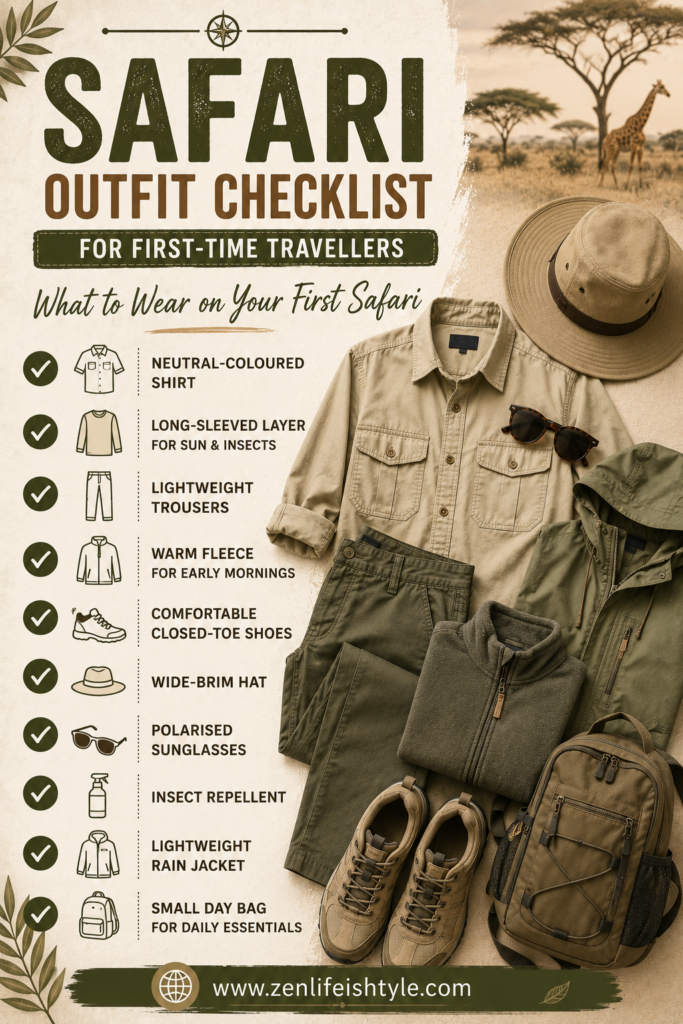
Essential Safari Outfit Checklist
☐ Neutral-coloured shirt (khaki, olive, beige, tan or brown)
☐ Long-sleeved layer for sun and insect protection
☐ Lightweight trousers
☐ Warm fleece for early morning game drives
☐ Comfortable closed-toe shoes
☐ Wide-brim hat
☐ Polarised sunglasses
☐ Insect repellent
☐ Lightweight rain jacket
☐ Small day bag for daily essentials
This simple combination will work for the vast majority of African safaris, whether you’re travelling to Kenya, Tanzania, Botswana, Zambia, Zimbabwe, Namibia or South Africa.
The key is not to overcomplicate things. Choose practical clothing that can handle changing temperatures, long hours outdoors and the occasional dusty road. Neutral colours, comfortable footwear and a few protective layers will take you much further than expensive safari fashion.
If your itinerary includes specialised activities such as gorilla trekking or walking safaris, you may need to add a few destination-specific items. However, for most game-drive-based safaris, this checklist covers the essentials you’ll use every day.
When in doubt, pack light, dress comfortably and remember that the wildlife will be far more interested in what it is doing than what you are wearing.
Final Thoughts
When it comes to deciding what to wear on safari, simplicity almost always wins.
You do not need a wardrobe full of specialised safari clothing, expensive safari fashion or outfits designed for social media photos. The most important thing is to choose clothing that keeps you comfortable throughout the day and allows you to focus on the incredible experience around you.
Stick to neutral colours, breathable fabrics and practical layers that can adapt to changing temperatures. Comfortable shoes, a wide-brim hat, sunglasses and insect protection will do far more for your enjoyment than any designer travel outfit ever could.
Remember that safari conditions vary from one destination to another. A game drive in Kenya may require different clothing from a walking safari in Zambia or gorilla trekking in Rwanda. Consider the season, your destination and the activities included in your itinerary before packing.
Most importantly, don’t overthink it.
The best safari outfit is not the most expensive one. It is the one that keeps you comfortable, protected and ready to enjoy every moment of your African safari adventure.
FAQs About What to Wear on Safari
What colours should you wear on safari?
The best colours to wear on safari are neutral tones such as khaki, olive, tan, beige and brown. These colours blend naturally with the environment, hide dust better than white clothing and are suitable for both game drives and walking safaris. Neutral colours are also more practical in areas where insects such as tsetse flies may be present.
Can you wear jeans on safari?
Yes, you can wear jeans on safari, but they are not always the most comfortable option. Jeans can feel hot during warm afternoons, take longer to dry and become uncomfortable during long game drives. Lightweight trousers made from breathable fabrics are usually a better choice for most safari destinations.
Can you wear black on safari?
It is generally better to avoid black clothing on safari. In some regions of Africa, tsetse flies are attracted to dark colours, particularly black and dark blue. While wearing a black shirt occasionally is unlikely to cause major problems, neutral colours are usually the safer and more comfortable option.
Do you need hiking boots for safari?
Not always. If your safari consists mainly of game drives, comfortable walking shoes or trainers are usually enough. Hiking boots become important for activities such as walking safaris, gorilla trekking, mountain hikes or travel on rocky and uneven terrain.
What shoes should you wear on safari?
For most safaris, comfortable closed-toe shoes are ideal. Trainers, walking shoes or lightweight trail shoes work well for game drives and lodge activities. If your itinerary includes walking safaris or gorilla trekking, consider bringing hiking boots with good grip and support.
Is camouflage clothing allowed in Africa?
Camouflage clothing is restricted, discouraged or illegal for civilians in several African countries. Rules vary by destination, but there is little reason to wear camouflage when neutral colours such as khaki, olive and brown work just as well. To avoid any issues, it is generally best not to pack camouflage clothing.
What should women wear on safari?
Women should focus on practical, comfortable clothing rather than fashion trends. Lightweight trousers, breathable tops, a sports bra, supportive walking shoes, a lightweight scarf and neutral-coloured clothing work well for most safari trips. A simple smart-casual outfit is usually sufficient for evenings at safari lodges.
What should men wear on safari?
Men should choose lightweight trousers, breathable shirts, comfortable closed-toe shoes and practical layers for changing temperatures. A fleece, wide-brim hat and sunglasses are also useful additions. Most safari lodges have a relaxed atmosphere, so formal clothing is rarely required.
What do you wear on a morning game drive?
Morning game drives can be surprisingly cold, especially during the dry season. A good approach is to wear layers. Start with a T-shirt, add a lightweight long-sleeved shirt and finish with a fleece or light jacket. As temperatures rise later in the morning, you can remove layers and stay comfortable throughout the day.
What should you not wear on safari?
Avoid camouflage clothing, bright neon colours, pure white clothing, heavy jeans, high heels, excessive jewellery and strong perfumes. These items are often impractical, uncomfortable or inappropriate for safari conditions. Neutral colours, breathable fabrics and comfortable footwear are usually the best choices.