
Travel is exciting. We all want to see beautiful places, stay in nice hotels, enjoy good food, and create memories that stay with us for years. But today, more travellers are also asking a simple question: how can I enjoy my holiday without causing unnecessary harm to the places I visit?
This guide is designed for beginners who want practical, easy-to-follow steps for making their travels more eco-friendly, regardless of destination or budget.
That is where eco-travel comes in. Eco-travel is not about being perfect. You do not need to stop flying forever, sleep in a tent, or give up comfort. It is simply about making better choices along the way.
It can be as simple as choosing a hotel that saves water, staying closer to the places you want to visit, carrying a reusable bottle, eating at local restaurants, or booking tours that respect wildlife and local communities.
Small choices can make a big difference. And the best part is that travelling more sustainably often makes your trip feel more meaningful, more local, and more connected to the destination.
What Is Eco-Travel?
Eco-travel is a way of travelling that helps you enjoy the world while reducing your impact on the environment and climate. It is about making thoughtful choices before and during your trip, from the hotels you book to the transport you use, the food you eat, and the activities you choose.
Sustainable travel is about traveling in a way that benefits the climate and nature. Sustainable travel minimizes negative impacts on the environment while maximizing positive benefits.
In simple words, eco-travel means travelling responsibly. It does not mean your trip has to be boring, expensive, or uncomfortable. You can still stay in beautiful accommodation, explore amazing destinations, eat good food, and have fun. The difference is that you try to make choices that are better for the planet and better for local communities.
For example, you can choose hotels that save water and energy, carry a reusable water bottle instead of buying many plastic bottles, use public transportation when possible, and support local businesses instead of only spending money with large international companies. These small actions can help reduce waste, lower your carbon footprint, and support the local economy.
Eco-friendly travel is also about respecting the natural world. This means keeping a safe distance from wildlife, avoiding tours that harm animals, not leaving rubbish behind, and following local rules when visiting parks, beaches, forests, or cultural sites.
At its heart, eco-travel is not about being a perfect traveler. It is about becoming a more environmentally conscious traveler, one choice at a time. Every better choice you make can create a more positive impact on the destination you visit.
The 6 Main Pillars of Eco-Travel
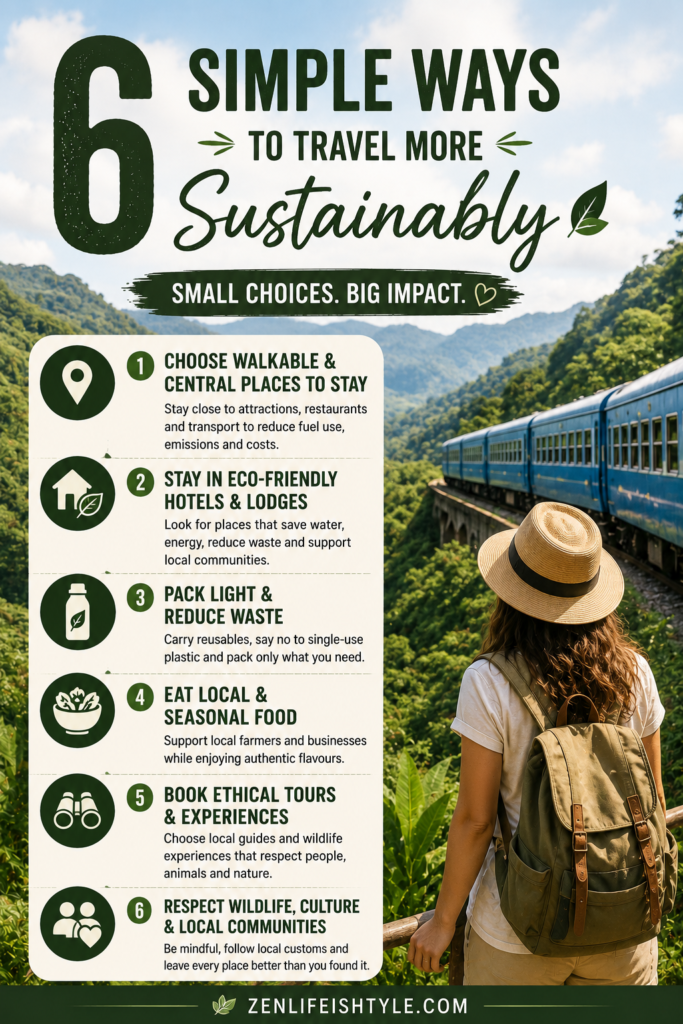
Eco-travel becomes easier when you break it down into simple choices. You do not have to change the whole way you travel overnight. Start with small steps that reduce waste, support local communities, and create a more positive impact on the places you visit.
1. Choose Walkable and Central Places to Stay
One of the easiest sustainable travel tips is to choose accommodation close to the places you want to explore. When your hotel or lodge is near restaurants, markets, beaches, museums, or tour starting points, you use less transport during your trip.
This can help reduce fuel use, carbon emissions, and your overall environmental footprint. It can also save money, especially for budget travelers who want to avoid paying for taxis every day.
Staying in a central area also allows you to walk more, use public transportation, take a bus, or use trains where available. This makes your trip feel more local because you see the destination at street level, not only from a car window.
2. Stay in Hotels and Lodges That Show Real Sustainable Tourism Efforts
Eco-friendly travel is also about choosing hotels and lodges that are making real efforts to reduce their impact on the environment. This does not always mean choosing the most expensive accommodation. It means looking for places that care about water, energy, waste, staff, and the local economy.
A good hotel may use solar power, energy efficient lighting, water-saving systems, refillable toiletries, recycling, or local food suppliers. Some lodges also employ people from nearby communities, support conservation projects, or buy products from local businesses.
Before booking, look beyond beautiful photos. Check if the hotel explains what it does to reduce waste, save water, avoid plastic bottles, and support sustainable development. Real action matters more than simply using the word “green.”
3. Pack Light and Reduce Waste
Packing light is a simple way to travel sustainably. A lighter bag is easier to carry, easier to move around with, and makes it easier to navigate on foot or by bike, while reducing the fuel needed for transport, especially during air travel. Packing only a carry on can also support lighter, lower-impact travel and help you avoid buying unnecessary items during your trip.
A reusable water bottle is one of the easiest things to carry. If potable water is available, you can refill it instead of buying plastic bottles every day. You can also pack toiletry bars, reusable shopping bags, a small food container, and travel-size refillable bottles.
The goal is to reduce waste and avoid single-use plastic where possible. You do not need a perfect zero-waste kit. Even carrying one water bottle and saying no to extra plastic can make a difference over the course of a trip.
4. Eat Local and Seasonal Food
Food is a big part of travel, and it is also a good way to support the local economy. Instead of eating only at international chains, try local restaurants, food markets, family-run cafés, and places that use seasonal ingredients.
Eating local often gives you a better feel for the destination. You get to try real flavours, meet local people, and spend money in businesses that directly support the community.
Plant-forward meals can also be a good option for environmentally conscious travelers. This does not mean everyone has to become vegetarian. It simply means choosing more fruits, vegetables, grains, and local dishes when possible.
5. Book Ethical Tours and Experiences
The tours you choose can have a big impact on the environment, local culture, wildlife, and communities. A responsible tour should respect the destination and not harm the natural world.
Look for small-group tours, local guides, community-based experiences, and companies that clearly explain how they operate. In wildlife destinations, choose tours that keep a safe distance from animals and do not allow feeding, touching, chasing, or disturbing them.
Avoid experiences that use animals only for entertainment, especially when the activity feels unnatural or stressful for the animal. Traveling responsibly means asking simple questions before you book: Who benefits from this tour? Is wildlife respected? Are local guides involved? Is the experience safe and ethical?
6. Respect Wildlife, Culture, and Local Communities
Eco-travel is not only about the environment. It is also about people, culture, and respect. Every destination has its own customs, way of life, and local culture. As travelers, we should enter those spaces with care.
When visiting communities, ask before taking photos of people. Dress respectfully where needed, especially in religious or cultural sites. Learn a few local greetings if you can, and support local businesses by buying from markets, artisans, guides, and small restaurants.
In nature, keep a safe distance from wildlife, stay on marked paths, and avoid leaving rubbish behind. These simple actions help protect the destination for the people who live there and for future travelers who will visit after you.
How to Plan an Eco-Friendly Trip in 5 Simple Steps
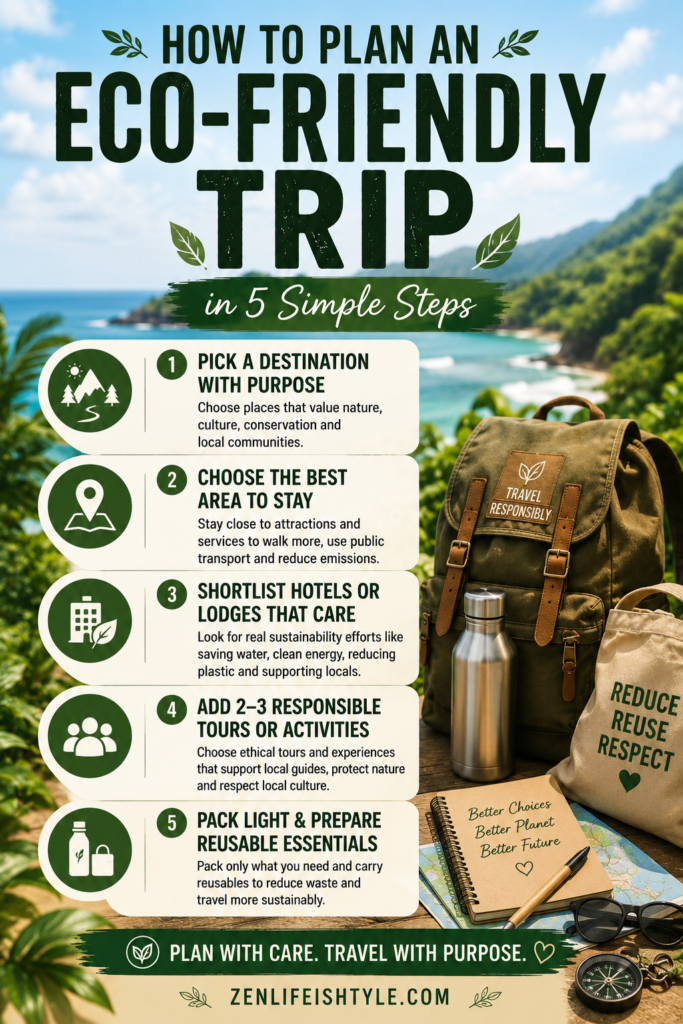
Planning an eco-friendly trip does not have to be complicated. You do not need to spend weeks researching every small detail. The idea is to make a few better choices in advance, such as transport and accommodation, before you travel, so your trip feels enjoyable, responsible, and easier to manage.
1. Pick a Destination with Nature, Culture, or Conservation Value
Start by choosing a destination that offers more than just a hotel stay. Look for places with natural beauty, local culture, national parks, protected areas, community projects, or conservation value.
This could be a beach destination like Mauritius or Seychelles, a safari destination like Zambia, Kenya, or Tanzania, or a cultural destination like Morocco or Egypt. When you choose places that protect the natural world and value local communities, your trip can support sustainable tourism in a more meaningful way.
2. Choose the Best Area to Stay
Before booking accommodation, think carefully about the area. A beautiful hotel is not always the best choice if it is too far from the places you want to explore.
Try to stay closer to beaches, markets, restaurants, museums, parks, or tour starting points. This can help you use less fuel, reduce carbon emissions, and save money on transport. For budget travelers, staying in a central area can also make the trip easier because you can walk more, use a bus, take trains where available, or rely less on private transfers.
3. Shortlist Hotels or Lodges Based on Location and Sustainability
Once you know the best area, start comparing hotels, lodges, or other accommodation. Do not only look at the price or photos. Also check whether the property is making real efforts to travel sustainably.
Look for things like energy efficient systems, solar power, water-saving practices, reduced use of plastic bottles, recycling, local staff, and support for the local economy. Some hotels may also mention how they support sustainable development or work with nearby communities.
Even small details matter. A hotel that provides refillable water, avoids single-use plastic, and works with local suppliers may be a better choice than one that only talks about being “green” without explaining what it actually does.
4. Add 2–3 Responsible Tours or Activities
A good eco-friendly trip is not only about where you sleep. It is also about what you do during the holiday.
Try to book 2–3 tours or activities that support local guides, protect nature, and respect local culture. This could be a walking tour, food market visit, small-group city tour, canoe safari, birding trip, cultural experience, or wildlife activity run by responsible companies.
When choosing tours, ask simple questions. Is the activity contributing positively to local communities or conservation? Does the activity respect wildlife? Is the group size reasonable? Does the company explain how it reduces its impact on the environment? These questions help you avoid harmful experiences and choose activities with a more positive impact.
5. Pack Light and Prepare Reusable Travel Essentials
Before your trip, pack only what you really need. Light luggage is easier to carry, easier to move around with, and can reduce the weight linked to air travel and transport.
A few simple items can also help you reduce waste. Carry a reusable water bottle, a small shopping bag, refillable toiletries, and toiletry bars where possible. These small changes help you avoid single-use plastic, reduce plastic bottles, and travel in a more environmentally conscious way.
Eco-travel is not about doing everything perfectly. It is about planning with a little more care, making smarter choices, and enjoying your destination in a way that respects the planet, the local economy, and the people who call that place home.
Best Eco-Travel Destinations to Start With
If you are new to eco-friendly travel, it helps to start with destinations where nature, local culture, and responsible tourism are already part of the experience. You do not need to travel perfectly. You only need to choose places where your trip can support local communities, protect the natural world, and create a more positive impact.
Mauritius
Mauritius is a good starting point for travelers who want beaches, comfort, and soft adventure. You can choose hotels that focus on water saving, energy efficient systems, local food, and reduced plastic waste. It is also a great destination for exploring local markets, coastal villages, nature parks, and marine activities in a more responsible way.
Zambia
Zambia is one of the best places for travelers who love wildlife and nature. It is known for Victoria Falls, walking safaris, canoe safaris, and national parks like South Luangwa and Lower Zambezi. Many lodges work closely with local communities and conservation projects, which makes Zambia a strong destination for sustainable tourism.
South Africa
South Africa offers a mix of cities, beaches, wine regions, mountains, and safari experiences. In Cape Town, travelers can stay in walkable areas, use public transportation in some parts of the city, eat local food, and book nature-based activities. It is a good choice if you want a trip that combines comfort, culture, wildlife, and outdoor adventure.
Morocco
Morocco is ideal for travelers interested in local culture, history, food, and traditional accommodation. Staying in locally owned riads, shopping from artisans, eating at small restaurants, and booking local guides can help support the local economy. It is also a good destination for travelers who want to explore cities, mountains, and desert landscapes.
Egypt
Egypt is a strong choice for history lovers. From the pyramids to the Nile and ancient temples, the country offers many cultural experiences. Eco-travel in Egypt can be as simple as choosing responsible tour operators, respecting historical sites, reducing waste during tours, and supporting local guides and businesses.
Tanzania
Tanzania is well known for the Serengeti, Ngorongoro Crater, Mount Kilimanjaro, and Zanzibar. It is a great destination for travelers who want to combine safari, beaches, and culture. Choosing responsible safari operators, respecting wildlife, and staying in lodges that support conservation can help reduce your impact on the environment.
Kenya
Kenya is popular for safari holidays, the Masai Mara, cultural experiences, and beach stays along the coast. Eco-conscious travelers can look for camps and lodges that support conservation, employ local staff, and work with nearby communities. Kenya is also a good place to learn how tourism can support both wildlife protection and local livelihoods.
Rwanda
Rwanda is one of Africa’s strongest examples of conservation-focused tourism. Many travelers visit for gorilla trekking, but the country also offers clean cities, national parks, and community-based tourism experiences. Because gorilla trekking is closely linked to conservation and local development, Rwanda is a meaningful destination for responsible travelers.
Seychelles
Seychelles is perfect for travelers who love beaches, marine life, and island hopping. Eco-travel here can include choosing smaller accommodation, respecting marine parks, avoiding single-use plastic, and supporting local businesses. It is a good destination for travelers who want a beautiful island holiday while being more mindful of the environment.
These destinations all offer something different. Some are better for safaris, some for beaches, some for culture, and some for history. The key is to plan your trip carefully, choose responsible accommodation and activities, and travel in a way that respects the planet and the people who live there
Eco-Travel Mistakes to Avoid
Eco-travel is not about getting everything right. It is normal to make mistakes, especially when you are still learning how to travel more responsibly. The good thing is that most eco-travel mistakes are easy to avoid once you know what to look for.
Choosing Remote Hotels Without Checking Transfer Needs and Carbon Footprint
A hotel may look peaceful and beautiful in photos, but if it is very far from restaurants, attractions, beaches, or tour starting points, you may end up using private transfers every day. This can increase your transport costs and add more carbon emissions to your trip.
Before booking accommodation, check the location properly. Look at how far it is from the places you want to visit. Sometimes, staying in a central or walkable area is a better eco-friendly travel choice because you can walk more, use public transportation, take a bus, or reduce unnecessary car journeys.
Believing Every “Green” Claim
Many hotels and tour companies use words like “eco,” “green,” or “sustainable,” but not all of them show real action. Some may only ask guests to reuse towels, while still using plastic bottles, wasting water, or ignoring the local community.
Do not believe every claim immediately. Look for clear examples such as solar power, water-saving systems, reduced single-use plastic, recycling, local staff, local food suppliers, or support for conservation and sustainable development. A truly responsible business should be able to explain what it is doing.
Overpacking
Packing too much makes travel harder and can also increase your environmental footprint, especially during air travel. Heavy luggage means more weight, more hassle, and sometimes extra baggage fees.
Try to pack only what you really need. Choose clothes you can mix and match, carry refillable toiletries, and avoid packing items “just in case” if you are unlikely to use them. Light packing can save money, make moving around easier, and help you travel more sustainably.
Booking Unethical Wildlife Experiences
Wildlife experiences can be amazing, but not all of them are responsible. Be careful with activities that allow touching, feeding, chasing, riding, or taking close-up photos with wild animals. These experiences may look fun, but they can harm animals and encourage bad tourism practices.
A better choice is to book tours that keep a safe distance from wildlife and respect the natural world. Choose local guides, small-group tours, national parks, and responsible operators who follow clear rules. Ethical wildlife tourism should protect animals, not use them only for entertainment.
Ignoring Local Customs
Sustainable travel is also about respecting people and local culture. Every destination has its own traditions, dress codes, greetings, food habits, and social rules. Ignoring these customs can make local people feel disrespected.
Before you travel, learn a little about the place you are visiting, including local tipping or other services customs. Dress respectfully where needed, ask before taking photos of people, and support local businesses instead of only spending money in large international places. These small actions help you connect better with the destination and support the local economy.
Creating Too Much Plastic Waste
Plastic waste is one of the easiest things to reduce while travelling. Buying plastic bottles every day, accepting plastic bags, using disposable cutlery, and taking unnecessary packaging can quickly create a lot of waste during one trip.
Carry a reusable water bottle where safe refills are available. You can also take a reusable shopping bag, toiletry bars, and small containers for snacks. You do not need to be perfectly zero-waste. Even reducing single-use plastic little by little can make your trip more environmentally conscious.
Final Thoughts
Eco-travel is not about perfect travel. It is about better decisions.
You may still fly. You may still stay in a comfortable hotel. You may still enjoy beautiful resorts, guided tours, and special experiences. The difference is that you become more aware of the choices you make along the way.
Choosing a walkable area, carrying a reusable water bottle, supporting local businesses, eating local food, reducing single-use plastic, and booking ethical tours are all simple ways to travel more responsibly.
Small actions may not feel like much on their own, but together they can reduce waste, lower your carbon footprint, support the local economy, and protect the natural world. Eco-friendly travel is about enjoying your holiday while showing respect for the place, the people, and the planet.
You do not need to do everything perfectly. Start with one or two better choices on your next trip, and build from there. This guide is part of our growing eco-travel section on Zen Life Ishtyle. Soon, you will also find detailed guides on Africa travel, sustainable hotels, zero-waste packing, and responsible safari planning.
FAQs
Is eco-travel expensive?
Eco-travel does not always have to be expensive. In fact, some sustainable travel choices can help you save money. Staying in a central area can reduce transport costs, and avoiding a flight when practical can also lower your environmental impact while cutting expenses. Using public transportation, walking more, carrying a reusable water bottle, and eating at local markets can also be cheaper than relying on taxis, bottled drinks, and tourist restaurants every day.
Some eco-lodges and sustainable hotels can be expensive, especially in remote safari or island destinations. But eco-friendly travel is not only about luxury lodges. Budget travelers can still travel sustainably by choosing local guesthouses, reducing waste, supporting local businesses, and booking responsible tours.
How do I know if a hotel is truly eco-friendly?
Do not only look for words like “green” or “eco” on a hotel website. Look for real examples of what the hotel is doing.
A truly eco-friendly hotel may mention water-saving systems, solar power, energy efficient lighting, recycling, refillable water stations, reduced use of plastic bottles, local staff, local food suppliers, or support for nearby communities.
You can also check if the hotel has recognised sustainability certifications. But even if a small hotel does not have certification, it may still be doing good work. The important thing is to look for clear actions, not just nice marketing words.
Can luxury travel be eco-friendly?
Yes, sustainable travelers can still choose luxury options when travel is planned responsibly. A high-end lodge or resort can still reduce waste, save water, use renewable energy, employ local staff, support conservation, and buy from local suppliers.
The key is to choose luxury accommodation and experiences that show real sustainability efforts. A luxury trip should not harm wildlife, waste resources, or ignore local communities. When done well, luxury travel can support sustainable tourism, conservation projects, and local economic development.
What is the easiest way to start travelling more sustainably?
The easiest way to start is by making small changes. You can begin by carrying a reusable water bottle, avoiding single-use plastic, packing lighter, choosing accommodation in a walkable area, eating at local restaurants, and booking tours with responsible local guides.
You do not need to change everything at once. Pick two or three habits for your next trip. Over time, these small choices will become normal, and travelling responsibly will feel much easier.