Choosing the best time for an African safari is not always as simple as picking a month on the calendar. The ideal time depends on where you want to go, what wildlife you hope to see and the type of safari experience you are looking for. Whether your dream is witnessing the Great Migration in East Africa, enjoying exceptional wildlife viewing in Southern Africa, or trekking through misty forests in search of mountain gorillas, timing can have a major impact on your trip.
Many travellers searching for the best time of year for safari in Africa expect a single answer, but the reality is more complicated. Africa is a vast continent with different climates, ecosystems and wildlife patterns. East Africa and Southern Africa follow different weather cycles, meaning that a fantastic safari month in Kenya or Tanzania may not be the best time to visit Botswana, Zambia or South Africa.
Some months are famous for dramatic wildlife events such as the Great Migration, while others are ideal for spotting newborn animals during the calving season. Certain periods attract bird lovers hoping to see migratory species, while budget-conscious travellers may prefer months with fewer crowds and lower prices. Gorilla trekking in Uganda and Rwanda also has its own seasonal considerations that differ from traditional game-drive safaris.
If this is your first African safari, understanding these seasonal differences can help you choose the right destination and get the most from your trip. If you are still deciding where to go, our Ultimate African Safari Guide provides a complete overview of safari planning, while our Best Safari Countries in Africa guide compares the continent’s top safari destinations.
In this guide, we break down the best time to go on safari by season, month and safari destination, helping you choose the perfect time for your African adventure.
What Is the Best Time of Year for Safari in Africa?
For most travellers, the best time of year for safari in Africa is usually June to October. This period coincides with the dry season across many of the continent’s most popular safari destinations, particularly in East and Southern Africa. During these months, wildlife viewing is often at its best because animals gather around rivers, waterholes and other permanent water sources.
The dry season also makes game viewing easier. Vegetation becomes thinner, animals are easier to spot and safari vehicles can access more areas of the parks. Clear skies, pleasant weather and fewer insects add to the overall safari experience, which is why this period is considered peak season in many countries.
However, the best time for safari is not always the same for every traveller. The green season has its own advantages. Landscapes become lush and beautiful after the rains, many animals give birth during the calving season, and bird watching is often excellent as migratory birds arrive from other parts of the world. Prices can also be lower, making the rainy season attractive for travellers looking for better value.
The right time to visit depends on your wildlife goals, budget and preferred safari experience.
Goal | Best Time |
|---|---|
First safari | June–October |
Great Migration | July–September |
Calving season | January–March |
Gorilla trekking | June–September & December–February |
Bird watching | November–April |
Budget safari | Green season |
While June to October is generally considered the best time for an African safari, there is no single perfect month for every destination. Some travellers come specifically for the Great Migration, others for newborn animals, gorilla trekking or bird watching. Understanding the seasons will help you choose the safari that best matches your interests.
African Safari Seasons Explained
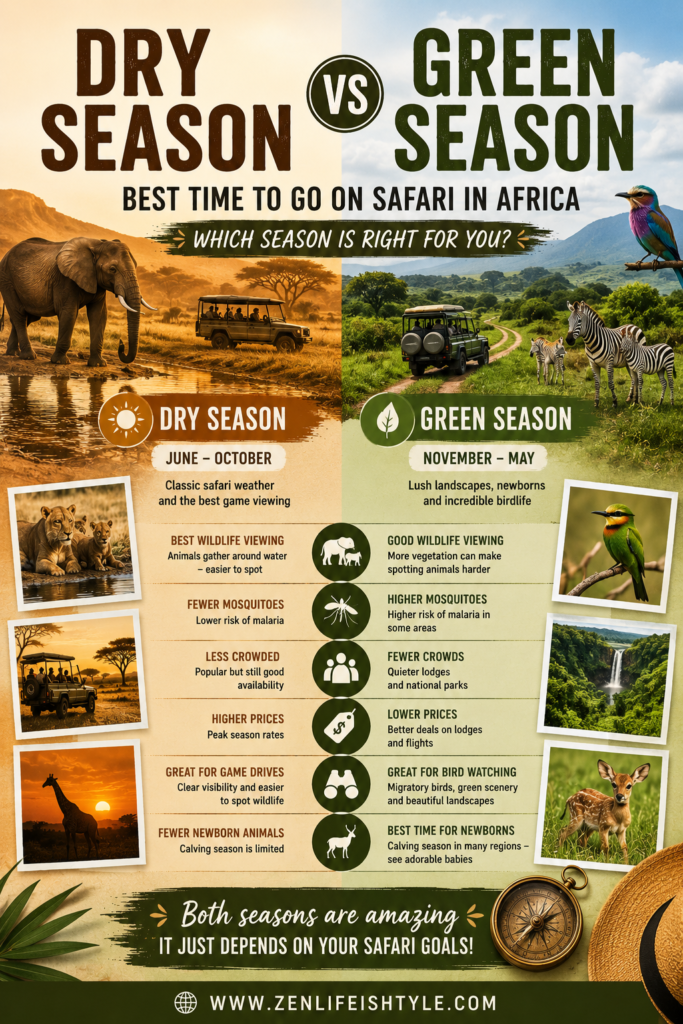
Dry Season: June to October
The dry season, from June to October, is usually the most popular time to go on an African safari. In many safari destinations, this is also the peak season because wildlife viewing is easier and travel conditions are more reliable.
During the dry months, water becomes harder to find in the bush. As a result, animals often gather around rivers, watering holes and permanent water sources. This makes game viewing more predictable because you have a better chance of seeing elephants, buffalo, antelopes, predators and other wildlife near water.
The bush also becomes thinner during this period. With less vegetation, it is easier to spot animals from a safari vehicle. Clearer skies, fewer insects and cooler mornings can also make the safari experience more comfortable.
Pros of the dry season:
Excellent wildlife viewing
Animals congregate around water sources
Easier game viewing because vegetation is thinner
Better road access in many parks
Fewer insects compared with the rainy season
Good for first-time safari travellers
Cons of the dry season:
Higher prices in peak season
Popular lodges and camps book early
Some parks can feel busier
Landscapes may look dry and dusty
Later months like September and October can be very hot in some areas
Green Season: November to April
The green season, from November to April, is the wetter period in many African safari destinations. It is also called the wet season or rainy season, although this does not usually mean it rains all day every day.
During this time, the bush becomes fresh and green. The dry landscapes change into a lush green landscape, rivers and waterholes fill up, and the scenery can be beautiful for photography. This is also a good time to see newborn animals in some areas, along with migratory birds that arrive during the rainy months.
Pros of the green season:
Beautiful green landscapes
Good bird watching
Migratory birds are more active
Newborn animals in some safari areas
Fewer crowds
Lower prices in many lodges and camps
Softer light and dramatic skies for photography
Cons of the green season:
Wildlife can be harder to spot because vegetation is thicker
Animals may spread out because water is available everywhere
Some roads can become muddy
Some remote camps may close
Rain can affect activities and transfers
More insects in some areas
Shoulder Season
The shoulder season can be one of the best times to plan an African safari if you want a balance between good wildlife, fewer crowds and better prices. These are the months that sit just before or just after the busiest peak safari period.
In many safari destinations, May, early June, October and early November can offer excellent value. Wildlife viewing can still be strong, but lodges may be less full and prices may be better than peak season.
Pros of the shoulder season:
Fewer crowds than peak season
Better prices in some lodges and camps
Good wildlife viewing
More peaceful safari experience
Easier availability than peak months
Cons of the shoulder season:
Weather can be less predictable
Some areas may still be wet or very hot
Wildlife movement can vary by destination
Some camps may not be fully open in remote areas
For many travellers, shoulder season is the sweet spot. You may not get the absolute peak safari conditions, but you can still enjoy a strong safari experience with better value and fewer vehicles.
Best Time for Safari in East Africa
East Africa is one of the most famous safari regions in the world, especially for travellers who want the Great Migration, open plains, big cats and classic game drives. The main safari countries here are Kenya and Tanzania, while Uganda and Rwanda are best known for gorilla trekking and forest-based wildlife experiences.
For Kenya and Tanzania, the best safari months often depend on the movement of the migration and the type of wildlife experience you want. The dry season, from around June to October, is usually excellent for wildlife viewing because animals are easier to spot and the bush is less thick.
In Kenya, the Masai Mara is at its most famous during the migration months, especially from July to September, when many travellers hope to see river crossings and large herds moving through the plains. This is also peak season, so prices are higher and good camps can book early. For more details, read our Kenya Safari Guide.
In Tanzania, Serengeti National Park offers different migration highlights throughout the year. The southern Serengeti is especially important during the calving season from January to March, while the northern Serengeti is popular later in the year when herds move towards the Mara River. If Tanzania is high on your list, our Tanzania Safari Guide explains how to choose the right route by season.
For Uganda and Rwanda, the best time is usually linked to gorilla trekking rather than open-plain game drives. The drier months, especially June to September and December to February, are often preferred because forest trails can be easier to walk. Gorilla trekking can still happen outside these months, but rain can make the experience more slippery and physically demanding.
Choose East Africa if you want the Great Migration, Masai Mara, Serengeti National Park, big cats, gorilla trekking and a world-class first safari experience.
Best Time for Safari in Southern Africa
Southern Africa is usually at its best for safari during the dry season, especially from June to September. This period is excellent for wildlife viewing in countries like South Africa, Botswana, Zambia, Zimbabwe and Namibia.
During the dry months, water becomes harder to find in the bush. This means animals gather around rivers, waterholes and permanent water sources. At the same time, the vegetation thins out, making it easier to spot wildlife during game drives and guided activities.
In South Africa, the dry winter months are especially good for Kruger National Park and nearby private reserves. In Botswana, places like the Okavango Delta and Chobe National Park are excellent during the dry season, with strong game viewing and animals gathering near water. If Botswana is high on your list, our Botswana Safari Guide can help you compare the Okavango Delta, Chobe and Moremi.
In Zambia, the dry season is ideal for walking safaris in South Luangwa and river-based safari experiences in Lower Zambezi. Wildlife is easier to see as animals move closer to rivers and lagoons. For more details, read our Zambia Safari Guide.
Zimbabwe also offers strong dry-season game viewing in Hwange and Mana Pools, while Namibia is excellent from around June to September because animals gather around Etosha’s waterholes.
This is also a good period if you want to combine safari with Victoria Falls, especially later in the dry season when activities around the Zambezi River may be easier to plan. Our Victoria Falls Travel Guide can help you decide how to include the falls before or after safari.
Best Time for the Great Migration
The Great Migration is one of the most famous wildlife events in Africa, but it is important to understand that it is not a single event that happens in one place. The wildebeest migration is a year-round movement of herds through the Serengeti-Mara ecosystem, mainly between Serengeti National Park in Tanzania and Kenya’s Maasai Mara.
The best time to see the migration depends on what part of the journey you want to experience. Some travellers want the calving season in the southern Serengeti, while others dream of the dramatic Mara River crossings near the northern Serengeti and the Masai Mara.
Period | Location |
|---|---|
Jan–Mar | Southern Serengeti, especially for calving season |
Apr–Jun | Central and Western Serengeti |
Jul–Aug | Mara River crossings |
Sep–Oct | Northern Serengeti and Masai Mara |
Nov–Dec | Herds begin moving south again |
The river crossings are often the most dramatic part of the Great Migration, but they are never guaranteed on a specific day. Wildlife movement depends on rainfall, grazing, water levels and natural herd behaviour. This is why it helps to choose the right region for your travel month instead of only chasing one exact event.
For the migration in Kenya, read our Kenya Safari Guide. For the Serengeti side of the migration, read our Tanzania Safari Guide.
Best Time for Gorilla Trekking
The best time for gorilla trekking in Africa is usually during the drier months, especially from June to September and December to February. These periods are popular because forest trails are often easier to walk, and the trekking conditions can feel more comfortable.
The two main countries for gorilla trekking are Uganda and Rwanda. In Uganda, many travellers visit Bwindi for mountain gorillas, while in Rwanda, Volcanoes National Park is the main gorilla trekking destination.
Gorilla trekking can happen throughout the year, but rain can make the trails muddy, slippery and more physically demanding. This does not mean the experience is bad in wetter months, but travellers should be prepared for tougher walking conditions.
January can be especially good for gorilla trekking because it falls within one of the drier periods. It can be a strong month if you want a forest wildlife experience before or after a more traditional safari elsewhere in Africa.
Choose the drier months if you want easier trails, better comfort and a smoother trekking experience. Choose the wetter months if you do not mind mud, want fewer travellers and are comfortable with more challenging forest conditions.
Best Time for Calving Season and Newborn Animals
The best time for calving season in Africa is usually from January to March, especially in the southern Serengeti in Tanzania. This is one of the most exciting times to visit if you want to see newborn animals, young animals and a very active safari landscape.
During this period, huge herds of wildebeest gather on the southern Serengeti plains, where the grass is fresh and rich after the rains. This is also when nearly half a million wildebeest calves can be born within a short period. Seeing so many newborn animals in one area can be a very special wildlife experience.
Calving season is not only about cute baby animals. It also brings strong predator activity. Lions, cheetahs, hyenas and other predators follow the herds, which can make game drives very dramatic. The open plains also make it easier to watch the interaction between the herds, young animals and predators.
This season is especially good for travellers who want something different from the famous Mara River crossings. The river crossings are dramatic, but calving season shows a softer and more emotional side of the Great Migration, with new life, wide open plains and powerful wildlife moments.
Choose January to March if you want newborn animals, active predators, the southern Serengeti and a more seasonal safari experience that feels full of movement and new life.
Best Time for Bird Watching in Africa
The best time for bird watching in Africa is often different from the best time for a traditional big-game safari. While many safari travellers prefer the dry season for easier wildlife viewing, birders often enjoy the green season and wet season, when the landscapes are fresh and many migratory birds arrive.
In many safari destinations, the birding season becomes especially rewarding from November to April. During these months, resident birds are often more colourful, breeding activity increases, and migratory species can be seen in wetlands, forests, rivers and open plains. The scenery is also greener, which makes photography beautiful.
October and November can be excellent transition months in some areas. October is still dry and hot in many safari regions, but bird activity can begin to increase as the season changes. By November, the first rains often bring fresh growth, insects and more bird movement.
Tanzania is a good destination for bird watching, especially around wetlands, lakes, forests and safari areas such as the Serengeti and other national parks. Zambia is also excellent for birders, with rich habitats in places like South Luangwa, Lower Zambezi, Kafue and seasonal wetlands.
Birders often prefer months with greener landscapes, more insects, active breeding displays and migratory birds, even if general game viewing can be a little harder. This is why the best safari month for a photographer, birder or repeat safari traveller may not be the same as the best month for a first-time safari visitor.
Best Time to Visit South Africa for Safari and Cape Town
South Africa is a great choice if you want to combine a classic safari with city life, beaches, food, wine and coastal scenery. Many travellers plan a safari in Kruger National Park and then spend a few days in Cape Town, which makes South Africa one of the easiest destinations for a first African safari.
The best time depends on which part of South Africa you are visiting. For safari, the dry winter months from May to September are usually best for Kruger National Park and nearby private game reserves. During this period, vegetation is thinner, animals gather around water sources and game viewing is easier.
For Cape Town, the best time is usually from November to March, when the weather is warmer and better suited for beaches, outdoor dining, scenic drives, vineyards and Table Mountain views.
Region | Best Time |
|---|---|
Kruger National Park | May–September |
Cape Town | November–March |
This means the perfect South Africa trip depends on your priorities. If safari is your main focus, choose the dry months around Kruger. If Cape Town is the highlight, the warmer summer months are more attractive. For a balanced trip, shoulder months such as September, October or November can work well, especially if you want both wildlife and pleasant city weather.
Many travellers combine safari with Cape Town because the two experiences are so different. You can start with game drives in Kruger, then fly south for beaches, wine estates, restaurants and coastal scenery. If you are planning that part of your trip, read our Where to Stay in Cape Town guide to choose the best area for your travel style.
Best Time to Visit Botswana
The best time to visit Botswana for safari is usually from July to October, when the dry season is at its strongest and game viewing is excellent. This is one of the top periods for wildlife in the Okavango Delta and Chobe National Park, as animals gather around rivers, floodplains and permanent water sources.
Botswana is especially famous for elephants, and Chobe is often described as one of Africa’s great elephant destinations. Large herds can often be seen near the Chobe River during the dry months, which is why many travellers think of this region as an elephant capital of Southern Africa.
Safari Goal | Best Time |
|---|---|
Best game viewing | July–October |
Okavango Delta safari | July–October |
Chobe elephants | July–October |
Better value and fewer crowds | November |
Bird watching | November–April |
Botswana November can also be a very interesting time to travel. It sits just after the main dry season and often brings the first rains. The landscape begins to change, birdlife improves and the crowds can be lower than during peak safari months.
November may not always offer the same dry-season concentration of animals around water, but it can be excellent for travellers who want lower prices, fewer crowds, dramatic skies and excellent birdlife. It is also a good month for photographers who enjoy softer light and greener scenery.
Choose July to October if your main goal is classic dry-season wildlife viewing. Choose November if you want better value, fewer vehicles and a more seasonal safari experience as Botswana moves from dry season into green season. For more planning tips, read our Botswana Safari Guide.
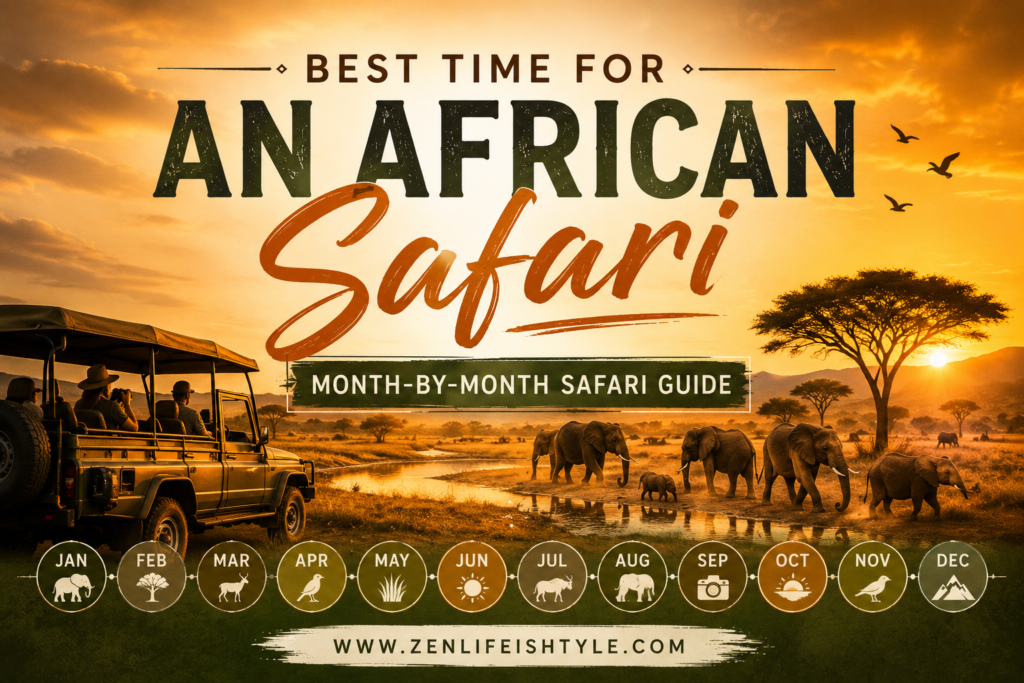
Month-by-Month African Safari Calendar
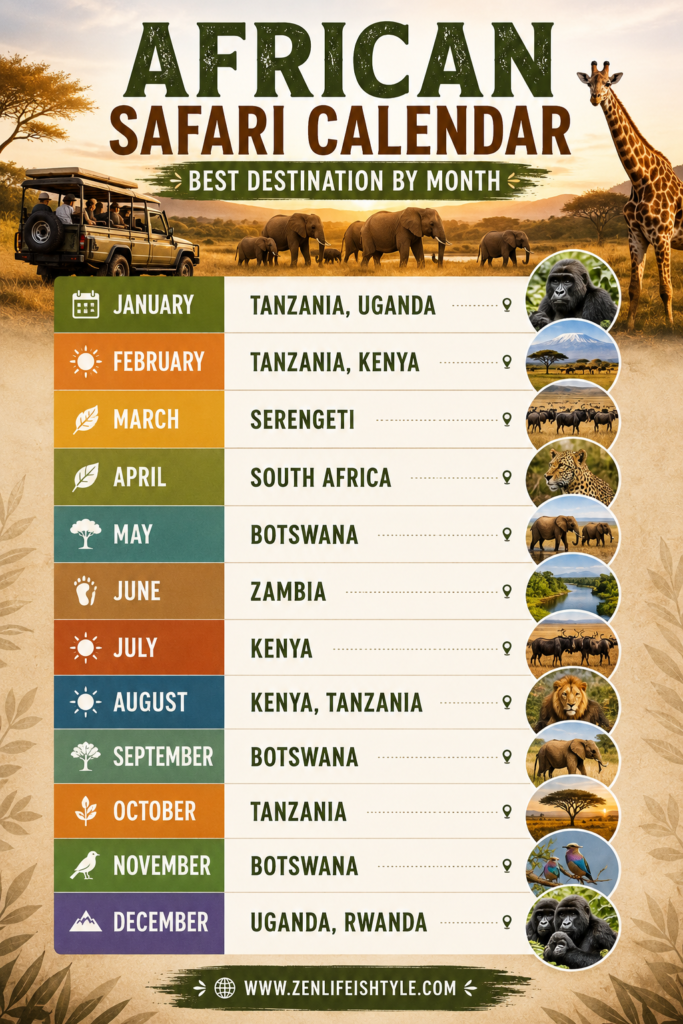
This month-by-month African safari calendar gives you a quick idea of where to go and why. It is useful if you are still deciding the best time to go on safari and want to match your travel month with the right destination.
Month | Best Destination | Why |
|---|---|---|
January | Tanzania, Uganda | Calving season begins in Tanzania, and January can be good for gorilla trekking in Uganda. |
February | Tanzania, Kenya | A great month for newborn animals, especially around the southern Serengeti and other East African safari areas. |
March | Serengeti | The migration is active in Tanzania, with herds still moving through the Serengeti ecosystem. |
April | South Africa | Shoulder season in some areas, with fewer crowds and better value before peak safari months. |
May | Botswana | The dry season begins, and wildlife viewing starts improving as landscapes slowly dry out. |
June | Zambia | A strong month for walking safaris as the dry season begins and camps open in key safari areas. |
July | Kenya | One of the best months for travellers hoping to see the Mara River crossings and the Great Migration. |
August | Kenya, Tanzania | Peak Great Migration season, especially around Kenya’s Masai Mara and the northern Serengeti. |
September | Botswana | Excellent dry-season wildlife viewing, with animals gathering near water in places like Chobe and the Okavango Delta. |
October | Tanzania | Excellent game viewing, with dry conditions and strong wildlife activity in many safari areas. |
November | Botswana | Lower prices, fewer crowds, first rains and excellent birdlife as the green season begins. |
December | Uganda, Rwanda | A good time for gorilla trekking, especially during the drier period from December to February. |
This table is a helpful starting point, but safari timing always depends on your exact destination, travel style and wildlife goals. For example, July and August are excellent for the Great Migration, while January to March is better for calving season. November may not be peak safari season everywhere, but it can offer better value, fewer crowds and rewarding bird watching.
Best Time to Go on Safari for First-Time Travellers
If you are planning your first African safari, it is usually best to choose a destination and season that offer easy wildlife viewing, reliable weather and a classic safari experience. For most first-time safari travellers, the dry season is the safest choice because animals are easier to find, vegetation is thinner and game drives are more comfortable.
The best safari destinations for first-time travellers are often Kenya, Tanzania and South Africa. These countries have well-established safari routes, good lodge options, experienced guides and excellent wildlife viewing.
Kenya: July to September
Kenya is a great choice for a first safari, especially if you want to visit the Masai Mara during the Great Migration season. From July to September, wildlife viewing is excellent, the skies are often clear and the safari experience feels very classic.Tanzania: June to October
Tanzania is ideal if you want big landscapes, the Serengeti, Ngorongoro Crater and a strong chance of seeing many animals on one trip. The dry season from June to October is one of the best times for game viewing, with animals easier to spot across the plains.South Africa: May to September
South Africa is one of the easiest safari destinations for beginners. Kruger National Park and nearby private reserves offer excellent wildlife viewing during the dry winter months. It is also a good choice if you want to combine safari with Cape Town, beaches, food and wine.
For a first safari, choose a dry-season trip if you want clear skies, easier game viewing and a more predictable safari experience. Once you have done your first African safari, you may want to return during the green season, calving season or birding months for a different side of Africa.
When Should You Avoid Going on Safari?
There are very few times when you must completely avoid going on safari, but there are some months that need more careful planning. In certain destinations, heavy rains can affect road conditions, wildlife visibility and camp operations.
In some East African safari areas, the long rains usually fall between March and May. During this period, some roads can become muddy, game viewing may be less predictable and visibility can be reduced because the vegetation is thicker. This does not mean a safari is impossible, but it may not be the best choice for a first-time safari traveller who wants easy wildlife viewing and clear conditions.
Remote safari camps in some countries may also close during the heaviest rainy months. This is especially common in areas where access depends on seasonal roads, small aircraft or river conditions. If you are travelling during the wet season, it is important to check which camps are open and whether certain activities are still operating.
That said, the rainy season is not always a bad time to travel. It can bring lower prices, fewer crowds, green landscapes, newborn animals and excellent bird watching. The key is to choose the right destination for the month you want to travel, rather than avoiding safari altogether.
For most travellers, the months to approach with extra care are the heavy rain periods, especially March to May in some East African areas and the peak wet months in remote Southern African parks. With good planning, even these months can still offer rewarding safari experiences.
How to Choose the Best Time for Your Safari
The best time for your safari depends on what you want to experience most. Some travellers want dramatic wildlife action, while others want lower prices, greener landscapes, bird watching or a quieter safari with fewer vehicles. Before choosing your travel dates, think about your main safari goal.
If you want… | Best Time to Go |
|---|---|
Great Migration | July–September |
Gorilla trekking | January/February or June–September |
Lowest prices | Green season |
Bird watching | November–April |
Walking safaris | Zambia dry season |
Victoria Falls + safari | August–October |
Choose July to September if the Great Migration is your dream, especially if you want to visit Kenya’s Masai Mara or the northern Serengeti. Choose January to March if you are more interested in calving season and newborn animals in Tanzania.
For gorilla trekking, January, February and the dry months from June to September are often better because forest trails can be easier to walk. For bird watching, the green season from November to April is usually more rewarding, with migratory birds, breeding activity and lush scenery.
If budget is important, the green season can offer better value, fewer crowds and lower lodge prices in many destinations. It may not always be the easiest time for game viewing, but it can be beautiful and peaceful.
For walking safaris, Zambia is one of the best destinations, especially during the dry season when conditions are better and wildlife gathers closer to rivers and lagoons. For travellers who want to combine Victoria Falls + safari, the period from August to October can work well because safari conditions are strong and the falls can still be included as part of a Southern Africa itinerary.
Your budget will also affect the best time to travel, so it is helpful to read our How Much Does an African Safari Cost? guide before booking. And if you want to add the falls to your safari, our Victoria Falls Travel Guide will help you plan where to stay, what to do and when to go.
Final Thoughts
The best overall safari months are usually June to October, especially for travellers who want reliable wildlife viewing, clear skies and classic dry-season game drives. During this period, animals are easier to spot, vegetation is thinner and many safari destinations offer excellent conditions.
However, the best time for an African safari is not the same everywhere. East Africa and Southern Africa follow different seasonal patterns, so the right month depends on the country and experience you choose. Kenya and Tanzania are strongly linked to the Great Migration, while Botswana, Zambia, South Africa, Zimbabwe and Namibia often shine during the dry months when animals gather near water.
The Great Migration also has different highlights throughout the year. January to March is excellent for calving season in the southern Serengeti, while July to September is popular for the Mara River crossings and migration activity around Kenya’s Masai Mara and the northern Serengeti.
The green season should not be ignored either. It can offer excellent value, fewer crowds, lush landscapes, newborn animals and beautiful photography conditions. Birders and photographers may actually prefer these months because of migratory birds, dramatic skies and greener scenery.
In the end, the best time for safari depends on your wildlife goals, budget and travel style. A first-time traveller may prefer the dry season, while a birder, photographer or repeat safari traveller may enjoy a quieter green-season trip.
The best time to go on safari is not always the most popular month—it is the month that matches the wildlife experience you want most.
You are right. Here is the corrected FAQ section with clear link insertion placeholders so you can add your WordPress links easily.
FAQs About the Best Time for an African Safari
What month is best for an African safari?
For most travellers, the best months for an African safari are usually June to October. This is the dry season in many major safari destinations, so animals are easier to see, vegetation is thinner and wildlife often gathers around rivers and waterholes. However, the best month depends on where you are going. July to September is excellent for the Great Migration, while January to March is better for calving season in Tanzania.
For a complete overview of planning your first safari, read our guide here: [Ultimate African Safari Guide – INSERT LINK].
How much does a 10 day African safari cost?
A 10 day African safari can cost anywhere from around $1,500 to $15,000+ per person, depending on the country, accommodation style, season and transport. A budget safari may average around $150–$250 per person per day, while mid-range safaris often fall around $350–$600 per person per day. Luxury safaris can easily cost $750–$1,500+ per person per day, especially in exclusive safari areas or high-end private reserves.
International flights, visas, travel insurance, tips and optional activities may not be included, so always check what is covered before booking.
For a detailed breakdown, read our full guide here: [How Much Does an African Safari Cost? – INSERT LINK].
Which African country is best for safaris?
The best African country for safaris depends on your travel style. Kenya is excellent for first-time safari travellers and the Masai Mara. Tanzania is best for the Serengeti, Ngorongoro Crater and the Great Migration. Botswana is ideal for luxury safaris, the Okavango Delta and Chobe elephants. South Africa is one of the easiest safari countries for beginners, especially with Kruger National Park. Zambia is best for walking safaris and remote wilderness.
There is no single “best” safari country for everyone. The right choice depends on your budget, wildlife goals, comfort level and whether you want a classic, luxury, family-friendly or adventurous safari.
To compare the top safari destinations, read: Best Safari Countries in Africa.
You may also find these country guides helpful: Kenya Safari Guide, Tanzania Safari Guide, Botswana Safari Guide and Zambia Safari Guide.
Is 70 too old to go on safari?
No, 70 is not too old to go on safari. Many travellers in their 60s, 70s and even older enjoy African safaris every year. The key is choosing the right type of safari. A comfortable lodge-based safari with game drives, short transfers and good medical planning is usually more suitable than a very active walking safari or remote camping trip.
Older travellers should speak to their doctor before travelling, check malaria requirements, choose a reputable safari operator and tell the lodge about any mobility or health concerns in advance. Private vehicles, fly-in safaris and lodges with fewer stairs can make the trip much easier and more enjoyable.
For more planning tips, read: Ultimate African Safari Guide.
What is the safest African country to visit for safari?
For a classic safari, Botswana and Namibia are often considered among the safer and more peaceful safari destinations in Africa. Botswana is especially popular for high-quality safaris in the Okavango Delta, Chobe National Park and Moremi, while Namibia is known for Etosha National Park and wide open desert landscapes.
South Africa is also a very popular safari destination with excellent infrastructure, but travellers should be more careful in big cities and follow local safety advice. Kenya, Tanzania and Zambia are also well-established safari destinations when trips are planned through reputable operators and trusted lodges.
Safety can change, so travellers should always check current travel advisories before booking and follow the guidance of their safari guide once in the bush.