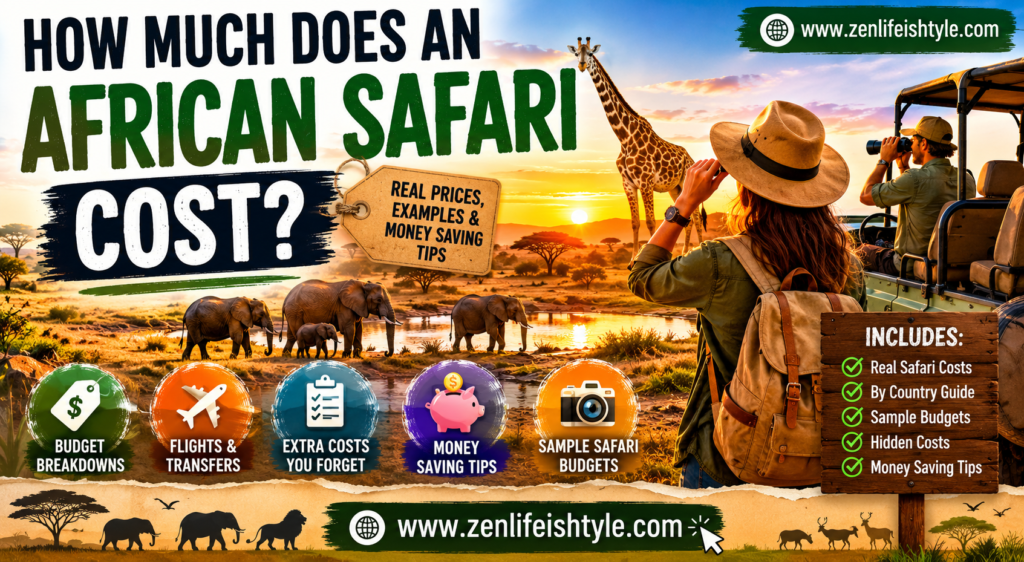
An African safari cost can vary a lot depending on where you go, when you travel, how long you stay and the type of safari lodge or camp you choose. A simple group safari in a national park will cost much less than a fly-in luxury safari staying at remote camps with private guides, private concessions and all-inclusive service.
As a general guide, a budget safari may start from a few hundred dollars per person per day, while luxury safaris can cost thousands of dollars per person per day. The final safari cost depends on many things, including the country, season, accommodation style, park fees, transfers, domestic flights and whether international flights are included or excluded.
Safari prices also change depending on the region. In East Africa, places like Kenya and Tanzania are famous for the Masai Mara, Serengeti and the Great Migration, but park fees and peak-season demand can increase costs. In Southern Africa, destinations like South Africa, Botswana, Zambia and Zimbabwe offer very different safari styles, from self-drive options near Kruger to high-end lodges in the Okavango Delta.
This guide will help you understand the real cost of an African safari so you can plan your safari budget with more confidence. You will learn what affects safari prices, how budget, mid-range and luxury safaris compare, which countries are more affordable, which ones are more expensive, and how to choose the best safari experience for your travel style.
If you are still comparing safari destinations, our Best Safari Countries in Africa guide can help you decide which country fits your budget and travel style.
How Much Does an African Safari Cost?
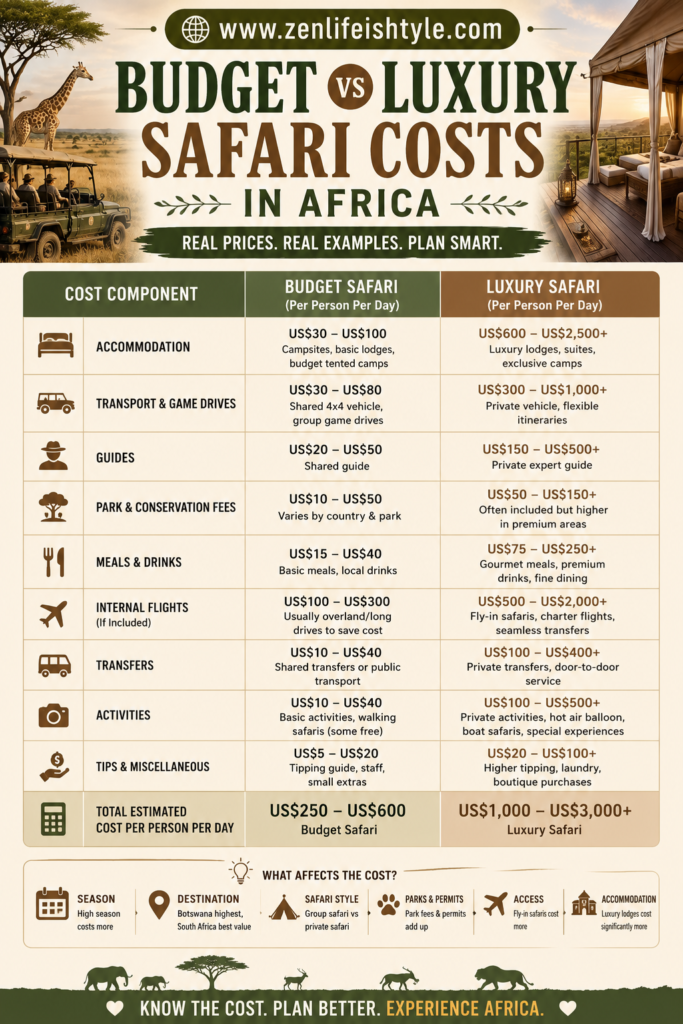
So, how much does an African safari cost? As a practical guide, an African safari cost can range from around US$250 to US$3,000+ per person per day, depending on the country, season, lodge style, transport and level of comfort.
For a full safari trip, many travellers spend around US$5,000 to US$15,000 per person for a complete African safari holiday. This may be higher or lower depending on whether the price includes domestic flights, park fees, transfers, premium lodges or international flights. Some safari packages are quoted excluding international flights, so always check this carefully before comparing prices.
Here is a simple way to understand the average African safari cost by travel style:
Safari Style | Approximate Cost Per Person Per Day | What to Expect |
|---|---|---|
Budget camping safari | US$190–250+ | Basic camps, shared vehicles, simple meals |
Budget safari | From around US$250+ | Group tours, shared game drives, simple lodges |
Mid-range safari | US$400–1,000+ | Comfortable lodges or tented camps, better locations |
Luxury safari | US$1,000–2,500+ | Luxury lodges, private reserves, better service |
Ultra-luxury safari | US$3,000–5,000+ | Remote camps, fly-in access, private guides, premium lodges |
For a wider overview of safari planning, wildlife, countries and travel styles, read our Ultimate African Safari Guide.
The lower end usually applies to budget safaris, group tours, camping safaris, self-drive options or simple lodges in easier-to-access areas. The higher end is more common for luxury safaris, private concessions, fly-in camps, private guides, premium lodges and remote safari destinations.
The important thing to remember is that safari prices are not only about the room. You are often paying for wildlife access, expert guides, game drives, meals, park fees, conservation fees, lodge staff, vehicles and complicated logistics in remote areas.
So before choosing the cheapest option, compare what is included. A safari that looks expensive may actually include most meals, activities, guides and transfers, while a cheaper safari may leave out important costs that you will pay later.
What Is Included in African Safari Prices?
Safari prices can look expensive at first, but many safari packages include much more than just a room at a safari lodge. In many cases, you are paying for accommodation, meals, guided game drives, park fees, conservation fees, transfers, guides and access to remote wildlife areas.
This is why it is important to check what is included before comparing prices. One safari package may seem expensive but include almost everything. Another may look cheaper but exclude park fees, road transfers, domestic flights or extra activities, which can increase the final cost later.
What is included also depends on the country, lodge and travel style. Some lodges offer full all-inclusive packages, while others charge separately for drinks, laundry, extra activities or private guides. In general, prices vary a lot, so always read the details carefully.
Usually included:
Accommodation at a safari lodge, camp or tented camp
Meals during your stay
Game drives with a safari guide
Park entry fees in some packages
Conservation fees in some packages
Road transfers or internal transfers
Some drinks, depending on the lodge
Laundry at some luxury lodges
Shared safari vehicle, unless private guiding is included
Often excluded:
International flights
Travel insurance
Visas
Vaccinations
Tips for guides and camp staff
Premium drinks
Hot air balloon safaris
Gorilla trekking permits
Extra activities
Some domestic flights
Private guides or private vehicles, unless clearly stated
Before booking, ask the operator for a clear breakdown of what is included and excluded. This will help you understand the real safari cost and avoid surprises once the trip begins.
African Safari Cost by Travel Style
Budget Safaris
Budget safaris are the best option if you want to keep your safari budget lower while still enjoying proper wildlife viewing. These safaris usually use simpler camps, shared vehicles, group tours and road-based travel instead of expensive fly-in transfers.
A budget safari does not mean a bad safari. It simply means you are choosing practical comfort instead of luxury. You may stay in basic camps, simple lodges or camping-style accommodation, and your game drives are usually shared with other travellers. This helps reduce the cost per person because the vehicle, guide and transfers are shared.
Overland transfers are also common on budget safaris because they are usually cheaper than domestic flights or light aircraft transfers. This can mean longer travel days, but it can also make the trip more affordable.
In some destinations, self-drive safaris can also help reduce costs, especially where the roads, parks and logistics are easier to manage. South Africa is often one of the most affordable safari countries for this reason, particularly around Kruger National Park, where travellers can choose self-drive options, budget lodges, rest camps or guided game drives.
Budget safaris work best for travellers who care more about wildlife and experience than luxury. You may not have private plunge pools, boutique lodges or remote camps, but you can still enjoy national parks, game drives, good guiding and memorable safari moments.
Mid-Range Safaris
Mid-range safaris are often the best choice for travellers who want comfort, good guiding and a strong safari experience without paying the high price of luxury lodges. This is usually the sweet spot for many first-time safari travellers.
On a mid-range safari, you may stay in a comfortable safari lodge or well-run tented camp. The rooms are usually simple but comfortable, with proper beds, private bathrooms, good meals and easy access to game drives. You may not have private plunge pools or ultra-luxury service, but you still get a proper safari atmosphere.
Mid-range safaris often include guided game drives, meals, park access in some packages and road transfers between destinations. In many cases, they offer good value because you still get experienced guides, good wildlife areas and a comfortable place to stay after long days in the bush.
This style works well in countries like Kenya, Tanzania, South Africa, Zambia and Zimbabwe. It is also a good choice if you want to visit a national park, enjoy proper wildlife viewing and keep your safari budget under control.
Choose a mid-range safari if you want comfort, reliable guiding, good locations and a real safari experience without moving into full luxury pricing.
Luxury Safaris
Luxury safaris are designed for travellers who want a more exclusive and comfortable safari experience. They usually come with a higher price tag, but the cost often reflects the location, service, guiding, privacy and level of detail.
A luxury safari may include beautiful luxury lodges, boutique lodges, remote camps, private concessions, private guides, fly-in access and rooms with features such as private decks, outdoor showers or private plunge pools. In some places, especially the Okavango Delta, luxury camps are small and remote, which makes the experience feel very private.
Luxury safaris cost more because they often offer better wildlife access, fewer guests, premium guiding and stronger locations. Private reserves and private concessions can also allow more flexible activities, such as off-road driving, night drives or walking safaris where permitted.
Fly-in access can also increase the price. Instead of spending long hours on road transfers, travellers may use light aircraft to reach remote camps. This saves time and makes the trip smoother, but it adds significantly to the total safari cost.
Choose a luxury safari if you want comfort, privacy, excellent guiding, beautiful lodges and a more seamless safari experience. It is especially suitable for honeymoons, milestone trips, photographers, families wanting comfort, or travellers planning a once-in-a-lifetime African safari.
African Safari Cost by Country
The African safari cost changes a lot depending on the country you choose. Some destinations are easier to access and have more budget-friendly options, while others are remote, exclusive and built around high-end lodges or fly-in safaris.
Country | General Cost Level | Why |
|---|---|---|
South Africa | Lower to high | Best value, Kruger, self-drive options and luxury private reserves |
Kenya | Moderate to high | Masai Mara, park fees and Great Migration season demand |
Tanzania | Moderate to high | Serengeti, Ngorongoro, park fees and longer safari routes |
Botswana | High to very high | Okavango Delta, private concessions, remote camps and fly-in safaris |
Zambia | Moderate to high | Remote lodges, walking safaris, Lower Zambezi and domestic flights |
Namibia | Lower to moderate | Self-drive options, Etosha National Park and road-based travel |
Uganda / Rwanda | Moderate to very high | Gorilla trekking permits, chimpanzee trekking and specialised activities |
Zimbabwe | Moderate to high | Hwange, Mana Pools and Victoria Falls safari combinations |
South Africa is usually one of the most affordable safari destinations because it offers many different ways to travel. Around Kruger National Park, travellers can choose self-drive safaris, budget camps, mid-range lodges or luxury private reserves. This makes it easier to control your safari budget.
Kenya and Tanzania can be moderate to expensive, especially if you are visiting famous areas like the Masai Mara, Serengeti National Park or Ngorongoro Crater during peak season. Park fees, migration season demand, lodge location and long transfers can all increase the final safari cost.
Botswana is often one of the most expensive safari countries in Africa. This is mainly because many camps are small, remote and located in private concessions, especially around the Okavango Delta. Fly-in logistics, limited bed numbers and high-end lodges can push the price much higher.
Zambia can also become expensive when you include remote safari lodges, domestic flights, walking safaris or Lower Zambezi river lodges. However, it offers a very authentic safari experience with strong guiding and fewer crowds.
Namibia can be better value for travellers who enjoy road-based trips and self-drive safaris, especially around Etosha. Uganda and Rwanda can become expensive because of gorilla trekking permits, while Zimbabwe is a strong option for travellers combining Hwange, Mana Pools and Victoria Falls.
The best value is not always the cheapest country. It is the destination that matches your budget, comfort level, wildlife goals and travel style.
Kenya Safari Cost
You are right. For this section, we should include real approximate figures, otherwise it feels too vague. Here is a stronger version you can use:
Kenya Safari Cost
A Kenya safari cost can vary from around US$200 to US$1,000+ per person per day, depending on the season, park, accommodation style and whether you choose a group safari, private safari or fly-in luxury safari. Kenya is one of the most flexible safari destinations in East Africa, so travellers can find both budget and high-end options.
As a rough guide, a budget Kenya safari may cost around US$200–300 per person per day, usually with shared vehicles, simple camps or budget lodges. A mid-range Kenya safari often costs around US$300–700 per person per day, with more comfortable lodges or tented camps. A luxury Kenya safari can start from around US$700–1,500+ per person per day, especially if it includes premium camps, private guiding or fly-in transfers.
Kenya Safari Style | Approximate Cost | What to Expect |
|---|---|---|
Budget group safari | US$200–300 pp/day | Shared vehicle, simple camp or lodge, basic comfort |
Mid-range safari | US$300–700 pp/day | Comfortable safari lodge or tented camp, guided game drives |
Luxury safari | US$700–1,500+ pp/day | Premium lodges, better locations, private or semi-private guiding |
3-day Masai Mara budget safari | From around US$360–1,300 pp | Group safari, simple accommodation, shared game drives |
3-day private mid-range Masai Mara safari | Around US$1,390–2,310 pp | Private vehicle, better accommodation, season affects price |
3-day luxury Masai Mara safari | Around US$2,000–3,200+ pp | Luxury camp or lodge, stronger service and locations |
The Masai Mara is usually one of the biggest cost drivers. In 2026, non-resident adult park fees for the Masai Mara are commonly listed at US$100 per day from January to June and US$200 per day from July to December. This means the same safari can cost much more during the Great Migration and peak season, especially when popular lodges are full and demand is high.
Kenya can still be good value if you travel outside peak season, join a small group safari, use road transfers instead of flights, or choose comfortable mid-range lodges instead of top luxury camps. But if you want the Masai Mara during migration months, a private vehicle and a well-located safari lodge, the total safari package can rise quickly.
Choose Kenya if you want flexible safari prices, classic game drives, the Masai Mara, the Great Migration and both budget and luxury safari options. For more detailed planning, read our Kenya Safari Guide.
Tanzania Safari Costs
Tanzania safari costs are usually higher than many travellers expect because the country’s most famous safari areas, especially Serengeti National Park and Ngorongoro Crater, come with premium park fees, long routes, popular lodges and strong demand during the Great Migration season.
As a rough current guide, a Tanzania safari can cost around US$250–450 per person per day for budget safaris, US$450–900 per person per day for mid-range safaris, and US$900–2,000+ per person per day for luxury safaris. Shared camping safaris can sometimes be cheaper, while private luxury safaris, fly-in safaris and high-end lodges can go much higher.
Tanzania Safari Style | Approximate Cost | What to Expect |
|---|---|---|
Shared camping safari | From around US$250 pp/day | Group safari, basic camping, shared vehicle |
Private budget safari | Around US$350–450 pp/day | Simple lodges or camps, private vehicle in some cases |
Mid-range safari | Around US$450–900 pp/day | Comfortable safari lodge or tented camp, guided game drives |
Luxury safari | Around US$900–2,000+ pp/day | Premium lodges, better locations, higher service level |
Fly-in / ultra-luxury safari | US$2,000+ pp/day | Remote camps, domestic flights, premium guiding |
The Serengeti is one of the main reasons Tanzania safari costs can rise. Serengeti park entry fees for foreign non-resident adults are commonly listed around US$70–83 per person per day, depending on season, VAT and how the operator presents the fee. Some sources list Serengeti fees at about US$83 per adult per 24 hours, while others show a base fee of US$70 before VAT or seasonal adjustments.
Ngorongoro can add even more to the budget. The conservation area entry fee is commonly listed around US$70.80 per adult per 24 hours, and if you descend into the crater, there is an additional crater service fee of about US$295 per vehicle. This is one reason Ngorongoro itineraries can cost more than travellers expect, especially for smaller private groups.
A Tanzania safari may also cost more because routes are longer. Many travellers combine Arusha, Tarangire, Ngorongoro and Serengeti, which means more driving, more fuel, more guide time and sometimes extra accommodation nights. Domestic flights can save time, especially between the Serengeti and Arusha or Zanzibar, but they add to the final safari package.
Optional activities can also increase the total price. A hot air balloon safari in the Serengeti is usually an extra cost, and premium lodges or well-located camps during migration season can sell out early. If you are travelling during the Great Migration, prices are usually higher because demand for the best areas of the Serengeti is strong.
There are ways to reduce Tanzania safari costs. Serengeti camping can be more affordable than staying in luxury lodges, shared safaris are cheaper than private safaris, and travelling outside peak migration months can offer better value. If you want to combine safari with the coast, you can also add Zanzibar after the safari, but flights and beach accommodation will increase the total trip cost.
Choose Tanzania if you want Serengeti National Park, Ngorongoro Crater, Great Migration wildlife, classic game drives and the option to add Zanzibar after safari. For deeper planning, read our Tanzania Safari Guide, and if you are adding beach time, our guide on Where to Stay in Zanzibar will help you choose the right area.
South Africa Safari Cost
South Africa often gives travellers some of the best value for an African safari because it offers many different price levels. You can plan a lower-cost self-drive trip in Kruger National Park, stay in budget lodges or rest camps, choose comfortable mid-range camps, or upgrade to luxury lodges in private reserves.
As a rough guide, a South Africa safari can start from around US$100–250 per person per day for budget or self-drive safaris, around US$250–500 per person per day for mid-range safaris, and around US$500–1,200+ per person per day for luxury safaris. Higher-end private reserves can cost more, especially if they include premium lodges, private guiding, all meals, drinks and two game drives per day.
South Africa Safari Style | Approximate Cost | What to Expect |
|---|---|---|
Self-drive Kruger safari | US$100–250 pp/day | Own vehicle, SANParks camps or simple lodges, flexible schedule |
Budget guided safari | US$250–350 pp/day | Shared vehicle, simple lodge or camp, guided game drives |
Mid-range lodge safari | US$250–500 pp/day | Comfortable lodge, meals, guided game drives, better service |
Luxury private reserve safari | US$500–1,200+ pp/day | Luxury lodges, private reserves, strong guiding, better exclusivity |
High-end Sabi Sands / private villa style | US$1,200+ pp/day | Premium suites, private reserves, high-end service and exclusive wildlife viewing |
Kruger National Park is one of the most flexible safari options for different budgets. Independent travellers can stay in SANParks camps and do self-drive safaris, while those who want more comfort can book guided packages or private lodges. For international visitors, Kruger’s daily conservation fee is listed at R602 per adult for 1 November 2025 to 31 October 2026, and the 2026/27 SANParks tariff shows R692 per international adult for Kruger, so always check the date of travel before budgeting.
Private reserves near Kruger usually cost more than staying inside the national park, but they can offer a more polished safari experience. The higher price often includes guided game drives, expert trackers, meals, better wildlife access, fewer vehicles and more personal service. Some lodges also offer boutique-style rooms, private decks, plunge pools and a more exclusive atmosphere.
South Africa is also useful if you want to combine safari with Cape Town, the Cape Winelands or the Garden Route. This can make the whole trip feel more varied, especially for first-time travellers who want wildlife, city time, food, wine and coast in one journey. If Cape Town is part of your route, our guide on Where to Stay in Cape Town can help you choose the right base before or after safari.
Choose South Africa if you want good value, flexible safari prices, Kruger National Park, self-drive safaris, private reserves, luxury lodges and easier logistics than many more remote safari destinations.
Botswana Safari Cost
A Botswana safari usually sits at the higher end of African safari prices. It is not impossible to do Botswana on a lower budget, especially around Chobe National Park, but overall, Botswana is known for remote camps, small lodges, private concessions and fly-in safari routes.
As a rough guide, a budget or mobile camping Botswana safari can start from around US$200–350 per person per day, while mid-range lodge safaris are often around US$600–1,100 per person per day. Luxury and fly-in safaris, especially in the Okavango Delta, can range from around US$1,500 to US$4,000+ per person per day, depending on season, lodge style and transfers.
Botswana Safari Style | Approximate Cost | What to Expect |
|---|---|---|
Budget / mobile camping safari | US$200–350 pp/day | Camping, shared vehicle, overland travel, simple comfort |
Mid-range lodge safari | US$600–1,100 pp/day | Comfortable lodges, guided game drives, some transfers included |
Chobe lodge safari | From around US$415–775+ pp/night | Easier access, game drives, boat safaris and river cruises |
Okavango Delta luxury safari | US$1,500–4,000+ pp/day | Remote camps, private concessions, luxury accommodation, fly-in access |
Multi-night Botswana package | Around US$5,795–9,365+ pp | Often includes internal flights, transfers, meals, drinks and lodge activities |
The Okavango Delta is usually one of the biggest cost drivers. Many camps are remote and reached by light aircraft, which adds to the final price. Luxury accommodation in the Delta can also be expensive because lodges are small, exclusive and often located in private concessions with excellent wildlife access.
Chobe National Park can be more affordable than the Okavango Delta because it is easier to access from Kasane and works well with road transfers and lodge stays. Chobe lodges commonly show rates from around US$415–775+ per person per night, while park entry fees for international visitors are listed around BWP 270 per adult per day, which is roughly about US$20 depending on exchange rates.
Botswana costs more because the safari model is built around fewer guests, better wilderness access and lower-impact tourism. Private concessions, remote camps, fly-in logistics, luxury lodges, game drives, boat safaris and river cruises all add to the higher price tag.
Choose Botswana if you want privacy, space, excellent guiding, Chobe elephants, Okavango Delta water activities and a luxury safari experience that feels far away from busy safari routes. For more detailed planning, read our Botswana Safari Guide.
Zambia Safari Cost
A Zambia safari cost can vary widely depending on the park, season, lodge style and how you travel between safari areas. As a rough guide, Zambia safaris often start around US$250–400 per person per day for budget or simpler safari options, around US$400–800 per person per day for mid-range safaris, and US$800–1,500+ per person per day for luxury lodges, remote camps and fly-in itineraries.
Zambia Safari Style | Approximate Cost | What to Expect |
|---|---|---|
Budget / simple camp safari | US$250–400 pp/day | Basic camps, shared facilities, guided activities |
Mid-range safari | US$400–800 pp/day | Comfortable safari lodge or tented camp, game drives, some walking activities |
Luxury lodge safari | US$800–1,500+ pp/day | High-end lodges, strong guiding, better locations, often all-inclusive |
Fly-in safari | Higher cost | Domestic flights, remote camps, less road travel |
Walking safari package | Varies by lodge and route | Guided walks, expert guides, bush camps, South Luangwa focus |
South Luangwa is one of Zambia’s most popular safari areas, especially for walking safaris and leopard sightings. It can offer anything from simpler camps to high-end bush camps, so the final price depends heavily on your lodge choice. Some activity rates in South Luangwa show guided game drives or walking safaris from around US$60–70 per person, depending on the activity and operator.
Lower Zambezi usually costs more than a simple road-based safari because many lodges sit in beautiful river locations and offer a mix of game drives, boat safaris, canoe trips and walking safaris where available. The river setting makes the safari experience very special, but remote lodges and domestic flights can increase the total cost.
Park fees are another part of the budget. Zambia Tourism lists international visitor fees at around US$25 per person per day for South Luangwa and Lower Zambezi, while self-drivers are listed at around US$30 for these parks. Kafue is generally lower, with other sources commonly listing it around US$20 per person.
Kafue can be good value compared with more famous safari areas, but costs can rise if you stay in remote camps, visit Busanga Plains, or use charter flights. Road transfers may be cheaper, but they can take longer because distances in Zambia are large.
Many travellers also add Victoria Falls before or after safari. This can make the trip more complete, but it adds costs for flights or transfers, hotels in Livingstone, activities and entry fees. If you are planning that combination, read our Zambia Safari Guide and Victoria Falls Travel Guide to decide how to structure the route.
Choose Zambia if you want walking safaris, canoe safaris, expert guides, South Luangwa, Lower Zambezi, Kafue and a safari experience that feels wild and less commercial. Just remember that remote camps, domestic flights and luxury lodges can push the final price much higher.
Park Fees, Conservation Fees and Permits
Park fees, conservation fees and special permits can make a big difference to the final African safari cost. These are not just random extra charges. They help support wildlife protection, park management, anti-poaching work, conservation programs and the local systems that keep national parks and game parks operating.
Still, they can add up quickly, especially if you are visiting famous safari destinations or staying in private concessions. Some safari packages include park entry fees and conservation fees, while others list them separately. This is why travellers should always check the full breakdown before booking.
In countries like Tanzania and Kenya, park fees in premium safari areas can often run around US$50–100+ per person per day, depending on the park, season and visitor category. Areas such as the Serengeti, Ngorongoro and Masai Mara can become expensive because park entry fees are a major part of the daily safari price.
In Botswana, the cost may include concession fees, especially if you are staying in private concessions around the Okavango Delta or other exclusive wildlife areas. These areas can offer excellent wildlife access, fewer vehicles and a more private safari experience, but they usually come with a higher price tag.
Specialised wildlife activities can add even more. For example, gorilla trekking in Rwanda requires a gorilla trekking permit, which is around US$1,500 per person. This permit is one of the biggest costs for travellers planning a gorilla trekking safari, but it also supports conservation and protection of mountain gorillas.
Here are the main points to remember:
Tanzania and Kenya park fees can be higher in premium parks, especially during peak safari seasons.
Botswana private concessions may include concession fees because they offer more exclusive wildlife access.
Rwanda gorilla trekking permits are a major cost and should be planned early.
National parks are often more affordable than private reserves or concessions, but they can also be busier.
Park fees and conservation fees help fund anti-poaching, wildlife protection and park management.
Before booking any safari package, ask whether park fees, conservation fees, concession fees and permits are included in the quote. A safari that looks cheaper at first may become more expensive once these costs are added.
High and Low Season: How Timing Changes Safari Prices
Safari prices can change a lot depending on when you travel. The same safari lodge, route or safari package may cost much more in peak season than it does in the low season or green season.
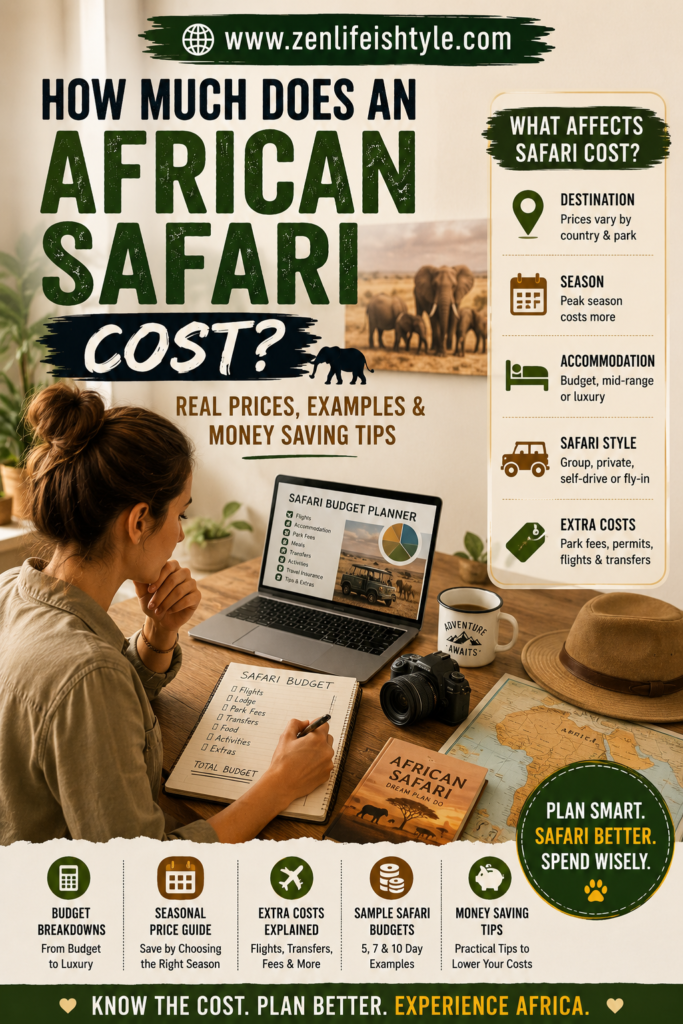
In many safari destinations, the high season happens during the dry months. This is when wildlife viewing is usually strongest because animals gather around rivers, waterholes and permanent water sources. Because demand is higher, lodge rates, safari prices and sometimes even flights can become more expensive.
As a rough guide, peak season prices can be 30–40% higher than low or shoulder season rates in some destinations. In the green season, some lodges may offer discounts of around 30–40% below peak rates, and in certain places, low-season rates can be much cheaper.
The trade-off is that low season often comes with rain, thicker bush and more spread-out wildlife. Some camps may also close during wet months, especially in remote areas. However, the green season can still be beautiful, with lush landscapes, fewer travellers, newborn animals and excellent birding.
Season | Cost Level | What to Expect |
|---|---|---|
Peak / high season | Highest | Best wildlife viewing, more demand, higher lodge rates |
Shoulder season | Moderate | Good value, fewer crowds, mixed weather |
Low / green season | Lower | Discounts, lush landscapes, birding, possible rain |
For the best value, shoulder season is often a smart choice. You may still get good wildlife viewing, but with fewer crowds and better prices than the busiest months. If your safari budget is tight, travelling outside peak season can make a big difference to the total African safari cost.
Flights and Transfers: The Hidden Cost of Safari Travel
Flights and transfers are one of the easiest parts of a safari budget to underestimate. Many safari quotes are shown excluding international flights, so the price you see may only cover the safari package once you arrive in Africa.
International flights are often the biggest expense outside the safari itself. The cost can vary widely depending on where you are flying from, the season, the airline, and whether you are travelling to a major hub such as Johannesburg, Nairobi, Arusha/Kilimanjaro, Cape Town or Lusaka. It is usually better to arrange your safari itinerary first, then book international flights around the confirmed route.
Once you are in Africa, domestic flights and light aircraft transfers can also add a lot to the total cost. This is especially common in remote safari destinations such as Botswana’s Okavango Delta, parts of Tanzania, Zambia’s safari parks and fly-in lodges in Southern Africa. A fly-in safari saves time and can make the trip smoother, but fly-in access usually comes with a higher price.
Road transfers and overland transfers are usually more budget-friendly. They work well for places like Kruger National Park, parts of Kenya, northern Tanzania, Victoria Falls combinations and some road-based safari routes. The trade-off is time. Road transfers may be cheaper, but they can mean long driving days between parks or lodges.
Private tours and custom itineraries usually cost more because the vehicle, guide and transfers are arranged around your schedule. This can be worth it if you want flexibility, but it will usually raise the overall safari cost compared with a shared group safari.
In simple terms:
International flights can vary widely depending on your origin and season.
Road transfers are usually cheaper than domestic flights.
Overland transfers are often the most budget-friendly option.
Fly-in safaris save time but cost more.
Private tours and custom itineraries offer flexibility but usually increase the price.
Remote safari camps often cost more to reach than lodges near major towns or airports.
When comparing safari packages, always ask how transfers are handled. A cheaper lodge may not be cheaper overall if reaching it requires expensive domestic flights or light aircraft transfers.
Extra Safari Costs Many Travellers Forget
When planning an African safari, it is easy to focus only on the lodge price or safari package. But there are several extra costs that can add to your final budget if you do not plan for them early.
Some of these costs are small, while others can be quite expensive. For example, a hot air balloon safari, gorilla trekking permit, private guide or extra domestic transfer can change the total price quickly. This is why it is important to ask what is included before confirming your safari.
Here are the extra safari costs many travellers forget:
Travel insurance
Visa fees
Vaccinations
Yellow fever vaccination if required
Tips for guides and camp staff
Optional activities
Hot air balloon safaris
Soft drinks if excluded
Premium drinks
Laundry if excluded
Single supplements
Private guides or private vehicles
Extra transfers
City hotels before or after safari
Travel insurance is very important for safari travel because you may be visiting remote areas. It can help cover medical emergencies, trip cancellations, lost luggage and unexpected travel problems. Travel insurance costs vary depending on your age, trip length, destination and level of cover.
Visa fees and vaccinations can also add to the total cost. Some countries require visas before arrival, while others offer visas on arrival or online applications. Yellow fever rules also depend on where you are travelling from or through, so always check the latest entry requirements before your trip.
Tipping is another cost to include in your safari budget. As a rough guide, safari guides may receive around US$10–40 per day, depending on the destination, lodge style and service level. Camp staff may receive around US$5–10 per day. These amounts can vary, so it is always best to ask your safari operator or lodge for local guidance.
Optional activities can also increase the final price. A hot air balloon safari, private vehicle, special walking safari, gorilla trekking permit, helicopter flight or extra transfer may not be included in the base safari package.
Before booking, ask for a clear list of inclusions and exclusions. This will help you understand the real African safari cost and avoid surprises during the trip.
Sample African Safari Budgets
To make the numbers easier to understand, here are three simple African safari budget examples. These are only rough guides, because prices vary by country, season, lodge style, park fees, transfers and what is included in the package.
5-Day Budget Safari
A 5-day budget safari is usually best for travellers looking at Kenya group tours, Tanzania camping safaris or more affordable South Africa safari options. This type of trip normally uses simple lodges, camping accommodation, shared vehicles and road transfers.
You may still enjoy proper game drives and good wildlife viewing, but the comfort level will be basic. This kind of safari is better for travellers who care more about the wildlife experience than luxury.
Budget Item | Approximate Cost |
|---|---|
Daily safari cost | US$190–300 pp/day |
Estimated 5-day total | Around US$950–1,500+ pp |
Best for | Kenya, Tanzania group tours, South Africa budget safaris |
This budget usually works better if you are joining a group safari, using shared vehicles and staying in simple camps or lodges.
7-Day Mid-Range Safari
A 7-day mid-range safari is often a good first safari length. It gives you enough time to enjoy more than one park without rushing too much, and it usually offers better comfort than a basic camping safari.
This kind of safari may include comfortable lodges or tented camps, guided game drives, some road transfers and better locations. For many travellers, this is the best balance between cost and experience.
Budget Item | Approximate Cost |
|---|---|
Daily safari cost | US$400–1,000 pp/day |
Estimated 7-day total | Around US$2,800–7,000+ pp |
Best for | First-time safari travellers who want comfort and good value |
A 7-day safari works well in Kenya, Tanzania, South Africa, Zambia or Zimbabwe, depending on your route and budget.
10-Day Luxury Safari
A 10-day luxury safari is for travellers who want premium lodges, stronger locations, smoother logistics and a more exclusive safari experience. This type of safari may include Botswana, Tanzania, South Africa private reserves or high-end lodges in Zambia.
Luxury safaris often include beautiful lodges, smaller camps, private guides or shared high-quality guiding, fly-in access and more personal service. In places like the Okavango Delta, Serengeti or private reserves near Kruger, the price can rise quickly.
Budget Item | Approximate Cost |
|---|---|
Daily safari cost | US$1,000–3,000+ pp/day |
Estimated 10-day total | Around US$10,000–30,000+ pp |
Best for | Botswana, Tanzania, South Africa private reserves and luxury lodges |
Most safari operators recommend around 7 to 10 days for a first safari because it gives you enough time for proper wildlife viewing without feeling too rushed. A longer safari can also offer better value per day because transfers, flights and logistics are spread across more nights.
For the best safari budget, it is usually better to stay longer in fewer places than to move constantly between parks. This gives you more time in the bush, fewer expensive transfers and a more relaxed safari experience.
Money Saving Tips for an African Safari
A safari can be expensive, but there are smart ways to control your safari budget without ruining the experience. The goal is not to choose the cheapest possible trip. The goal is to find the best value for your money.
One of the best money saving tips is to travel in the shoulder season instead of the most expensive peak months. Shoulder season can still offer good wildlife viewing, but lodge rates may be lower and there may be fewer travellers. If your dates are flexible, the low season or green season can also help reduce the total cost.
You can also save money by using shared vehicles instead of private vehicles. Group safaris usually cost less because the guide, vehicle and fuel are shared between travellers. This works especially well in places like Kenya, Tanzania and South Africa.
Road transfers are usually cheaper than fly-in safaris. If your route allows it, choose road transfers instead of light aircraft flights. Overland travel takes longer, but it can reduce your safari cost, especially if you are visiting parks that are easier to reach by road.
Here are practical ways to save money on an African safari:
Travel in shoulder season for better prices and fewer crowds.
Choose road transfers instead of fly-in access where practical.
Use shared safari vehicles instead of private vehicles.
Choose national parks instead of private concessions if your budget is limited.
Consider South Africa or Namibia for lower-cost safari options.
Look at self drive safaris in suitable places like South Africa.
Stay longer in fewer places instead of moving between too many parks.
Compare inclusions before booking, not only the headline price.
Book 9–12 months in advance for better availability and choice.
Avoid unnecessary flights between parks if road transfers are realistic.
Do not overload the itinerary with too many destinations.
Combine safari with one affordable city or beach stay if you want to balance the total trip cost.
South Africa is often one of the best choices for travellers who want more control over cost. Kruger National Park has self-drive options, budget camps, guided safaris and luxury lodges, so it works for many different budgets.
Another good strategy is to travel longer but move less. A short safari with many transfers can have a high per-day cost. A slightly longer safari in fewer places can sometimes offer better value because you spend more time enjoying wildlife and less money moving between destinations.
Before booking, always ask what is included: park fees, meals, drinks, laundry, game drives, transfers and guide fees. A package that looks cheaper may not be the best value if many important costs are excluded.
Is an African Safari Worth the Cost?
An African safari is expensive, but for many travellers, it becomes one of the most memorable trips of their life. The cost is not only for a room in the bush. You are paying for a full safari experience that includes remote accommodation, expert guides, meals, vehicles, park fees, conservation support and access to protected wildlife areas.
A good safari is very different from a normal holiday. You wake up early, head out for game viewing, follow animal tracks with experienced guides, watch elephants at a waterhole, listen to lions at night, and spend time in landscapes that still feel wild. These are not everyday travel moments, and that is why the trip can feel so special.
The price also helps support the places you are visiting. Park fees and conservation fees contribute to wildlife protection, anti-poaching work, park management and local employment. When done responsibly, safari tourism can help protect animals and natural habitats while also supporting guides, lodge staff and communities near wildlife areas.
That said, an African safari is only worth the cost if it matches your travel style and budget. A luxury safari may offer beautiful lodges, private guides and seamless service, but a mid-range safari can still give you excellent wildlife viewing and great value. You do not always need the most expensive lodge to have an unforgettable safari.
For many travellers, the real value is not just in the accommodation. It is in the expert guides, the quiet moments in the bush, the wildlife encounters, and the feeling of being far away from normal life. If you choose the right country, season and safari style, an African safari can absolutely be worth the cost as a once-in-a-lifetime trip.
Final Thoughts
The African safari cost can vary widely, which is why it is important to plan around your own budget and travel style. A simple group or camping safari may start from around US$250 per person per day, while a more comfortable mid-range safari will usually cost more but offer better lodges, stronger locations and a smoother overall experience.
Luxury safaris can reach thousands of dollars per person per day, especially in places with remote camps, private concessions, fly-in access and high-end service. Botswana often sits at the higher end of safari pricing, while South Africa usually offers better value because of Kruger National Park, self-drive options and a wider range of accommodation.
Kenya and Tanzania can also become expensive, especially during peak season and Great Migration months. Park fees, popular lodges, private vehicles and premium locations can all push prices higher. In countries like Zambia and Botswana, domestic flights and remote lodge access can also add a lot to the final safari budget.
When comparing safari prices, look beyond the headline cost. Flights, park fees, conservation fees, gorilla trekking permits, transfers, tips, travel insurance and optional activities can all change the final amount you spend.
The best value comes from choosing the right country, season and safari style. A cheaper safari is not always better, and the most expensive safari is not always necessary. The best safari budget is the one that matches your wildlife goals, comfort level, season and travel style.
FAQs
How much does an African safari cost?
An African safari usually costs from around US$250 to US$3,000+ per person per day. The final cost depends on the country, season, safari lodge, park fees, transport and travel style. Budget safaris cost less, while private fly-in safaris and luxury lodges can cost much more.
What is the average African safari cost?
The average African safari cost for a full trip often ranges from around US$5,000 to US$15,000 per person, depending on the length of the safari and comfort level. A short budget safari may cost much less, while a longer luxury safari in places like Botswana, Tanzania or South Africa can go far above this range.
Why are African safaris so expensive?
African safaris are expensive because they often include remote lodges, expert guides, park fees, conservation fees, meals, safari vehicles, fuel, staff, logistics and access to protected wildlife areas. In remote destinations, domestic flights or light aircraft transfers can also add a lot to the total cost.
Which African safari country is cheapest?
South Africa is often one of the most affordable African safari countries, especially around Kruger National Park. Travellers can choose self-drive safaris, budget rest camps, mid-range lodges or luxury private reserves, which makes it easier to plan around different budgets.
Which African safari country is most expensive?
Botswana is often one of the most expensive safari countries in Africa. This is mainly because of the Okavango Delta, remote camps, private concessions, small luxury lodges and fly-in access. The experience is usually more exclusive, but it comes with a higher price tag.
How much does a Kenya safari cost?
A Kenya safari cost depends on the season, park, lodge and travel style. Budget group safaris can be more affordable, while private safaris and luxury lodges cost more. The Masai Mara is usually more expensive during the Great Migration and peak season because of higher demand, park fees and popular lodge locations.
How much does a Tanzania safari cost?
Tanzania safari costs are often higher in places like Serengeti National Park and Ngorongoro Crater. This is because of park fees, longer safari routes, premium lodges and strong demand during migration months. Camping safaris can reduce costs, while fly-in safaris and luxury lodges increase the total price.
Are park fees included in safari prices?
Sometimes park fees are included, and sometimes they are charged separately. Travellers should always check carefully because park fees, conservation fees and concession fees can add a lot to the final safari cost, especially in Kenya, Tanzania, Botswana and private reserves.
Do African safari prices include flights?
International flights are often not included in African safari prices. Domestic flights may or may not be included, depending on the package. Fly-in safaris, light aircraft transfers and extra internal flights can increase the total cost, so always check the quote before booking.
How can I save money on an African safari?
You can save money by travelling in the shoulder season or low season, choosing road transfers instead of fly-in access, using shared safari vehicles, joining group safaris, comparing inclusions carefully, travelling with a group and avoiding too many park changes. South Africa and Namibia can also offer better-value safari options for budget-conscious travellers.
Related African Safari Guides
Planning your safari? These guides may also help:
Ultimate African Safari Guide — for first-time safari planning, wildlife, seasons and travel styles.
Best Safari Countries in Africa — for comparing Kenya, Tanzania, South Africa, Botswana, Zambia and more.
Kenya Safari Guide — for Masai Mara, Great Migration, parks and travel tips.
Tanzania Safari Guide — for Serengeti, Ngorongoro, Tarangire and Zanzibar combinations.
Botswana Safari Guide — for Okavango Delta, Chobe, luxury safaris and water-based experiences.
Zambia Safari Guide — for walking safaris, Lower Zambezi, South Luangwa and remote wilderness.
Victoria Falls Travel Guide — for adding Victoria Falls before or after safari.