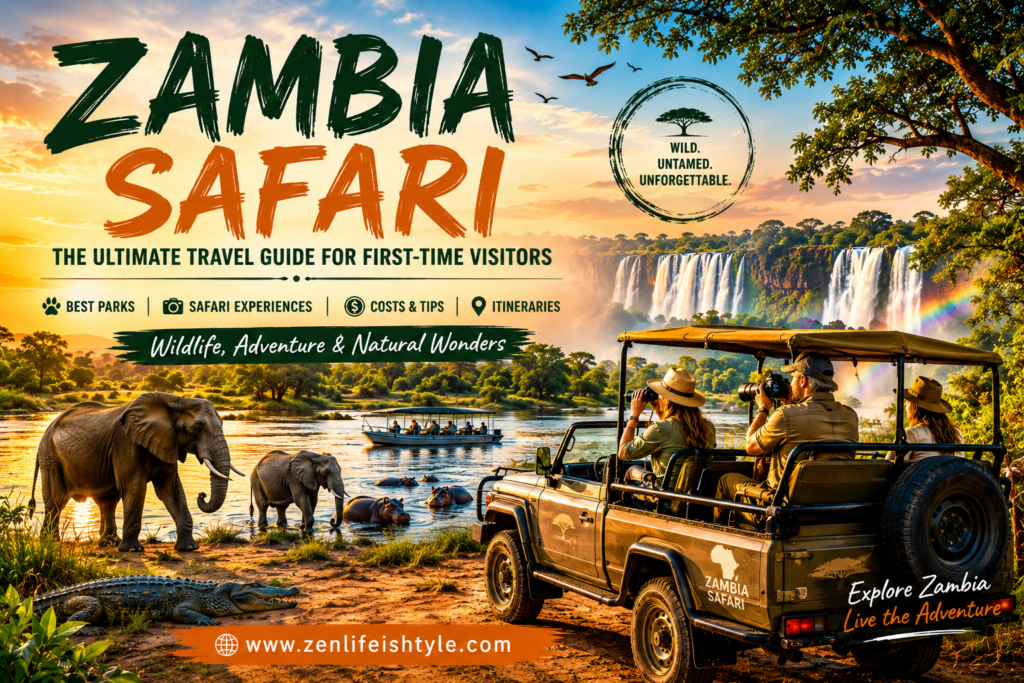
A Zambia safari is one of the best choices in Africa if you want real wilderness, expert guides, fewer crowds and authentic wildlife encounters. It feels different from some of the more famous safari routes in East Africa because many of Zambia’s safari areas still feel wild, quiet and deeply connected to nature.
This is the kind of safari experience where the bush feels close. In South Luangwa National Park, you can follow animal tracks on a walking safari with expert guides. In Lower Zambezi National Park, you can enjoy a canoe safari on the Zambezi River, watching elephants, hippos, crocodiles and birds from the water. In Kafue National Park, you can explore one of the largest and wildest safari landscapes in Southern Africa.
Zambia is also a wonderful destination if you want to combine safari with Victoria Falls. Many travellers begin or end their trip in Livingstone, then continue to South Luangwa, Lower Zambezi, Kafue or other remote parks for proper wildlife viewing and game drives.
This Zambia safari guide will help you begin planning with more confidence. You will learn where to go, when to visit, what animals you may see, how much a Zambia safari costs, where to stay, and how to combine your safari with Victoria Falls.
Why Choose Zambia for a Safari?
Zambia is a wonderful choice if you want a safari that feels raw, quiet and deeply connected to the bush. It is not as busy or as commercial as some of Africa’s more famous safari destinations, and that is exactly what makes it special. A Zambia safari is for travellers who want space, expert guiding, real wilderness and wildlife encounters that feel natural rather than rushed.
One of the biggest reasons to visit Zambia is the walking safari. South Luangwa National Park is often called the home of the walking safari, and it helped pioneer this style of safari in the 1960s. Instead of only watching animals from a vehicle, you can walk through the bush with expert wildlife guides and learn how the ecosystem works. You notice tracks, sounds, plants, insects, birds and animal signs that you would easily miss on a normal game drive.
Zambia is also excellent for river-based safari experiences. In Lower Zambezi National Park, canoe safaris on the Zambezi River give you a completely different way to experience wildlife. You may see elephants feeding along the riverbank, hippos in the water, crocodiles resting in the sun and birds moving through the reeds. It is peaceful, but also exciting because you feel very close to nature.
For travellers who want wide, untamed wilderness, Kafue National Park is one of Zambia’s great safari treasures. It is vast, remote and less crowded, with different landscapes, from river areas to the open Busanga Plains. It is a strong choice for travellers who want to go beyond the usual safari route.
Zambia also has special seasonal wildlife experiences. Liuwa Plain hosts the second-largest wildebeest migration, while Kasanka National Park is famous for its fruit bat migration, one of the most unusual wildlife events in Africa. These places are not for travellers looking for the easiest or most polished safari, but they are perfect for people who want something rare and memorable.
Choose Zambia if you want more than just seeing animals from a safari vehicle. A safari here is about slowing down, walking with expert guides, exploring rivers by canoe, listening to the bush and feeling part of the landscape. It is especially good for repeat safari travellers, adventure travellers and anyone who wants a wilder, more authentic safari experience in Southern Africa.
Best Safari Parks and National Parks in Zambia
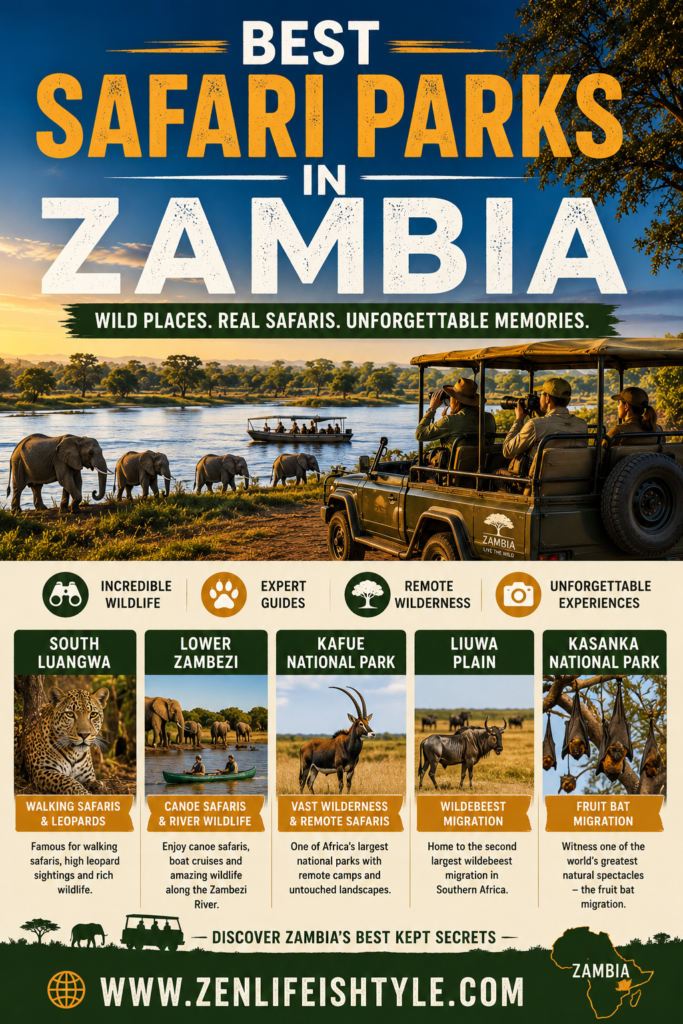
South Luangwa National Park — Best for Walking Safaris and Leopards
South Luangwa National Park is one of Zambia’s most famous safari destinations, and for many travellers, it is the best place to start. If you are planning your first Zambia safari, South Luangwa gives you a strong mix of wildlife, expert guiding, game drives and one of the most iconic safari experiences in the country: the walking safari.
South Luangwa is closely linked with the history of the Zambia walking safari. The park helped pioneer walking safaris in the 1960s, and that tradition is still one of its biggest strengths today. A walking safari here is not just a short nature walk. It is a slow, careful and guided way to understand the bush from the ground level.
With expert wildlife guides, you may follow tracks, listen for alarm calls, notice fresh animal signs, and learn about plants, insects, birds and smaller details that are easy to miss from a vehicle. Some guided walks may last around one hour, while longer walking safari experiences can stretch over several days, depending on the camp and itinerary.
The Luangwa River is the heart of the park. During the dry season, animals gather closer to the river and remaining water sources, making game viewing especially rewarding. South Luangwa is well known for strong leopard sightings, and you may also see lions, elephants, buffalo, hippos, crocodiles, antelopes, giraffes, birds and, with luck, wild dogs.
Game drives are also excellent in South Luangwa, especially in the early morning and late afternoon. Night drives, where allowed, can add another layer to the safari experience because the bush feels completely different after dark.
Choose South Luangwa National Park if you want walking safaris, expert guides, leopards, strong wildlife encounters, dry season game viewing and a safari that feels deeply connected to the real Zambian bush.
Lower Zambezi National Park — Best for Canoe Safaris and River Wildlife
Lower Zambezi National Park is one of the most beautiful places for a Zambia safari, especially if you love river scenery and peaceful wildlife moments. The park sits along the Mighty Zambezi River, and this river is the heart of the whole safari experience.
What makes the Lower Zambezi special is the mix of land and water activities. You can enjoy normal game drives in a safari vehicle, but you can also see wildlife from the river. A canoe safari here feels very different from a regular game drive because everything slows down. You move quietly along the water, with the riverbanks, islands and channels opening up around you.
Canoeing safaris on the Zambezi River offer a unique way to view wildlife, especially along the riverbanks. You may see elephants drinking or feeding near the water, hippos in the river, crocodiles resting on sandbanks, and many birds moving through the trees and reeds. It is calm, but it also feels exciting because you are experiencing the bush from water level.
The park is also known for excellent water-based game viewing, but it is not only about canoe trips. Many Zambia safari tours in Lower Zambezi include game drives, boat safaris, sundowner cruises and, in some areas, walking safaris where available. This gives travellers a very varied safari experience in one destination.
Lower Zambezi is also home to some beautiful luxury lodges, many of them set close to the river. These lodges are ideal if you want comfort, great guiding and a strong sense of place. The daily entrance fee for Lower Zambezi National Park is usually around USD 25, but travellers should always check the latest fees when planning.
Choose Lower Zambezi National Park if you want canoe safaris, river wildlife, elephants, hippos, crocodiles, birds, game drives, luxury lodges and one of the most peaceful safari settings in Zambia.
Kafue National Park — Best for Vast Wilderness and Remote Safaris
Kafue National Park is the place to choose if you want space, silence and a safari that feels far away from the usual route. It is Zambia’s largest conservation area and spans over 22,400 square kilometres, making it one of the great wilderness areas of Southern Africa.
Kafue is not a park you visit if you want everything to feel quick and easy. Its beauty is in its size, variety and wild character. Some areas feel remote and untouched, with long stretches of bush, rivers, woodland, open plains and very few other vehicles. For travellers who want a less crowded safari experience, Kafue can feel incredibly rewarding.
One of the most famous areas is the Busanga Plains, a vast seasonal floodplain known for open landscapes, lions, antelopes, birds and dramatic dry-season game viewing. The plains can feel completely different from other parts of Zambia, especially when the light is soft and wildlife is spread across the open grasslands.
Kafue is home to lions, leopards, wild dogs, elephants, buffalo, antelopes and many bird species. Wildlife viewing can require patience because the park is so large, but that is also part of its charm. You do not feel like you are following a crowd from one sighting to another.
Safari experiences in Kafue can include game drives, guided walking safaris, canoe trips in selected areas, and stays in mobile tented camps for a more authentic bush feel. The park is especially good for travellers who want variety, remote destinations and a deeper sense of untamed wilderness.
The entrance fee for Kafue National Park is usually around USD 20 per person, but fees can change, so it is always best to confirm the latest rates before travelling.
Choose Kafue National Park if you want vast wilderness, fewer crowds, Busanga Plains, wild dogs, lions, leopards, mobile tented camps, and a safari that feels truly off the beaten track.
Liuwa Plain National Park — Best for Wildebeest Migration and Open Plains
Liuwa Plain National Park is one of Zambia’s most special safari destinations, but it is still much less visited than places like South Luangwa or Lower Zambezi. It is remote, open and beautifully wild, making it a great choice for adventurous travellers who want something different from the usual safari route.
The park is best known for the second-largest wildebeest migration in Africa. Huge herds move across the open plains, creating a dramatic wildlife spectacle that feels very different from a classic river or woodland safari. The scenery is wide and open, with big skies, seasonal floodplains, grasslands and a strong sense of space.
Liuwa Plain is also known for hyenas, lions, birds and seasonal wildlife viewing. The park has a raw and remote feeling, and that is part of its appeal. This is not the kind of safari where everything feels polished and busy. It is quieter, more unusual and more suited to travellers who enjoy remote destinations.
Because access can be seasonal, Liuwa Plain needs more careful planning than some other Zambia safari areas. Road conditions, camp operations and wildlife movements can change depending on the time of year, so it is best to plan with someone who understands the park well.
Choose Liuwa Plain National Park if you want open plains, wildebeest migration, hyenas, lions, birds, remote landscapes and a Zambia safari that feels truly off the beaten track.
Kasanka National Park — Best for Fruit Bat Migration and Birding
Kasanka National Park is very different from the classic big game safari areas in Zambia, and that is what makes it so interesting. You do not come here mainly for lions, leopards or large herds of elephants. You come for nature, birdwatching, wetlands, forests and one of Africa’s most unusual wildlife events.
Kasanka is best known for the world’s largest mammal migration of fruit bats. Every year, huge numbers of fruit bats gather in the park’s swamp forest, creating an incredible natural spectacle. It is one of those rare wildlife experiences that many travellers do not know about until they start looking deeper into Zambia.
The park is also excellent for birdwatching, especially during the Emerald Season, when the landscapes are greener and birdlife is active. Kasanka has wetlands, forests, rivers and open areas, which makes it a beautiful destination for nature lovers who enjoy slower, quieter wildlife experiences.
A visit to Kasanka is seasonal, so timing matters. If the fruit bat migration is the main reason for going, you need to plan your trip around the right months and check local conditions before travelling.
Choose Kasanka National Park if you want birding, forests, wetlands, seasonal wildlife, and a rare safari experience that feels completely different from South Luangwa, Lower Zambezi or Kafue. It is not a typical big game safari, but it is one of Zambia’s most special natural events.
Victoria Falls and Mosi-oa-Tunya National Park — Best for Natural Wonders and Easy Add-Ons
Victoria Falls is one of the best add-ons to a Zambia safari, especially for travellers who want to combine wildlife with one of Africa’s greatest natural wonders. It is not a classic safari park in the same way as South Luangwa, Lower Zambezi or Kafue, but it adds something very special to a Zambia itinerary.
On the Zambia side, the falls are accessed from Livingstone and Mosi-oa-Tunya National Park, which sits along the Zambezi River. This area is ideal if you want waterfall views, river activities, history, adventure and a softer introduction to Zambia before heading deeper into the bush.
The best time to see Victoria Falls at full flood is usually around March to May, when the water flow is powerful and the spray can be dramatic. At this time, the falls feel huge, loud and full of energy. Later in the year, water levels can be lower, but visibility may be clearer and some adventure activities become more accessible.
Victoria Falls is also a strong destination for adventure travellers. You can add activities such as bungee jumping, white-water rafting, helicopter flights, sunset cruises and bridge visits, depending on the season and water levels. Since the falls sit on the border between Zambia and Zimbabwe, some travellers also choose to visit both sides if visa rules and time allow.
Choose Victoria Falls and Mosi-oa-Tunya National Park if you want natural wonders, Zambezi River scenery, adventure activities and an easy add-on before or after your Zambia safari.
Best Zambia Safari Destinations by Travel Style
The best Zambia safari destination depends on the kind of experience you want. Some parks are better for walking safaris, some for canoe safaris, some for remote wilderness, and others for special seasonal wildlife events.
Travel Style | Best Zambia Safari Area |
|---|---|
First Zambia safari | South Luangwa, Lower Zambezi |
Walking safari | South Luangwa National Park |
Canoe safari | Lower Zambezi National Park |
Leopards | South Luangwa |
Wild dogs | Kafue, South Luangwa, Lower Zambezi |
Remote wilderness | Kafue National Park, Liuwa Plain |
Luxury safari | Lower Zambezi, South Luangwa |
Mobile tented camps | Kafue, South Luangwa |
Wildebeest migration | Liuwa Plain |
Birding | Kasanka, South Luangwa, Lower Zambezi |
Victoria Falls combination | Livingstone, Mosi-oa-Tunya, Lower Zambezi |
For a first Zambia safari, South Luangwa and Lower Zambezi are usually the easiest places to recommend. South Luangwa gives you the classic Zambia walking safari experience, excellent guiding and strong leopard sightings. Lower Zambezi gives you something different, with canoe safaris, river wildlife, game drives and beautiful lodges along the Zambezi River.
If you want a more remote safari, Kafue National Park and Liuwa Plain are better choices. Kafue is vast and wild, while Liuwa Plain is ideal for adventurous travellers who want open landscapes and Zambia’s wildebeest migration.
For a safari and natural wonder combination, Livingstone and Victoria Falls fit very well before or after the bush. This works especially well for travellers who want wildlife, adventure, river activities and one of Africa’s most famous sights in one trip.
What Animals Can You See on a Zambia Safari?
Zambia’s wildlife is one of the biggest reasons the country is such a rewarding safari destination. The experience feels wild and natural, especially because many parks are remote and less crowded than more famous safari areas in Africa.
On a Zambia safari, you may see elephants, lions, leopards, wild dogs, buffalo, hippos, crocodiles, antelopes, zebras, giraffes in selected areas, and many birds. The exact animals you see will depend on the park, season, guide, water levels and luck.
South Luangwa is especially famous for leopards. It is one of the best places in Zambia for strong predator sightings, and the Luangwa River attracts plenty of wildlife during the dry season. You may also see lions, elephants, buffalo, hippos, crocodiles, antelopes and many bird species.
In Lower Zambezi, the wildlife experience feels different because so much of it is linked to the river. You may see elephants feeding along the banks, hippos in the water, crocodiles on sandbanks, and birds moving through the reeds and trees. This is one of the best places in Zambia for river-based wildlife viewing.
Kafue National Park offers a wider and more remote safari experience. It is known for plains wildlife, lions, leopards, elephants, buffalo and wild dogs. Because Kafue is so large, sightings may take patience, but the reward is a safari that feels truly wild.
Zambia also has special seasonal wildlife experiences. Liuwa Plain is known for wildebeest and open plains, while Kasanka National Park is famous for its fruit bat migration. These experiences are very different from a typical big game safari, but they show how rich and varied Zambia’s wildlife can be.
A Zambia safari is not only about seeing the biggest animals. It is also about the smaller moments: birds calling near the river, fresh tracks on a walking safari, elephants crossing a channel, or a leopard appearing quietly in the evening light.
Walking Safaris in Zambia
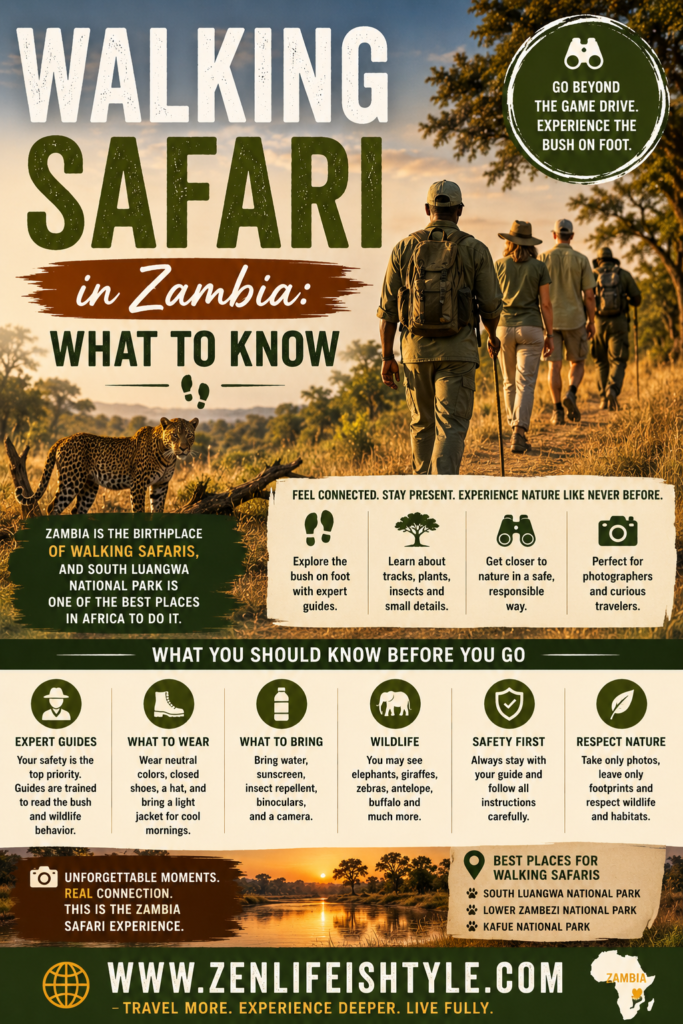
Walking safaris are one of the biggest reasons Zambia stands out from other safari destinations in Africa. While many safaris focus mainly on game drives, a Zambia walking safari gives you the chance to slow down and experience the bush from the ground.
Zambia helped pioneer walking safaris in South Luangwa National Park in the 1960s, and South Luangwa is still one of the best places in Africa for this kind of safari. It is not just about walking through the bush. It is about learning how everything connects: the tracks in the sand, the alarm calls of birds, the smell of wild herbs, the movement of insects, and the fresh signs left by animals during the night.
A walking safari is always done with trained guides. You usually walk with expert wildlife guides who understand animal behaviour, safety, wind direction, tracks and the landscape. Before starting, you will normally receive a safety briefing so you know how to behave, where to walk, when to stop, and how to follow instructions.
Walking safaris can be short or long, depending on the lodge and itinerary. Some guided walks may last around one hour, while more serious walking safari experiences can continue for several days, with travellers moving between bush camps. This makes Zambia a wonderful choice for travellers who want something deeper than a normal safari drive.
The beauty of a walking safari is not only in seeing large animals. In fact, it is not about getting dangerously close to wildlife. It is about understanding the ecosystem on foot. Your guide may show you leopard tracks, elephant dung, medicinal plants, bird nests, termite mounds, animal paths, insects, bones and other small details that tell the story of the bush.
A walking safari in Zambia feels personal, quiet and very real. You are not just watching the landscape from a vehicle. You are part of it, moving slowly, listening carefully and seeing the wild in a different way.
Canoe Safaris and River Experiences in Zambia
A canoe safari is one of the most memorable ways to experience Zambia, especially in Lower Zambezi National Park. Instead of sitting high in a safari vehicle, you move quietly along the Zambezi River, close to the water, with the bush unfolding slowly around you.
This is what makes canoe trips on the Mighty Zambezi River feel so special. You may pass elephants feeding along the riverbanks, hippos resting in the water, crocodiles sunning themselves on sandbanks, and birds flying between the trees and reeds. The pace is slower than a game drive, but the experience can feel more personal and powerful.
In Lower Zambezi, water-based game viewing is one of the main highlights. Many lodges offer a mix of canoe safaris, boat trips, game drives, sunset cruises and sometimes walking safaris where available. This gives travellers a beautiful balance between land and river experiences.
A canoe safari is always a guided activity. You go with trained guides who understand the river, wildlife behaviour, safe distances and the best routes to follow. It is peaceful, but it still takes place in a wild environment, so listening to your guide is very important.
Some areas in Kafue National Park may also offer canoe trips, depending on the lodge, season and water levels. But for most travellers, the Lower Zambezi is the strongest choice if a canoe safari is high on the list.
Choose a canoe safari in Zambia if you want a quieter, more natural way to see wildlife from the water. It is not about rushing from one sighting to another. It is about drifting with the river, watching animals at eye level, and feeling the calm power of the Zambezi.
Best Time to Visit Zambia for Safari
Dry Season: May to October
The dry season, from May to October, is usually the best time to visit Zambia for safari. This is when wildlife viewing is at its strongest because the bush becomes drier, the grass is shorter, and animals start gathering around rivers and permanent waterholes.
This season is especially good for parks like South Luangwa National Park, Lower Zambezi National Park and Kafue National Park. As water becomes harder to find, animals move closer to places like the Luangwa River, the Zambezi River and other remaining water sources. This makes game viewing easier and more predictable.
September and October are often prime months for spotting animals around water sources. You may see elephants, buffalo, antelopes, hippos, crocodiles, lions, leopards and many birds close to rivers and lagoons. The wildlife can be excellent, but these months are also hotter, so travellers should be ready for warm days.
The high safari season in Zambia usually runs from July to November, with strong game viewing across many parks. August is especially good for walking safaris in South Luangwa because conditions are dry, visibility is good, and the bush is easier to read on foot.
If you want fewer visitors, May and June can be a lovely time to travel. The parks are opening up after the rains, the landscapes still have some greenery, and the safari areas may feel quieter than the peak months.
Emerald Season: November to April
The Emerald Season, from November to April, is Zambia’s green season. This is when the rains bring fresh life to the bush, the landscapes become lush, and the skies can be dramatic and beautiful.
This is one of the best times for birdwatching in Zambia. Migratory birds arrive, breeding colours appear, and places like South Luangwa, Lower Zambezi and Kasanka can feel rich and full of life. It is also a good season for photographers who enjoy green scenery, soft light, dramatic clouds and fewer vehicles in some areas.
The Emerald Season is not always the easiest time for a classic safari. Some camps may close, roads can become difficult, and access to remote areas may be limited. Wildlife can also be more spread out because water is available in many places.
Still, this season has its own beauty. It is quieter, greener and more peaceful in many areas. For bird lovers, photographers and travellers who do not mind a little rain, the Emerald Season can show a very different side of Zambia.
Best Time for Victoria Falls
If you are combining your Zambia safari with Victoria Falls, the best time depends on the kind of waterfall experience you want. For strong flow and dramatic spray, March to May is usually a great time for viewing Victoria Falls.
During this period, the falls are often close to full flood, so the sound, mist and power of the water can feel incredible. The spray can be heavy, and you may get wet at the viewpoints, but that is part of the experience. This is when Victoria Falls really feels like one of Africa’s greatest natural wonders.
Later in the year, water levels can drop, especially on the Zambia side. The views may become clearer because there is less spray, but the flow may not be as powerful. Some adventure activities also depend on water levels, so it is important to check before you travel.
Activities such as bungee jumping, white-water rafting, Devil’s Pool, boat cruises and helicopter flights can all be affected by season, water level and safety conditions. If Victoria Falls is an important part of your trip, plan the timing carefully instead of treating it as an afterthought.
Best Time by Experience
Here is a simple way to choose the best time for your Zambia safari:
Best for general wildlife viewing: May to October
Best for peak game viewing: September and October
Best for walking safaris: July to September, with August especially strong in South Luangwa
Best for birdwatching: Emerald Season, November to April
Best for Victoria Falls flow: March to May
Best for fewer visitors: May and June
High safari season: July to November
For most first-time safari travellers, the dry season is the easiest period to choose. But if you love birds, green landscapes and dramatic skies, the Emerald Season can show you a softer and very beautiful side of Zambia.
Types of Zambia Safari Experiences
Game Drives
Game drives are still one of the main safari experiences in Zambia, even though the country is famous for walking safaris and canoe safaris. A game drive is done in a safari vehicle with expert guides who understand the park, the animals, the tracks and the best places to look for wildlife.
Most game drives happen in the morning and late afternoon, when animals are more active and temperatures are cooler. In the dry season, game viewing can be especially rewarding because wildlife often gathers around rivers, lagoons and permanent waterholes.
In places like South Luangwa, Lower Zambezi and Kafue, game drives may give you the chance to see elephants, lions, leopards, buffalo, antelopes, hippos, crocodiles, birds and sometimes wild dogs. Night drives may also be available in some areas, giving you a chance to experience the bush after dark and look for nocturnal animals.
A good game drive in Zambia is not only about rushing from one sighting to another. The best guides help you understand the landscape, animal behaviour and smaller signs of life around you.
Walking Safaris
A walking safari is one of the most special experiences you can have in Zambia. The country is known for the Zambia walking safari, especially in South Luangwa, where walking safaris became part of the country’s safari identity.
During guided walks, you leave the safari vehicle behind and explore the ecosystem on foot with expert wildlife guides. Some walks may last around one hour, while longer walking safari experiences can continue for several days, depending on the lodge and route.
The beauty of a walking safari is in the details. Your guide may show you tracks in the sand, plants used by animals, insects, bird calls, droppings, bones, termite mounds and other signs that tell the story of the bush.
A walking safari is not about getting dangerously close to animals. It is about slowing down, listening carefully and seeing the wild from a different level. For many travellers, this becomes the most memorable part of their Zambia safari.
Canoe Safaris
A canoe safari gives you a peaceful and very different way to experience Zambia’s wildlife. Instead of driving through the bush, you move quietly along the water with trained guides, usually in areas like the Lower Zambezi.
Canoe trips on the Zambezi River are especially memorable because they bring you close to the rhythm of the river. You may see elephants along the banks, hippos in the water, crocodiles on sandbanks and birds moving through the reeds and trees.
This kind of water-based wildlife viewing feels slower and more intimate than a normal game drive. You are not covering huge distances quickly. You are watching the river, listening to the sounds around you and seeing wildlife from a completely different angle.
Canoe safaris are guided activities and should always be done with experienced operators who understand the river and animal behaviour. When done properly, a canoe safari in Zambia can be one of the most unforgettable safari experiences in Southern Africa.
Boat Safaris and River Cruises
Boat safaris and river cruises are a lovely way to enjoy Zambia’s river landscapes without the intensity of a canoe safari. They are especially popular in the Lower Zambezi, where the Zambezi River becomes part of the whole safari experience.
A boat safari gives you a relaxed view of the riverbanks, channels and islands. You may see hippos in the water, crocodiles resting on sandbanks, elephants coming down to drink, and birds moving through the reeds and trees. It is a peaceful activity, but it can still offer excellent wildlife moments.
Sunset boat trips are especially beautiful. The light softens, the river becomes calmer, and the bush feels quieter. For many travellers, this is one of the most enjoyable ways to end a safari day in Zambia.
Cultural Visits
Cultural visits can add more meaning to a Zambia safari when they are done respectfully. Many safari areas are close to local communities, and a well-organised visit can help travellers understand the people, traditions and daily life around Zambia’s national parks.
These experiences may include village visits, local guides, craft projects, community tourism activities or conversations with people living near safari areas. The best cultural visits should feel respectful and locally managed, not staged only for tourists.
Responsible tourism matters here. A good Zambia safari should not only benefit travellers and lodges, but also support local communities, conservation and people who live close to wildlife areas.
Victoria Falls Adventure Add-Ons
Victoria Falls is one of the best adventure add-ons to a Zambia safari. After a few days in the bush, many travellers spend time in Livingstone to enjoy the falls, the Zambezi River and the activities around the border of Zambia and Zimbabwe.
Depending on the season, adventure activities can include bungee jumping, white-water rafting, helicopter flights, sunset cruises, bridge visits and other Zambezi River activities. Some activities depend on water levels, so it is always important to check what is available before travelling.
Victoria Falls works well before or after a safari because it gives the trip a different feeling. The safari gives you wildlife and quiet bush moments, while the falls add energy, scenery, adventure and one of Africa’s most famous natural wonders.
Zambia Safari Costs: How Much Should You Budget?
The Zambia safari cost can vary a lot depending on the season, park, accommodation style, transport and how many nights you stay. Prices are usually quoted per person, and a simple camping safari will cost much less than a fly-in safari staying at luxury lodges.
Zambia has different safari styles, from basic camping options and rustic tented camps to beautiful luxury lodges and all-inclusive safari packages. In places like South Luangwa, Lower Zambezi and Kafue, the final cost often depends on how remote the lodge is, whether flights are needed, and what activities are included.
Park fees also need to be considered. As a rough guide, South Luangwa National Park charges around USD 30 for a daily entrance fee, Lower Zambezi National Park is around USD 25 per day, and Kafue National Park is around USD 20 per person. These fees can change, so always check the latest rates before booking.
Zambia safari lodges can range widely, from around €568 to €13,095 per person, depending on the package, season, lodge level and length of stay. Luxury lodges, fly-in safaris and private safaris will usually sit at the higher end, while simpler camps and scheduled tours may be more affordable.
Safari Style | Approximate Cost | What to Expect |
|---|---|---|
Budget / camping safari | Lower cost | Basic camps, simple comfort, guided activities |
Mid-range safari | Moderate cost | Comfortable lodges or tented camps |
Luxury lodge safari | Higher cost | Premium lodges, strong guiding, all-inclusive services |
Fly-in safari | Higher cost | Saves time, useful for remote destinations |
Private safari | Higher cost | Flexible itinerary, private guide or vehicle |
Flights and transfers can add a lot to the total cost, especially if you are visiting remote destinations or combining parks like South Luangwa, Lower Zambezi and Kafue. Private safaris also cost more than group or scheduled options because you are paying for more flexibility, privacy and personalised service.
When comparing Zambia safari packages, do not only look at the headline price. Check what is included carefully: park fees, meals, drinks, activities, laundry, flights, transfers, guide fees and conservation fees. One package may look cheaper at first, but if important costs are excluded, it may not be the better value.
A good Zambia safari is not always the cheapest one. The best value usually comes from the right lodge, the right park, good guiding, and enough time to enjoy the safari properly.
Where to Stay on a Zambia Safari
Where you stay on a Zambia safari depends on the park, your budget, the season and the kind of safari experience you want. Zambia has everything from rustic bush camps and basic camping options to beautiful luxury lodges, tented camps, mobile tented camps and fully all-inclusive lodges.
In South Luangwa, many accommodations are built around the walking safari experience. Some camps feel simple and close to nature, while others are more upscale with excellent guiding, comfortable rooms and beautiful views near the Luangwa River. This is a great area if you want strong wildlife, expert guides and a real bush atmosphere.
In the Lower Zambezi, many lodges sit close to the river, which gives the safari a very different feeling. These Lower Zambezi river lodges are ideal if you want canoe safaris, boat trips, game drives, sunset river activities and peaceful views over the Zambezi River. This area is especially good for travellers who want comfort, water-based safari experiences and a quieter luxury lodge setting.
Kafue National Park offers a more remote style of accommodation. You can find lodges, rustic camps and mobile tented camps that suit travellers who want space, wilderness and fewer crowds. A mobile tented camp in Kafue can feel very authentic because you are closer to the bush and further away from busy safari routes.
Zambia also has a wide range of rustic and upscale options. Some travellers may choose simpler camps for a more adventurous safari, while others may prefer luxury lodges with private decks, excellent meals, strong guiding and all-inclusive services. Examples such as Kasaka Lodge and Wildlife Camp show how Zambia offers different styles depending on the area, budget and comfort level.
The best place to stay is not always the most expensive lodge. It is the place that fits your route, season and safari style. If walking safaris are your priority, choose South Luangwa. If river activities matter most, choose Lower Zambezi. If you want remote wilderness, look at Kafue or one of Zambia’s more off-the-beaten-track parks.
How Many Days Do You Need for a Zambia Safari?
How many days you need for a Zambia safari depends on the parks you want to visit, how remote they are, and whether you want to add Victoria Falls. Zambia’s safari areas are beautiful, but they are not always close to each other, so it is worth giving yourself enough time.
As a simple guide:
Length of Safari | Best For |
|---|---|
3 days | Short South Luangwa or Lower Zambezi safari |
4 to 5 days | Better for one park |
6 to 8 days | Stronger Zambia safari with two areas |
10+ days | Zambia safari plus Victoria Falls or remote parks |
If it is your first Zambia safari, a good starting point is 3 nights in South Luangwa. This gives you time for game drives, guided walks and a better chance of seeing leopards, elephants, lions, hippos and other wildlife.
Another good option is 3 nights in Lower Zambezi, especially if you want canoe safaris, boat trips, river wildlife and a peaceful lodge setting along the Zambezi River.
If you want a stronger first safari, you can combine:
3 nights South Luangwa + 2 nights Victoria Falls
3 nights South Luangwa + 3 nights Lower Zambezi
3 nights Lower Zambezi + 2 or 3 nights Livingstone
If you have 10 days or more, you can go deeper. This gives you time to add Kafue National Park, Liuwa Plain, Kasanka National Park or a longer Victoria Falls stay.
Zambia is worth spending more time in because transfers can take time, especially if you are moving between remote parks. It is usually better to enjoy fewer places properly than to rush through too many areas. A slower Zambia safari gives you more time to settle into the rhythm of the bush, enjoy the guiding, and let the wildlife encounters happen naturally.
Zambia Safari and Victoria Falls Combination
A Zambia safari and Victoria Falls combination is one of the easiest and most rewarding ways to plan a first trip to Zambia. You get the quiet, wild feeling of the bush, then add one of Africa’s greatest natural wonders at the beginning or end of the journey.
Most visitors add Victoria Falls before or after safari because it fits naturally into a Zambia itinerary. The falls are accessed from Livingstone on the Zambian side, where the Zambezi River creates one of the most dramatic landscapes in Southern Africa. From here, travellers can enjoy waterfall viewpoints, sunset cruises, river activities and adventure experiences.
For many people, a good first Zambia itinerary is South Luangwa plus Victoria Falls. South Luangwa gives you walking safaris, leopards, expert guiding and classic wildlife viewing, while Victoria Falls adds scenery, history, culture and adventure. This combination works well if you want a safari that feels authentic but still includes a famous landmark.
Another beautiful option is a Lower Zambezi combination. You can enjoy canoe safaris, boat trips, game drives and river wildlife in Lower Zambezi, then continue to Livingstone for Victoria Falls. This route is especially good if you love water-based activities and want to experience the Zambezi River in different ways.
Victoria Falls also brings adventure into the trip. Depending on the season and water levels, travellers may add bungee jumping, white-water rafting, helicopter flights, sunset cruises or bridge activities. During full flood, the falls are powerful and full of spray, while lower-water months may offer clearer views and different activity options.
Because Victoria Falls sits between Zambia and Zimbabwe, some travellers also visit both sides of the falls if time and visa rules allow. This can make the trip feel even more complete, especially if you want to compare the Zambian side with the Zimbabwean viewpoints.
Choose a Zambia safari and Victoria Falls combination if you want wildlife, walking safaris, river experiences, adventure and one of Africa’s most famous natural wonders in one trip.
Zambia Safari Travel Tips for First-Time Visitors
If you are planning your first Zambia safari, it helps to begin planning early, especially if you want to travel during the high safari season. The best camps and lodges in places like South Luangwa, Lower Zambezi and Kafue can book up quickly, particularly between July and October.
Start by choosing your park based on the type of safari experience you want. Choose South Luangwa if you want walking safaris, expert guides and strong leopard sightings. Choose Lower Zambezi if you want a canoe safari, river wildlife and peaceful Zambezi River views. Choose Kafue if you want remote wilderness, fewer crowds and a bigger sense of space.
Pack light and practical. Neutral clothing works best for safari, so choose colours like khaki, beige, olive, brown or grey. Early mornings can be cool, especially in the dry season, so bring layers, a light jacket or fleece, and comfortable shoes.
You should also pack insect repellent, sunscreen, a hat, sunglasses, binoculars and a camera. If your itinerary includes light aircraft transfers, use soft-sided luggage because small planes usually have strict weight and space limits.
Before booking, check what is included in your safari package. Look carefully at park fees, meals, drinks, activities, transfers, laundry, flights and guide fees. Some lodges are all-inclusive, while others may charge separately for certain extras.
Also check visa rules before travelling and carry some US dollars for tips, small payments or activities where needed. Tipping guides and lodge staff is common, but it should always depend on service and your own budget.
For walking safaris and canoe safaris, always follow your guide’s instructions. These are incredible experiences, but they happen in wild areas. Listen carefully during safety briefings, keep quiet when asked, and never try to move ahead of the guide.
Finally, respect wildlife and local communities. Do not ask guides to get too close to animals, do not make loud noise at sightings, and choose responsible operators where possible. Zambia is special because it still feels wild and uncrowded, so the best way to enjoy it is slowly and respectfully.
Try not to overpack the itinerary. Zambia’s parks can be remote, and transfers may take time. It is better to enjoy two places properly than rush through too many destinations without settling into the rhythm of the bush.
Final Thoughts
Zambia is one of Africa’s most authentic safari destinations. It is a place for travellers who want real wilderness, excellent guiding, fewer crowds and safari experiences that feel close to the bush rather than overly commercial.
Choose South Luangwa National Park if you want walking safaris, strong leopard sightings, expert wildlife guides and classic dry-season game viewing along the Luangwa River. This is one of the best places to understand why Zambia is so respected in the safari world.
Choose Lower Zambezi National Park if you want canoe safaris, river wildlife, boat trips and peaceful moments along the Zambezi River. Seeing elephants along the riverbanks or drifting quietly past hippos and birds gives this park a very special feeling.
Choose Kafue National Park if you want vast wilderness, remote landscapes, mobile tented camps and a safari that feels truly off the beaten track. It is best for travellers who enjoy space, patience and a deeper sense of wild Africa.
Choose Liuwa Plain if you want open plains, seasonal wildlife and Zambia’s wildebeest migration. Choose Kasanka National Park if you want birding, forests, wetlands and the incredible fruit bat migration, one of Africa’s most unusual wildlife events.
For many travellers, Victoria Falls is the perfect addition to a Zambia safari. It brings natural wonders, Zambezi River scenery, adventure activities and easy access from Livingstone before or after the bush.
The best time for a Zambia safari is usually May to October, especially for wildlife viewing. The Emerald Season from November to April is also worth considering if you love birding, green landscapes, dramatic skies and a quieter atmosphere in some areas.
Zambia is ideal for travellers who want remote wilderness, strong guiding, walking safaris, canoe safaris and a safari experience that feels natural and deeply connected to the landscape. The best Zambia safari is the one planned around your wildlife goals, budget, season, comfort level and travel style.
FAQs
Is Zambia good for safari?
Yes, Zambia is one of Africa’s best safari destinations, especially if you want walking safaris, remote wilderness, expert guides and fewer crowds. It is known for places like South Luangwa National Park, Lower Zambezi National Park and Kafue National Park, each offering a different safari experience.
What is the best safari park in Zambia?
The best safari park in Zambia depends on what you want. South Luangwa is best for walking safaris and leopards, Lower Zambezi is best for canoe safaris and river wildlife, and Kafue National Park is best for vast wilderness and a more remote safari feeling.
When is the best time to visit Zambia for safari?
The best time to visit Zambia for safari is usually from May to October, during the dry season. September and October are excellent for peak game viewing because animals gather around rivers and waterholes. The Emerald Season, from November to April, is better for birding, green landscapes and dramatic skies.
Is Zambia good for walking safaris?
Yes, Zambia is one of the best countries in Africa for walking safaris. South Luangwa National Park helped pioneer walking safaris, and guided walks remain one of Zambia’s biggest safari highlights. It is a great way to experience the bush slowly, safely and with expert wildlife guides.
Can you do a canoe safari in Zambia?
Yes, Zambia is excellent for canoe safaris, especially in Lower Zambezi National Park. Canoe trips on the Zambezi River give travellers a quiet, water-level view of elephants, hippos, crocodiles, birds and riverbank wildlife.
How much does a Zambia safari cost?
A Zambia safari cost depends on the park, season, accommodation and transport. Luxury lodges and fly-in safaris cost more, while camping safaris, simpler lodges and scheduled tours can be more affordable. Always check what is included, such as park fees, meals, drinks, transfers and activities.
Can you combine Zambia safari with Victoria Falls?
Yes, many travellers combine a Zambia safari with Victoria Falls in Livingstone. Popular combinations include South Luangwa plus Victoria Falls, Lower Zambezi plus Victoria Falls, or Kafue plus Livingstone. It is a great way to enjoy both wildlife and one of Africa’s most famous natural wonders.
How many days do you need for a Zambia safari?
For a good first Zambia safari, 5 to 7 days is a strong starting point. This gives you enough time for one or two safari areas. If you want to add Victoria Falls, Kafue, Liuwa Plain or Kasanka, plan 10 days or more for a better-paced trip.