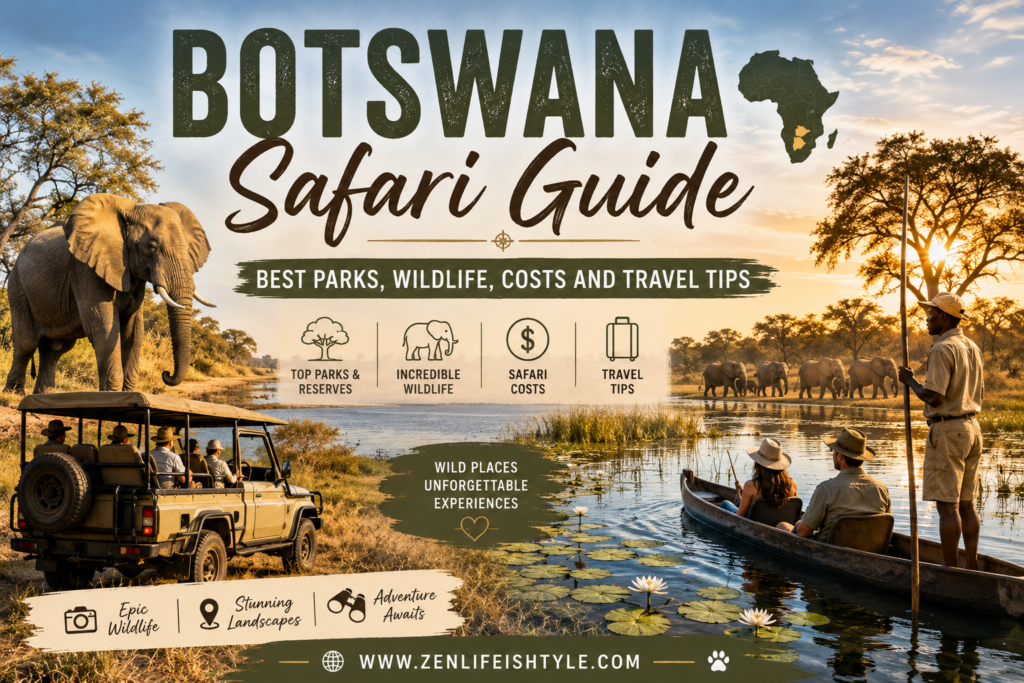
A Botswana safari is one of the best choices in Africa if you want wild landscapes, fewer crowds, beautiful lodges, and a true wilderness feeling. It is different from a busy classic safari route because many areas feel remote, peaceful, and very close to nature.
This Botswana safari guide is especially useful if you want a safari experience that includes both land and water. In the Okavango Delta, you can explore winding waterways by mokoro trips, enjoy boat activities, and see wildlife from a completely different angle. In Chobe National Park, you can enjoy game drives and river safaris, with excellent chances of seeing African elephants along the Chobe River.
Botswana is also a strong choice for travellers who want a more exclusive African safari in Southern Africa. Places like Moremi Game Reserve, private concessions, and the Okavango Delta offer excellent wildlife viewing, strong guiding, and a quieter safari atmosphere. Many travellers also combine Botswana with Victoria Falls, which makes it a great option for a wider Southern Africa itinerary.
This guide will help you begin planning your Botswana safari with more confidence. You will learn where to go, when to visit, what animals you may see, how much it costs, where to stay, and how to combine Botswana with Victoria Falls.
Botswana is not the place to rush. The beauty of a safari here is in the quiet moments: drifting through the Delta in a mokoro, watching elephants at sunset on the Chobe River, or listening to the night sounds from a small camp in the bush.
Why Choose Botswana for a Safari?
Botswana is one of Africa’s most exclusive safari destinations. It is a great choice if you want strong wildlife viewing, wild landscapes, fewer crowds, and a safari experience that feels private and close to nature.
Compared to busier safari destinations like Kenya or Tanzania, Botswana often feels more remote and untouched. Its wide open spaces, inland waterways, desert landscapes, and small safari camps all add to its wild character. Many camps are small, and the country follows a low-impact tourism model, which helps limit visitor numbers and protect the environment. This means a Botswana safari is not usually the cheapest option, but it can offer more space, privacy, and a very special wilderness atmosphere.
One of the biggest reasons to visit Botswana is the variety of safari experiences. In the Okavango Delta, you can enjoy water activities such as mokoro trips, canoe safaris, boat safaris, and game drives. In Chobe National Park, you can see large herds of African elephants, especially around the Chobe River. In Moremi Game Reserve, travellers often look for predators, leopards, wild dogs, lions, buffalo, and excellent wildlife viewing.
Botswana also offers dramatic Kalahari Desert landscapes, mobile camping options, luxury lodges, and private concessions where activities like night drives and walking safaris may be available. This makes it a good destination for travellers who want something more adventurous or more exclusive than a standard safari route.
A Botswana safari is especially good for repeat safari travellers, luxury travellers, photographers, and anyone who wants a true wilderness feeling. It may cost more than some other African safari destinations, but the reward is space, strong guiding, beautiful lodges, and one of the most peaceful safari atmospheres in Southern Africa.
Best Safari Parks and Reserves in Botswana
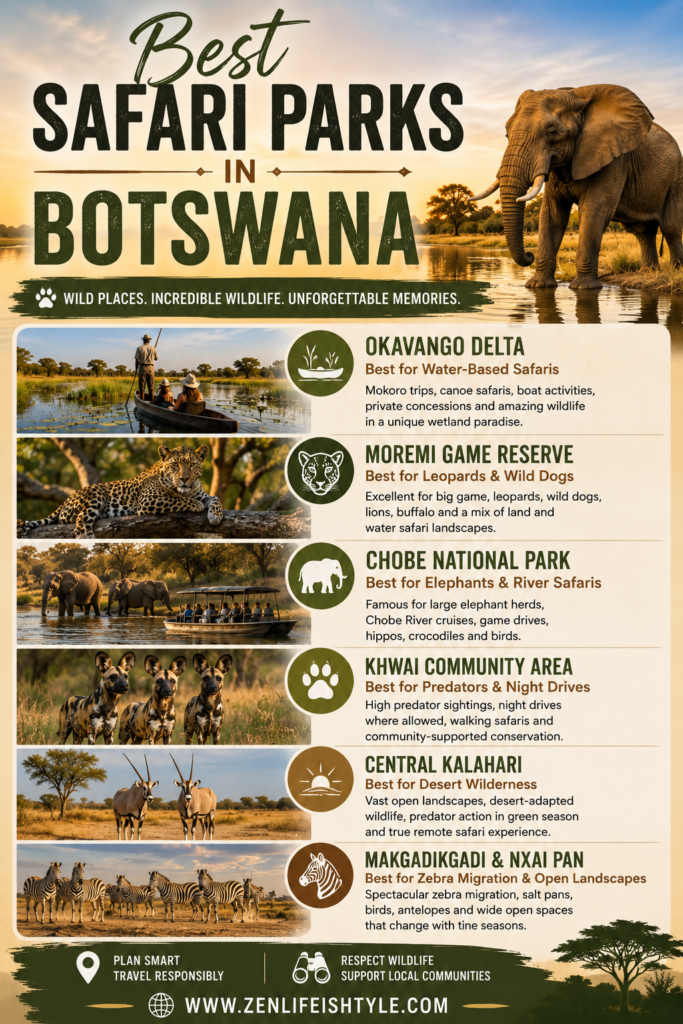
Okavango Delta — Best for Water-Based Safaris and Wilderness
The Okavango Delta is one of the most special places to visit on a Botswana safari. It is often called the famous Okavango Delta because it offers a very different safari experience from the usual dry-land game drives. Instead of only travelling by safari vehicle, you can explore winding waterways, quiet channels, islands, floodplains, and lagoons.
The delta is created by the Okavango River, which spreads into the Kalahari instead of flowing into the sea. This creates a rich wetland full of wildlife, birds, hippos, and beautiful scenery. The Okavango Delta is also a UNESCO World Heritage Site, which shows how important and unique this ecosystem is.
One of the best things to do here is a mokoro trip. A mokoro is a traditional canoe used to move through the shallow waterways of the delta. It gives you a peaceful and close-to-nature view of the area, especially for birds, water plants, frogs, and smaller wildlife. Some areas also offer canoe safaris, boat trips, and other water activities.
The Okavango Delta is especially interesting because it floods during the dry season. This winter flood makes water-based safari activities even more special at a time when many other safari areas are becoming dry. For this reason, the Okavango Delta is often best visited in winter, when the water levels are good and wildlife may gather around permanent water sources.
Many safari areas in the delta are private concessions, which means fewer guests, smaller camps, and a quieter safari experience. This is one of the reasons Botswana feels so exclusive compared to some busier safari destinations.
Choose the Okavango Delta if you want mokoro trips, canoe safaris, water activities, birds, hippos, private concessions, true wilderness, and one of the most unique safari experiences in Africa.
Moremi Game Reserve — Best for Leopards, Wild Dogs and Big Game
Moremi Game Reserve is one of the best places to visit on a Botswana safari if you want strong wildlife viewing on both land and water. It forms part of the wider Okavango Delta ecosystem, which means the scenery can include floodplains, lagoons, river channels, grasslands, and woodland areas.
Moremi is often considered one of Africa’s best areas for leopards. Leopard sightings are never guaranteed, but this reserve is well known for them, especially with experienced guides who understand the landscape and animal behaviour.
It is also a good place to look for wild dogs, lions, buffalo, elephants, hippos, antelopes, giraffes, and many other animals. Because the reserve has such a mix of habitats, every game drive can feel different. One moment you may be driving through dry woodland in a safari vehicle, and the next you may be close to water channels filled with birds and hippos.
Moremi also gives travellers a less crowded safari experience compared to some busier African safari destinations. You still need patience, because wildlife is wild and sightings depend on season, guide, water levels and luck. But when the conditions are right, Moremi can offer a very rich and exciting safari experience.
Choose Moremi Game Reserve if you want leopards, wild dogs, lions, buffalo, strong wildlife viewing, game drives, and a beautiful mix of land and water safari landscapes in Botswana.
Chobe National Park — Best for Elephants and River Safaris
Chobe National Park is one of the best places to visit on a Botswana safari, especially if you want to see large herds of African elephants. The park is famous for its elephants, buffalo, river views, and easy access from Kasane.
The Chobe River is the heart of the safari experience here. During the dry season, many animals come down to the river to drink, which makes wildlife viewing very rewarding. You may see elephants crossing the river, buffalo grazing nearby, hippos in the water, crocodiles on the banks, and many birds along the shoreline.
Chobe offers both land and water safari experiences. A morning game drive in a safari vehicle is good for looking for lions, leopards, buffalo, giraffes, antelopes, and other wildlife. A river cruise is one of the best ways to see elephants, hippos, crocodiles, and birds from a different angle.
Chobe is also one of the easiest Botswana safari areas to combine with Victoria Falls. Many travellers visit Chobe before or after seeing the falls in Zambia or Zimbabwe. This makes it a good choice for first-time Botswana safari travellers who want wildlife, river activities, and a simple Southern Africa itinerary.
Choose Chobe National Park if you want elephants, Chobe River safaris, game drives, river cruises, birds, hippos, crocodiles, and an easy Victoria Falls combination.
Chobe is also one of the easiest safari areas for travellers who want strong wildlife without complicated logistics. This makes it a good starting point before moving deeper into Botswana’s more remote safari regions.
Khwai Community Area — Best for Predators and Night Drives
Khwai Community Area is a great choice if you want a more flexible Botswana safari experience with strong predator sightings and community-supported tourism. It sits near the Okavango Delta and Moremi area, which makes it a rich wildlife region with a mix of land, water, floodplains and woodland.
Khwai is known for high concentrations of predators, including lions, leopards and wild dogs. Wildlife sightings are never guaranteed, but this area is often rewarding for travellers who want exciting game drives and a more active safari atmosphere.
One of the main advantages of Khwai is that some activities may be more flexible than in national parks. In areas where they are allowed, travellers may be able to enjoy night drives to look for nocturnal animals and predators after dark. Walking safaris may also be available in selected areas with expert guides and proper safety rules.
Khwai also has an important community element. Tourism here can support local communities, local conservation efforts, guiding, employment and wildlife protection outside formal national parks. This makes it a good option for travellers who want their safari to support both people and nature.
Choose Khwai Community Area if you want predators, night drives where allowed, walking safaris where permitted, fewer crowds, local conservation and a more flexible Botswana safari experience.
Central Kalahari Game Reserve — Best for Desert Wildlife and Remote Safaris
Central Kalahari Game Reserve is a great choice if you want a remote safari experience that feels very different from the Okavango Delta. Instead of winding waterways and floodplains, this area gives you wide open spaces, Kalahari Desert scenery, rolling grasslands, and a strong feeling of true wilderness.
The Central Kalahari is best for travellers who want to go off the beaten track. It is not as easy or as polished as some of Botswana’s luxury safari areas, but that is part of its appeal. The landscapes feel vast, quiet, and untouched, making it ideal for travellers who enjoy remote places and slower safari experiences.
Wildlife here is different from the Delta and Chobe. You may see desert-adapted species, antelopes, giraffes, jackals, hyenas, lions, cheetahs, and many birds. During the green season, the Kalahari can transform as rain brings fresh grass, attracting animals and creating strong predator action.
This area is better for travellers who are comfortable with a more remote safari and understand that wildlife viewing may require patience. It is not always about seeing huge numbers of animals quickly. It is about space, silence, desert landscapes, and the feeling of being far away from busy safari routes.
Choose Central Kalahari Game Reserve if you want rolling grasslands, desert-adapted wildlife, predator action in the green season, true wilderness, and a remote Botswana safari away from the usual route.
Makgadikgadi and Nxai Pan — Best for Zebra Migration and Open Landscapes
Makgadikgadi and Nxai Pan are great choices if you want wide open landscapes, big skies, salt pans, seasonal wildlife, and a safari experience that feels very different from the Okavango Delta or Chobe.
This area is known for its open salt pans and dramatic contrast between the dry season and the green season. During the dry months, the landscape can feel wide, quiet and almost otherworldly. When the rains arrive, the area changes completely, with fresh grass, birds, and wildlife moving into the region.
One of the biggest highlights is Botswana’s annual zebra migration, often described as one of the world’s longest zebra migrations. It can cover around 620 miles, although the exact movement depends on rain, grazing, and seasonal conditions.
The zebra migration is usually linked to June to November, but timing can vary. Some years are better than others, and wildlife movement is never guaranteed. This is why it helps to plan with a good local operator who understands seasonal patterns.
Besides zebras, travellers may see antelopes, predators, elephants in some areas, and many birds, especially during wetter months. The scenery is also a major part of the experience, with open horizons, salt pans, and unique desert-like landscapes.
Choose Makgadikgadi and Nxai Pan if you want zebra migration, open salt pans, birds, wildlife, big landscapes, and a quieter Botswana safari away from the more famous Delta and Chobe routes.
Best Botswana Safari Destinations by Travel Style
The best Botswana safari destination depends on the type of safari experience you want. Some areas are better for elephants and river safaris, while others are better for mokoro trips, leopards, wild dogs, night drives, desert landscapes or a Victoria Falls combination.
Travel Style | Best Botswana Safari Area |
|---|---|
First Botswana safari | Chobe National Park, Okavango Delta, Moremi |
Luxury safari | Okavango Delta, private concessions |
Water-based safari | Okavango Delta, Chobe River |
Elephants | Chobe National Park |
Leopards | Moremi Game Reserve |
Wild dogs | Moremi, Khwai |
Night drives | Khwai, private concessions |
Walking safaris | Private concessions, selected Delta areas |
Mobile camping | Moremi, Chobe, Central Kalahari |
Desert safari | Central Kalahari Game Reserve |
Zebra migration | Makgadikgadi and Nxai Pan |
Victoria Falls combination | Chobe National Park, Kasane |
For a first Botswana safari, Chobe National Park, the Okavango Delta and Moremi Game Reserve are usually the easiest places to understand. Chobe is excellent for elephants and river cruises, the Okavango Delta is best for mokoro trips and water-based safaris, and Moremi is strong for leopards, wild dogs and big game.
If you want a more exclusive safari, look at the Okavango Delta private concessions. These areas often offer smaller camps, fewer guests, stronger privacy and activities such as walking safaris or night drives where permitted.
For travellers who want something different from the Delta, the Central Kalahari Game Reserve gives a remote desert safari experience, while Makgadikgadi and Nxai Pan are good for open landscapes and zebra migration. If you want to combine Botswana with one of Africa’s great natural wonders, Chobe National Park and Kasane work very well with Victoria Falls.
What Animals Can You See on a Botswana Safari?
Botswana has excellent wildlife viewing, especially if you enjoy a safari that feels wild, natural and less crowded. The animals you see will depend on the area, season, water levels, guide and luck, but Botswana is one of the best safari destinations in Southern Africa for a rich wildlife experience.
Botswana is especially famous for African elephants. The country is known for having one of the world’s largest elephant populations, and Chobe National Park is one of the best places to see them. During the dry season, large herds often gather near the Chobe River, creating unforgettable safari moments.
You may also see lions, leopards, wild dogs, buffalo, hippos, crocodiles, antelopes, zebras, giraffes and many birds. The Okavango Delta is excellent for water-based wildlife viewing, where you may see hippos, birds, elephants and antelopes from boats or mokoro trips.
For predators, Khwai is known for strong sightings of lions, leopards and wild dogs, while Moremi Game Reserve is especially famous for leopard sightings. Wildlife encounters are never guaranteed, but these areas are among the most rewarding in Botswana.
The Kalahari Desert offers a very different safari experience. Here, you may see desert-adapted wildlife, including antelopes, giraffes, jackals, hyenas, lions and cheetahs, especially when the green season brings fresh grass and more animal movement.
A Botswana safari is not only about ticking animals off a list. It is about watching wildlife in peaceful, remote landscapes, from elephants along the Chobe River to birds in the Delta and predators moving through Khwai or Moremi.
Best Time to Visit Botswana for Safari
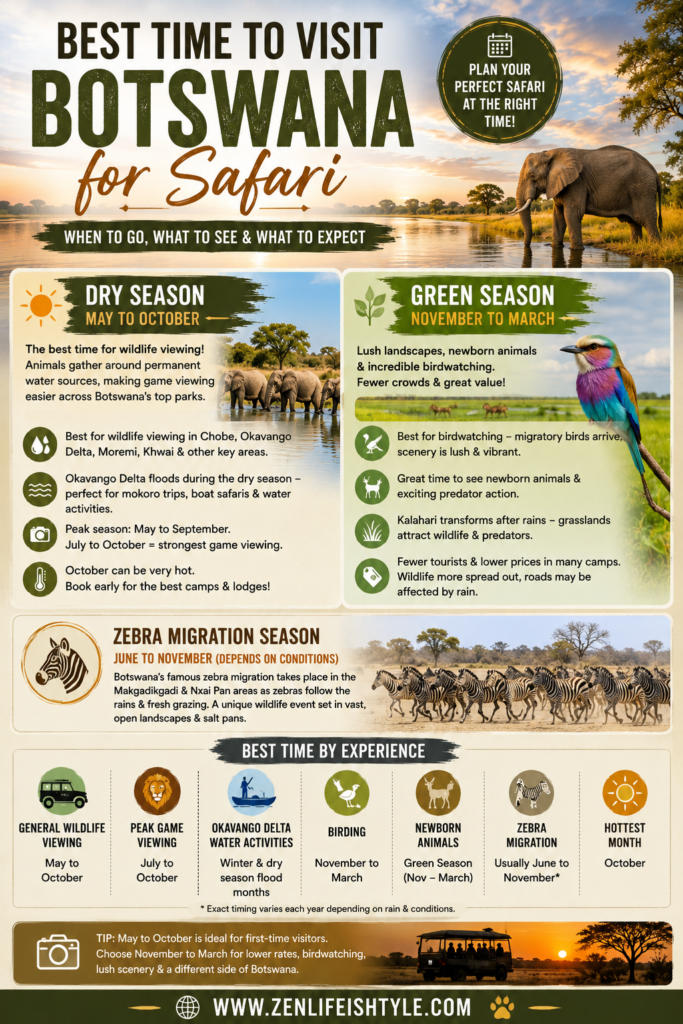
Dry Season: May to October
The dry season, from May to October, is usually the best time to visit Botswana for a safari. This is the dry winter season, and it is one of the best periods for wildlife viewing across many of Botswana’s national parks and private concessions.
During these months, water becomes harder to find in many areas, so animals often gather around permanent water sources. This makes game viewing easier, especially around the Chobe River, the Okavango Delta, Moremi, Khwai and other key safari areas.
The Okavango Delta is especially interesting because it floods during the dry season. While other areas are becoming drier, water arrives in the Delta and fills the channels, floodplains and lagoons. This makes winter a wonderful time for mokoro trips, boat safaris and other water-based activities.
Peak safari season is usually from May to September, with July to October offering very strong game viewing. This is when many travellers visit Botswana for the best wildlife experience, so prices are higher and lodges can book up early.
October can also be an excellent month for wildlife, but it is often very hot. If you are sensitive to heat, you may prefer May, June, July, August or September. For the best choice of camps and lodges, it is wise to book early, especially if you want to travel during peak season.
Green Season: November to March
The green season, from November to March, is a beautiful time to visit Botswana if you want lush landscapes, birdwatching, newborn animals and fewer tourists. This is the period when occasional rain brings new life to the bush, and many areas become greener and softer than they are during the dry season.
For bird lovers, the green season can be excellent. Migratory birds arrive, colours are brighter, and the scenery can be very photogenic. It is also a good time to see young animals, which can create exciting predator activity in some areas.
The Kalahari is especially interesting during the green season. After the rains, parts of the desert transform into grasslands, attracting animals and predators. This can make places like the Central Kalahari and Makgadikgadi feel very different from the dry months.
There are usually fewer tourists during this period, and some camps may offer lower prices compared to peak season. The trade-off is that wildlife can be more spread out because water is available in more places, and some roads may be affected by rain.
Choose the green season if you want birdwatching, newborn animals, lush scenery, fewer crowds, better value in some areas, and a different side of Botswana.
Zebra Migration Season
Botswana is also known for its annual zebra migration, one of the country’s most unique wildlife events. This migration is usually linked to the Makgadikgadi and Nxai Pan areas, where zebras move between seasonal grazing areas as rain and water conditions change.
The zebra migration is often connected to the period from June to November, but exact timing can vary. Like all wildlife movement, it depends on rain, fresh grass, water availability and natural animal behaviour. Some years may be better than others, so it is best to plan with a local operator who understands the season.
This experience is different from the famous wildebeest migration in East Africa. In Botswana, the beauty is in the wide open landscapes, salt pans, quiet wilderness and the sight of zebras moving through a very unique environment.
Best Time by Experience
Here is a simple way to choose the best time to visit Botswana based on the safari experience you want:
Best for general wildlife viewing: May to October
Best for peak game viewing: July to October
Best for Okavango Delta water activities: Winter and dry season flood months
Best for birding: November to March
Best for newborn animals: Green season
Best for zebra migration: Usually June to November, depending on conditions
Hottest month: October
For most first-time travellers, May to October is the easiest time to choose for a Botswana safari. If you want lower rates, birdwatching, lush scenery and fewer tourists, the green season from November to March can also be a very rewarding option.
Types of Botswana Safari Experiences
Game Drives
Game drives are one of the main safari activities in Botswana. They are usually done in a safari vehicle with a trained driver guide who knows the area, wildlife behaviour, tracks, and safe viewing rules.
Game drives are common in Botswana’s national parks, game reserves, and private concessions. They often take place in the early morning and late afternoon, when animals are more active and the temperatures are cooler.
During the dry season, game drives can be especially rewarding because animals gather around permanent water sources. This can make wildlife viewing easier, especially in places like Chobe, Moremi and Khwai.
A game drive may include sightings of elephants, lions, leopards, buffalo, giraffes, zebras, antelopes, wild dogs, birds and many other animals. But as with any safari, sightings are never guaranteed. A good guide and a little patience make a big difference.
Mokoro Trips and Canoe Safaris
Mokoro trips are one of the most special safari experiences in Botswana. A mokoro is a traditional canoe used in the Okavango Delta to move quietly through shallow water channels.
This is a peaceful way to explore the Delta’s winding waterways. Instead of the sound of a vehicle, you move slowly through reeds, water lilies and quiet channels while your guide points out birds, plants, frogs and other small details.
Canoe safaris and mokoro trips give you a unique view of the Delta’s wildlife and flora. You may see hippos and birds from a safe distance, as well as antelopes, elephants or other animals near the water.
This type of safari is not about speed or big sightings. It is more intimate and calm, perfect for travellers who want to feel close to nature and experience the Okavango Delta in a traditional way.
Boat Safaris and River Cruises
Boat safaris and river cruises are another excellent way to enjoy Botswana’s water activities. They are especially popular on the Chobe River, where wildlife often comes to the water during the dry season.
A Chobe River cruise can be one of the best ways to see elephants, buffalo, hippos, crocodiles and birds. You may see elephants drinking at the riverbank, hippos resting in the water, crocodiles sunning themselves, and birds flying over the river.
Many travellers enjoy a boat safari as a sunset activity. It is more relaxed than a game drive, but it can still offer excellent wildlife viewing and beautiful photography opportunities.
Boat safaris are a great reason to include Chobe National Park or the Okavango Delta in your Botswana safari itinerary.
Walking Safaris
Walking safaris give you a slower and more detailed way to experience the bush. Instead of watching wildlife only from a vehicle, you walk with expert guides who explain tracks, plants, birds, insects, animal signs and smaller details in the landscape.
Walking safaris can offer close encounters with wildlife, but they are always done carefully and only in selected areas where they are permitted. Safety rules are very important, and you should always follow your guide’s instructions.
This experience is not about getting too close to dangerous animals. It is about understanding the bush better and noticing things you might miss during a normal game drive.
Walking safaris are best for travellers who want a deeper, quieter and more educational safari experience.
Night Drives
Night drives are available in some private concessions and community areas, such as Khwai, but they are not usually allowed everywhere. They must always be done as a guided activity with trained guides.
A night drive gives you the chance to look for nocturnal animals and predators after dark. You may see animals that are harder to find during the day, such as genets, civets, owls, hyenas, leopards or lions on the move.
Night drives can make a Botswana safari feel more exciting because the bush changes after sunset. The sounds, atmosphere and animal behaviour can be very different from a daytime game drive.
Choose a private concession or area like Khwai if night drives are important to you, but always check what activities are allowed before booking.
Mobile Camping Safaris
Mobile camping safaris are a good choice if you want a more adventurous and close-to-nature Botswana safari. Instead of staying in one fixed lodge, mobile camps move between different safari areas such as Moremi, Chobe, Khwai or the Central Kalahari.
Mobile camping can range from basic camping options to more comfortable mobile camps with proper beds, camp staff and prepared meals. It gives travellers a strong sense of true wilderness and can be more affordable than luxury lodges.
This type of safari is good for travellers who do not mind simpler facilities and want to spend more time in remote areas. You may sleep under the night sky, hear animals in the distance and feel much closer to the bush.
Mobile camping is not for everyone, but for adventurous travellers, it can be one of the most memorable ways to experience Botswana.
Botswana Safari Costs: Is Botswana Expensive?
Botswana usually sits at the higher end of African safari pricing, especially for Okavango Delta lodges, private concessions, and fly-in safaris. This is mainly because the country follows a low-impact tourism model, which limits visitor numbers to help protect wildlife areas and fragile ecosystems.
This means Botswana has fewer beds, smaller camps, and more private safari spaces compared to some busier destinations. Many lodges have only a few suites, and luxury lodges in remote areas can be very expensive. Fly-in safaris also add to the cost because many camps are reached by small aircraft.
As a rough guide, Botswana safari costs often start around US$400 per person per day for more standard safari options. Camping safaris can start from around US$100 per person per day, while luxury lodges can range from around US$1,000 to US$7,000 per person per night, depending on the camp, season, location and inclusions. That also makes Botswana one of the pricier safari choices on the african continent.
Park entry fees can be around US$10 per person per day, while overnight concession fees may range from around US$30 to US$100 per person per night. These fees can add up, especially if you are staying in private concessions or moving between several safari areas. Solo travellers often pay more per person because many safari costs are fixed and shared across fewer people.
Safari Style | Approximate Cost | What to Expect |
|---|---|---|
Camping safari | From around US$100 pp/day | Basic camping, shared setup, adventurous |
Budget / mobile camping safari | Around US$250–400 pp/day | Mobile camps, driver guide, simple comfort |
Mid-range safari | Around US$400–800 pp/day | Comfortable lodges or camps, guided activities |
Luxury lodge safari | Around US$1,000–7,000 pp/night | Exclusive lodges, fly-in access, high-end service |
Fly-in safari | Higher cost | Small aircraft transfers, remote camps, less road travel |
When comparing Botswana safari prices, always look at the route, not only the lodge name. A good itinerary saves time, avoids unnecessary transfers, and puts you in the right area for the season.
Booking through local tour operators can sometimes help you get better value because they understand routes, seasons, camp combinations and transfer costs. They can also help you avoid paying more for a route that does not match your travel style.
On a Botswana safari, the lowest price is not always the smartest choice. A lower price may exclude important costs such as park fees, concession fees, transfers, activities or good guiding. A more expensive safari may include better locations, stronger guides, fewer vehicles, smoother transfers and more time in the best wildlife areas.
Before booking, always check what is included in the price: accommodation, meals, drinks, park fees, concession fees, game drives, mokoro trips, boat activities, transfers, light aircraft flights, tips and laundry. This will help you compare safari packages properly.
Where to Stay on a Botswana Safari
Where you stay on a Botswana safari can shape the whole experience. Botswana accommodation often focuses on small camps, privacy, wilderness, and a low-impact tourism style. Instead of large safari hotels, many places are intimate lodges or safari camps with only a few rooms or suites.
In the Okavango Delta, many lodges and safari camps are set in private concessions or remote wilderness areas. These camps are often reached by light aircraft and offer a mix of game drives, mokoro trips, boat safaris, walking safaris where permitted, and peaceful water-based activities.
Chobe lodges are a good choice if you want easier access, river views, and a strong chance of seeing elephants. Staying near the Chobe River or Kasane also makes it easier to combine your safari with Victoria Falls.
In Moremi and Khwai, camps are usually better for travellers who want a wilder safari feel, strong predator sightings, leopards, wild dogs, and more flexible activities in selected areas. Khwai can also be a good option for community-supported tourism and night drives where allowed.
Botswana has everything from basic camping options and mobile camping to high-end luxury lodges. Mobile camping is more adventurous and can be a good way to experience remote areas without the cost of top luxury lodges. Luxury lodges, on the other hand, often offer excellent guiding, beautiful design, private decks, plunge pools, and fly-in access.
Many lodges in Botswana have fewer than eight suites, which helps keep the experience quiet and personal, with less contact with other guests unless you prefer a more social camp atmosphere. Because of Botswana’s low-impact tourism approach, many camps also use eco-friendly materials and try to reduce their impact on the natural environment.
Choose your Botswana safari accommodation based on your budget, comfort level, activities, and how remote you want to feel. A simple mobile camp can give you a real bush adventure, while a luxury lodge in the Okavango Delta can offer privacy, comfort, and one of the most special safari settings in Africa.
How Many Days Do You Need for a Botswana Safari?
How many days you need for a Botswana safari depends on how many areas you want to visit and how remote your camps are. Botswana is worth spending more time in because travel between camps can involve light aircraft, boat transfers, long road sections, and remote safari areas.
As a simple guide:
Length of Safari | Best For |
|---|---|
3 days | Short Chobe safari or Okavango Delta taster |
4 to 5 days | Chobe + Okavango Delta or Moremi |
6 to 8 days | Stronger Botswana safari with two or three areas |
10+ days | Botswana safari plus Victoria Falls or Kalahari |
For a first Botswana safari, a good plan could be:
2 nights Chobe + 3 nights Okavango Delta
3 nights Moremi or Khwai + 3 nights Okavango Delta
7 to 10 days if adding Victoria Falls
A short 3-day safari can work if you only want a quick Chobe safari or a small taste of the Okavango Delta. But Botswana is not a destination to rush if you can avoid it.
With 6 to 8 days, you can enjoy a better mix of experiences, such as game drives, mokoro trips, river cruises, and time in private concessions. If you have 10 days or more, you can add Victoria Falls, the Central Kalahari, or Makgadikgadi and Nxai Pan for a more complete Southern Africa itinerary.
For most travellers, the best Botswana safari is not about visiting too many places. It is better to choose two or three strong areas and enjoy them properly.
Botswana Safari and Victoria Falls Combination
A Botswana safari and Victoria Falls combination is one of the easiest and most rewarding ways to plan a Southern Africa itinerary. Many travellers combine these two destinations because Chobe National Park and Kasane are very close to Victoria Falls.
Kasane is the main gateway for Chobe, and from there it is possible to travel to Victoria Falls in either Zimbabwe or Zambia. Many international travellers reach Botswana via South Africa, especially through Johannesburg, before continuing to Kasane or other safari areas. Cape Town can also fit into a wider regional route, depending on flight plans and the rest of the itinerary. This makes the combination very practical for first-time travellers who want both safari and one of Africa’s most famous natural wonders in one trip.
A common route is to start with Chobe National Park, enjoy game drives and a Chobe River cruise, then continue to Victoria Falls for waterfall viewpoints, adventure activities, sunset cruises, and cultural experiences. You can visit the Zambian side from Livingstone or the Zimbabwe side from Victoria Falls Town, depending on your flights, visa rules, and preferred activities.
This combination works well because Chobe gives you excellent wildlife, especially elephants, buffalo, hippos, crocodiles and birds along the river, while Victoria Falls adds scenery, adventure and a completely different experience.
Before booking, check border crossings, visa requirements, transfer times and whether a KAZA Univisa is suitable for your route. Rules can change, so it is always better to confirm before travelling.
Choose a Botswana safari and Victoria Falls combination if you want an easy route with wildlife, river safaris, waterfalls, adventure activities and a strong Southern Africa travel experience.
Botswana Safari Travel Tips for First-Time Visitors
If you are planning your first Botswana safari, it is best to begin planning at least 6 months in advance. Botswana is a popular safari destination, and peak season camps can book up early, especially in the Okavango Delta, Moremi, Khwai and Chobe.
If your safari includes remote camps, you may travel between areas by small chartered aircraft. For these flights, use soft-sided luggage and pack light because weight limits are usually strict. Hard suitcases are not ideal for light aircraft.
Self-drive safaris are possible in Botswana, but they can be challenging without a local guide. Some routes are sandy, remote and difficult to navigate, especially in parks and wilderness areas. If it is your first time, a guided safari with a driver guide is usually easier and safer.
Booking through local tour operators or travel experts can also help you get better value. They understand camp locations, seasons, transfer routes, park fees and which areas work best together. Before confirming, always check what is included in the safari cost, such as accommodation, meals, game drives, park fees, concession fees, mokoro trips, boat safaris, transfers and light aircraft flights.
It is also useful to carry some cash for tips. Tipping safari guides and camp staff is customary in Botswana, although the amount depends on the service, lodge style and your own budget.
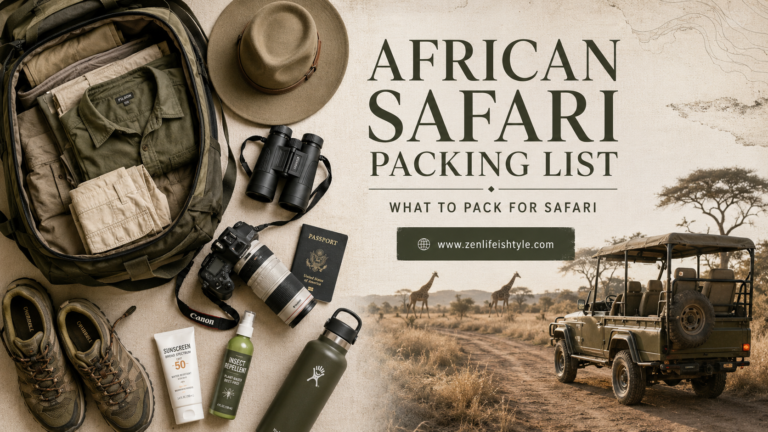
For packing, choose neutral clothing such as khaki, beige, olive or light brown. October can be very hot, so bring sun protection, a hat, sunglasses, sunscreen and light breathable clothes. You should also pack insect repellent, binoculars, a camera, personal medication and any important travel documents.
During safari activities, always respect wildlife and follow your guide’s instructions. Do not stand up in the vehicle unless allowed, do not feed animals, and keep noise low during sightings.
Finally, try to support responsible operators and local communities. Botswana’s safari model depends on protecting wildlife areas, supporting conservation and creating benefits for people living near these natural spaces. A good Botswana safari should be amazing for travellers, but also respectful to wildlife, guides, camp staff and local communities.
Final Thoughts
Botswana is one of Africa’s best safari destinations, especially if you want space, privacy, wild landscapes and a true wilderness feeling. It is not the cheapest safari country, but it offers a very special experience with fewer crowds, small camps, strong guiding and excellent wildlife viewing.
Choose the Okavango Delta if you want mokoro trips, canoe safaris, water activities, private concessions and one of the most unique safari landscapes in Africa. It is perfect for travellers who want a peaceful, water-based safari experience.
Choose Moremi Game Reserve if you want leopards, wild dogs, lions, buffalo and a strong mix of land and water safari experiences. Moremi is one of Botswana’s most rewarding wildlife areas and a great choice for serious safari lovers.
Choose Chobe National Park if you want elephants and river safaris. The Chobe River is one of the best places in Southern Africa to see large elephant herds, hippos, crocodiles, birds and beautiful sunset river scenes.
Choose Khwai if you want predators, night drives where allowed, walking safaris where permitted and a more flexible safari experience linked to local communities.
Choose the Central Kalahari Game Reserve if you want desert wilderness, open landscapes, remote camps and a safari that feels far away from the usual routes.
The best time for a Botswana safari is usually May to October, when wildlife viewing is strong and animals gather around permanent water sources. The green season, from November to March, is also worth considering if you want birds, newborn animals, lush scenery, fewer tourists and better value in some areas.
Botswana is more expensive than many other safari destinations, but it offers privacy, true wilderness, excellent guiding and some of the most beautiful safari camps in Africa. It also combines very well with Victoria Falls, especially if you are visiting Chobe National Park and Kasane.
The best Botswana safari is the one planned around your wildlife goals, budget, season, comfort level and travel style.
FAQs
Is Botswana good for safari?
Yes, Botswana is one of Africa’s best safari destinations, especially if you want wilderness, fewer crowds, strong wildlife viewing and a more exclusive safari experience. It is famous for the Okavango Delta, Chobe National Park, Moremi Game Reserve and some of the best elephant sightings in Southern Africa.
What is the best safari area in Botswana?
The best safari area in Botswana depends on what you want to see. Choose the Okavango Delta for mokoro trips and water-based safaris, Chobe National Park for elephants and river safaris, Moremi Game Reserve for leopards and wild dogs, and the Kalahari for remote desert landscapes.
When is the best time to visit Botswana for safari?
The best time to visit Botswana for safari is usually from May to October, during the dry season. This is when wildlife viewing is strong because animals gather around permanent water sources. July to October is especially good for game viewing, while November to March is the green season, which is better for birds, newborn animals, lush landscapes and fewer tourists.
Is Botswana safari expensive?
Yes, Botswana is often one of Africa’s most expensive safari destinations. This is mainly because of its low-impact tourism model, small camps, fewer beds, private concessions and fly-in logistics. The higher cost usually gives travellers more privacy, fewer crowds, strong guiding and a true wilderness safari experience.
Can you combine Botswana safari with Victoria Falls?
Yes, Botswana combines very well with Victoria Falls. Chobe National Park and Kasane are close to the falls, so many travellers add Victoria Falls in Zambia or Zimbabwe before or after their Botswana safari, often routing through South Africa as part of the journey. It is one of the easiest safari and waterfall combinations in Southern Africa.
What animals can you see in Botswana?
On a Botswana safari, you may see elephants, lions, leopards, wild dogs, buffalo, hippos, crocodiles, zebras, giraffes, antelopes and many birds. Chobe is famous for elephants, Moremi is known for leopards, Khwai is strong for predators, and the Okavango Delta is excellent for water-based wildlife viewing.
What is a mokoro safari?
A mokoro safari is a quiet water-based safari in the Okavango Delta. A mokoro is a traditional canoe used to move through shallow channels and waterways. It is a peaceful way to see birds, plants, frogs, water lilies and wildlife from a different angle.
How many days do you need for Botswana safari?
For a good first Botswana safari, 5 to 7 days is a strong starting point. This gives you enough time to combine areas like Chobe, Moremi, Khwai or the Okavango Delta. If you want to add Victoria Falls or the Kalahari, plan 10 days or more for a more complete trip.