A Kenya safari is one of the best ways to experience a classic African safari, especially if it is your first time going on safari. Kenya is one of the most famous safari destinations in East Africa, known for open plains, rich wildlife, experienced guides, safari lodges, tented camps, and unforgettable game drives.
For many travellers, the dream starts with the Masai Mara. This is one of Africa’s most iconic safari areas and is especially famous for the Great Migration, when huge herds of wildebeest and zebras move across the landscape in search of fresh grazing. Even outside migration season, the Masai Mara is known for excellent wildlife viewing, big cats, and a true classic safari atmosphere.
But a Kenyan safari is not only about the Masai Mara. You can also visit Amboseli for elephants and Mount Kilimanjaro views, Lake Nakuru for birding and rhinos, Samburu for unique wildlife, and conservancies that support local communities and conservation.
This guide will help you plan your Kenya safari with more confidence. You will learn where to go, when to visit, what animals you may see, how long to stay, where to stay, and how to choose the right safari experience for your budget and travel style.
Kenya is also a good choice because you can keep the trip simple or make it more varied. A first-time traveller can focus only on the Masai Mara, while someone with more time can add Amboseli, Lake Nakuru, Samburu, or even a beach stay on the Kenya coast.
Why Choose Kenya for a Safari?
Kenya is a premier safari destination and one of the best places in Africa for first-time safari travellers. It offers world-famous wildlife viewing, beautiful landscapes, experienced guides, and a wide range of safari styles, from luxury lodges to budget tented camps.
One of the biggest reasons to choose Kenya is its variety. The country has open plains, savannah landscapes, riverine forests, lakes, mountains, and semi-arid wilderness areas. This means every safari area feels a little different. The Masai Mara is famous for big cats and the Great Migration, Amboseli National Park is known for elephants and Mount Kilimanjaro views, and Lake Nakuru is popular for birding and rhinos.
Kenya is also a strong destination for seeing the Big Five: lion, leopard, elephant, buffalo, and rhino. Big cats are a major highlight, especially in the Masai Mara, where lions, cheetahs, and leopards are often high on travellers’ wish lists. Birding is also excellent, with lakes and wetlands attracting many species.
Another reason Kenya works well for a first safari is access. Many trips begin in Nairobi, with safari flights often departing from Wilson Airport. This makes it easier to connect to places like the Masai Mara, Amboseli, Samburu, and other safari areas.
Kenya also offers more than wildlife. Cultural visits with the Maasai people, local conservation projects, community conservancies, and beach extensions on the Kenya coast can all be added to a safari itinerary. This gives travellers a good mix of classic safari, wildlife, culture, conservation, and relaxation.
What makes Kenya especially useful for first-time safari travellers is that it gives you many safari styles without making the trip feel too complicated. You can choose a classic lodge safari, a tented camp in the bush, a fly-in luxury safari, or a more affordable road safari depending on your budget.
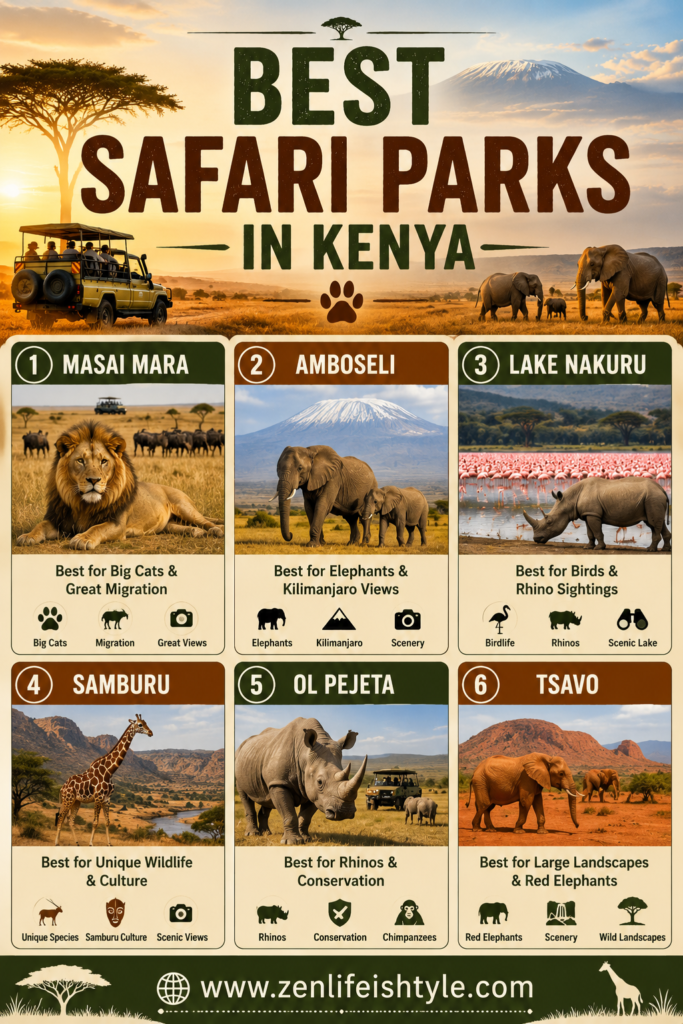
Best Safari Parks and Reserves in Kenya
Masai Mara National Reserve — Best for Big Cats and the Great Migration
The Masai Mara National Reserve is the most famous place for a Kenya safari and one of the best safari destinations in East Africa. It is often called the Masai Mara, or Maasai Mara, and it gives travellers that classic safari feeling: open plains, big skies, safari lodges, tented camps, and excellent wildlife viewing.
The Masai Mara is especially famous for big cats. Lions are often a major highlight, and the reserve is also known for cheetahs and leopards. If seeing predators is high on your list, a Masai Mara safari is one of the strongest choices in Kenya.
The reserve is also closely linked to the Great Migration, also called the Great Wildebeest Migration. This natural movement can involve around two million wildebeest, zebras, and other grazers moving through the Serengeti-Mara ecosystem in search of fresh grass.
One of the most dramatic parts of the migration is the Mara River crossing. This is when herds may cross the river while facing strong currents and predators such as crocodiles. These river crossings are usually linked to the period between August and November, but exact timing depends on rainfall, grass conditions, and animal movement.
It is important to know that river crossings are never guaranteed. You may be in the right area and still need patience. But even outside migration season, the Masai Mara offers strong year-round wildlife viewing, making it one of the best places in Kenya for a first safari.
Stay in or near the Masai Mara if you want big cats, open plains, classic game drives, tented camps, safari lodges, and one of Africa’s most iconic wildlife experiences.
The Masai Mara is not only about checking animals off a list. The real magic is the atmosphere: wide plains, early morning light, distant lion calls, and the feeling that something can happen at any moment.
Mara Conservancies — Best for Fewer Crowds and Private Safari Experiences
The Mara Conservancies are a great choice if you want a more private and less crowded Kenya safari experience. These conservancies sit around the main Masai Mara National Reserve and include areas such as Mara North Conservancy, which is well known for excellent wildlife viewing and a quieter safari atmosphere.
Unlike the main reserve, private conservancies often limit the number of vehicles in a specific area. This can mean fewer vehicles at sightings, a more relaxed pace, and a more exclusive safari feeling. Some conservancies also allow activities that may not be available inside the national reserve, such as night drives or walking safaris, depending on the rules of that area.
The conservancies also play an important role in supporting local communities and local conservation projects. Many are based on agreements with Maasai landowners, where tourism helps create income through conservation fees, employment, guiding, and camp partnerships. This can help protect wildlife habitats while also giving local people a reason to benefit from safari tourism.
Accommodation in the Mara Conservancies is often more high-end, with beautiful luxury safari camps, tented camps, and small lodges. These camps can be more expensive than standard reserve stays, but they often offer better privacy, strong guiding, and a more personal safari experience.
Choose the Mara Conservancies if you want fewer vehicles, excellent wildlife, community-supported conservation, luxury camps, and a more exclusive Masai Mara safari.
Amboseli National Park — Best for Elephants and Mount Kilimanjaro Views
Amboseli National Park is one of the best places in Kenya for travellers who want to see large elephant herds in a dramatic setting. It is famous for its open landscapes, classic safari scenery, and views of Mount Kilimanjaro when the sky is clear.
The park is especially loved by photographers because the scenery can be spectacular. Seeing elephants walking across the plains with Kilimanjaro in the background is one of the most iconic images of a Kenya safari.
Amboseli is also a good choice for a classic safari experience. Game drives here can include elephants, lions, giraffes, zebras, buffalo, antelopes, hyenas, and many bird species. The open landscapes often make wildlife viewing easier, especially compared to thicker bush areas.
Many travellers include Amboseli as part of a Kenya safari itinerary with the Masai Mara, Lake Nakuru, or Nairobi. It is a strong option for first-time safari travellers who want elephants, big views, game drives, photography, and a different landscape from the Masai Mara.
Choose Amboseli National Park if you want large elephant herds, Mount Kilimanjaro views, open plains, classic game drives, and memorable safari photography.
Lake Nakuru National Park — Best for Flamingos, Rhinos and Birding
Lake Nakuru National Park is a great Kenya safari stop if you want birding, lake landscapes, rhinos, and a different type of wildlife experience from the open plains of the Masai Mara.
The park is famous for Lake Nakuru and its flamingo populations. At certain times, flamingos can gather in large numbers and create a pink colour along the lake edge. However, flamingo numbers can change depending on water levels, food availability, and feeding conditions, so sightings are not always the same throughout the year.
Even when flamingo numbers are lower, Lake Nakuru remains an excellent place for superb birding. The lake and surrounding habitats attract many bird species, making it a strong choice for travellers who enjoy photography and nature.
Lake Nakuru is also known for rhinos, which makes it a useful stop if seeing rhinos is important on your Kenya safari. Wildlife viewing can also include buffalo, giraffes, zebras, antelopes, baboons, and sometimes predators.
Choose Lake Nakuru National Park if you want flamingos, rhinos, birding, lake scenery, and a compact national park that adds variety to your Kenyan safari itinerary.
Samburu National Reserve — Best for Unique Wildlife and Culture
Samburu National Reserve is one of the best places to visit if you want a Kenya safari that feels different from the Masai Mara. Located in northern Kenya, Samburu has drier landscapes, beautiful river scenery, unique wildlife, and strong cultural experiences.
The reserve is known for the Samburu Special Five, a group of animals that are harder to find in many other safari areas. These include Grevy’s zebra, reticulated giraffe, gerenuk, Somali ostrich, and Beisa oryx. Seeing these species makes Samburu a very rewarding stop for travellers who have already done a classic safari or want something more unusual.
The Ewaso Nyiro River is an important feature of the reserve. Its riverine forest attracts wildlife, especially during drier periods when animals come closer to water. Game drives can include elephants, lions, leopards, buffalo, antelopes, giraffes, and many bird species.
Samburu is also a good place for cultural visits. Travellers can learn more about Samburu traditions, local communities, and ways of life in northern Kenya. In some areas, experiences such as the Samburu Singing Wells can give visitors a deeper understanding of local culture and the relationship between people, livestock, and water.
Choose Samburu National Reserve if you want unique wildlife, dry northern landscapes, cultural visits, river scenery, and a safari experience that feels very different from the Masai Mara.
Ol Pejeta and Lewa — Best for Rhinos and Conservation
Ol Pejeta Conservancy and Lewa Wildlife Conservancy are two of the best places in Kenya for travellers who care about rhinos, conservation, and responsible safari tourism. These conservancies are not only about wildlife viewing. They also play an important role in protecting endangered species and supporting local conservation projects.
Ol Pejeta Conservancy is especially known for rhinos, including the remaining northern white rhinos. It is one of the most important conservation areas in Kenya and a strong choice if seeing rhinos is high on your safari wish list. You can also see other wild animals, including elephants, lions, buffalo, giraffes, zebras, and many bird species.
Lewa Wildlife Conservancy is another excellent conservation-focused safari area. It is known for rhinos, strong wildlife protection, beautiful landscapes, and high-quality safari experiences. Lewa also offers luxury lodges and a more exclusive safari feel compared to busier national parks.
Both Ol Pejeta and Lewa are good choices for travellers who want a Kenya safari with a deeper purpose. The experience is not only about game drives and sightings, but also about understanding how tourism can support wildlife protection, local communities, and long-term conservation.
Choose Ol Pejeta or Lewa if you want rhino sightings, luxury lodges, fewer crowds, conservation-focused safari experiences, and a meaningful connection to Kenya’s wildlife protection work.
Meru National Park — Best for Quiet Wilderness
Meru National Park is a good choice for travellers who want a quieter Kenya safari away from the most famous safari routes. It is not as well known as the Masai Mara or Amboseli, but that is part of its appeal.
Meru offers a more peaceful Kenyan wilderness experience, with fewer crowds, open landscapes, riverine forest, and a strong feeling of being off the beaten path. It is a good destination for travellers who want wildlife viewing without the busier safari atmosphere found in Kenya’s most popular parks.
The park is home to many wild animals, including elephants, buffalo, giraffes, zebras, antelopes, hippos, crocodiles, and predators such as lions and leopards. Birdlife is also good, especially around the rivers and forested areas.
Meru works well for travellers who want a classic safari but with more space, fewer vehicles, and a more natural rhythm. It is also a good option for people who have already visited the Masai Mara or Amboseli and want to explore a different side of Kenya.
Choose Meru National Park if you want quiet wilderness, fewer crowds, river scenery, wildlife viewing, and a more off-the-beaten-path safari experience.
Tsavo East and Tsavo West — Best for Wide Open Spaces and Road Safari
Tsavo East and Tsavo West are great choices for travellers who want a large wilderness experience and wide open spaces. Together, they form one of Kenya’s biggest safari regions and offer a different feel from the Masai Mara.
Tsavo East is known for its open landscapes, red earth, and famous red elephants, which get their colour from the park’s dusty soil. The scenery feels wild and spacious, making it a good place for travellers who enjoy classic safari landscapes, long game drives, and a sense of distance from busy areas.
Tsavo West has a more varied landscape, with hills, lava flows, springs, and scenic viewpoints. Wildlife viewing can include elephants, lions, giraffes, zebras, buffalo, antelopes, and many bird species, although sightings may sometimes require patience because of the size and terrain of the parks.
Tsavo works especially well for a road safari, and it can be a practical option if you are combining a Kenya safari with the coast. Many travellers include Tsavo when travelling between Nairobi and the Kenya coast or when planning a safari plus beach holiday.
Choose Tsavo East and Tsavo West if you want wide open spaces, red elephants, classic safari scenery, a large wilderness area, and a possible connection to the Kenya coast.
Best Kenya Safari Destinations by Travel Style
The best Kenya safari destination depends on what you want most from your trip. Some parks are better for a first safari, some for the Great Migration, some for elephants, and others for conservation, culture, or fewer crowds.
Travel Style | Best Kenya Safari Area |
|---|---|
First safari | Masai Mara, Amboseli, Lake Nakuru |
Great Migration | Masai Mara National Reserve |
Big cats | Masai Mara, Mara Conservancies |
Elephants | Amboseli, Samburu, Tsavo |
Rhinos | Ol Pejeta, Lewa, Lake Nakuru |
Birding | Lake Nakuru, Samburu, Masai Mara |
Luxury safari | Mara Conservancies, Lewa, Ol Pejeta |
Budget safari | Masai Mara group tours, Lake Nakuru, Amboseli |
Culture | Masai Mara, Samburu |
Fewer crowds | Mara Conservancies, Meru, Lewa |
Safari + beach holiday | Tsavo + Diani Beach, Masai Mara + Diani Beach |
For a first safari, the Masai Mara is usually the easiest place to recommend because it offers classic open plains, big cats, strong wildlife viewing, safari lodges, tented camps, and the chance to see the Great Migration in season.
If you want elephants, Amboseli National Park is one of the best choices, especially when Mount Kilimanjaro is visible in the background. For rhinos and conservation-focused travel, Ol Pejeta, Lewa, and Lake Nakuru are strong options.
If you want fewer crowds and a more private safari experience, look at the Mara Conservancies, Meru, or Lewa. For travellers who want safari and beach in one trip, Tsavo + Diani Beach or Masai Mara + Diani Beach can work very well.
What Animals Can You See on a Kenya Safari?
Kenya has spectacular wildlife across varied ecosystems, from open savannah plains and riverine forests to lakes, conservancies and dry northern landscapes. What you see will depend on the park you visit, the season, your guide, and a bit of luck, but Kenya is one of the best countries in Africa for memorable wildlife viewing.
Many travellers hope to see the Big Five on a Kenya safari: lion, leopard, elephant, buffalo and rhino. Lions are often seen in the Masai Mara, while leopards can be more elusive and may require patience. Elephants are a major highlight in Amboseli National Park, where large herds are often seen against the backdrop of Mount Kilimanjaro.
Kenya is also excellent for big cats, including lions, cheetahs and leopards. The Masai Mara and the Mara Conservancies are especially strong for predator sightings because of the open plains and abundant prey.
Other animals you may see include giraffes, zebras, wildebeest, hippos, crocodiles, antelopes and many other wild animals. During the migration season, huge herds of wildebeest and zebras move through the Masai Mara ecosystem, creating one of the most dramatic wildlife spectacles in the world.
Northern Kenya offers something different. In places like Samburu, travellers can look for unique species such as Grevy’s zebra, reticulated giraffe, gerenuk, Somali ostrich and Beisa oryx. These animals help make Samburu feel very different from the classic Masai Mara safari.
Birdlife is also excellent across Kenya. Lake Nakuru is famous for flamingos and other birds, although flamingo numbers can change depending on water levels and feeding conditions. Kenya is also a strong destination for birders visiting wetlands, lakes, forests and savannah areas.
For rhinos, look at Ol Pejeta Conservancy, Lewa Wildlife Conservancy and Lake Nakuru National Park. These areas are important for rhino conservation and give travellers a better chance of seeing rhinos during a Kenya safari.
The Great Migration in Kenya
The Great Migration is one of the biggest reasons many travellers plan a Kenya safari. Also known as the Great Wildebeest Migration, it is the movement of huge herds of wildebeest, zebras, and other grazers through the Serengeti-Mara ecosystem.
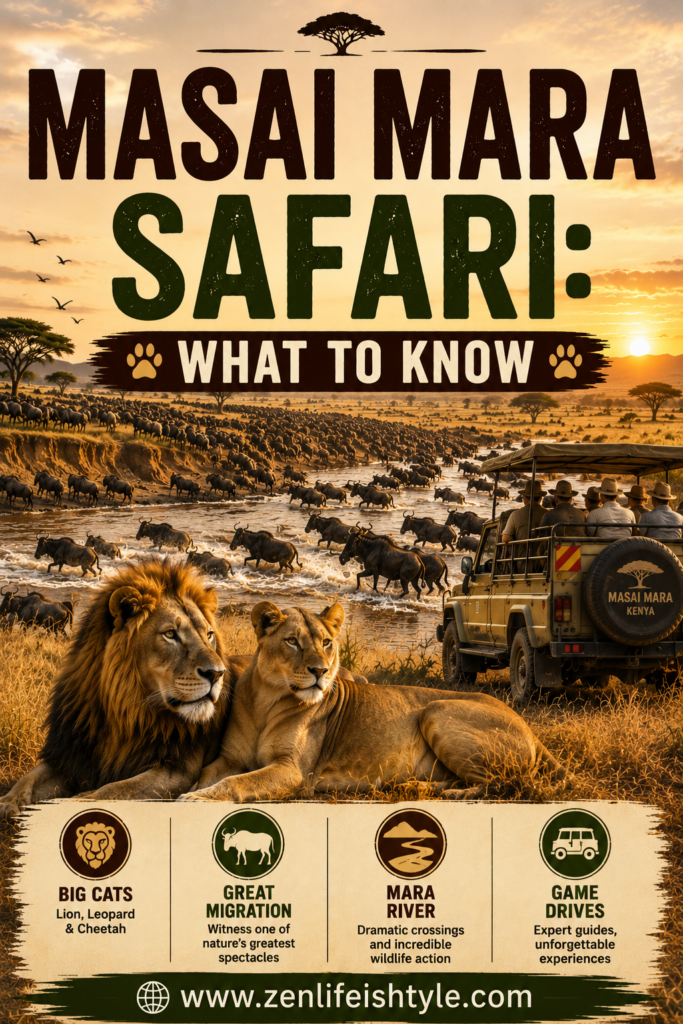
In Kenya, the migration is mainly linked to the Masai Mara, where the herds move across open plains and sometimes cross the Mara River. These dramatic river crossings are among the most famous wildlife moments in Africa, with wildebeest facing strong currents, steep riverbanks, and crocodiles in the water.
The migration can involve around two million wildebeest, zebras, and other grazers moving in search of fresh grass and water. In Kenya, the migration season is commonly linked to August to November, but the exact timing changes every year depending on rainfall, grass, and animal movement.
It is important to understand that river crossings are never guaranteed. Even if you visit during the right months, the herds may cross on a different day, in a different area, or not while you are watching. This is nature, not a scheduled event.
That said, wildlife viewing in the Masai Mara can be excellent year-round. Even outside the Great Migration season, the Mara is known for lions, cheetahs, leopards, elephants, giraffes, buffalo, zebras, antelopes, and many other animals.
If the migration is your main reason for travelling, plan enough nights in the Masai Mara, choose a good location, and work with experienced guides. But do not plan your whole safari around one river crossing. A Kenya safari can still be unforgettable even without seeing the crossing itself. A better way to plan is to treat the migration as a bonus, not a promise. If you see a crossing, it will be unforgettable, but the Masai Mara still offers excellent wildlife even when the herds are not crossing the river.
Best Time to Go on a Kenya Safari
Dry Season: June to October
The dry season, from June to October, is usually the best time to go on a Kenya safari for classic wildlife viewing. This is also considered the peak safari season, especially in popular areas like the Masai Mara, Amboseli, and other major parks.
During the dry season, the grass is shorter and animals often gather around rivers, waterholes, and permanent water sources. This can make wildlife easier to spot during game drives, especially in open areas where visibility is good.
This period is also closely linked to the Great Migration in the Masai Mara. From around August to November, many travellers visit Kenya hoping to see the wildebeest migration and possible Mara River crossings. The exact timing changes each year, but the dry season is one of the most popular times for a Masai Mara safari.
The main downside is that prices are usually higher, and there can be more vehicles in busy safari areas. If you are travelling during this season, book safari lodges, tented camps, and flights early, especially if you want to visit during migration months.
Rainy Season: March to May
The rainy season in Kenya usually runs from March to May. This is often called the long rains, and it brings greener landscapes, softer light, and fewer travellers in many safari areas.
During this period, prices can be lower, and some lodges may offer better value compared to the peak safari season. The parks and reserves can also feel quieter, which is good if you want fewer vehicles and a more peaceful safari atmosphere.
Wildlife viewing is still possible during the rainy season, especially in areas like the Masai Mara where animals are present year-round. However, some roads can become muddy or difficult, and wildlife may be more spread out because water is easier to find.
Shoulder and Short-Rain Months
The shoulder and short-rain months can also be good for a Kenya safari, depending on where you go. November can still offer good wildlife viewing, especially after the main migration crowds have reduced.
January and February are also often good months for safari in Kenya. The weather is usually warmer and drier than the long rainy season, and there are often fewer crowds than during peak migration months.
These months can be a good choice if you want wildlife viewing, better value, and a slightly quieter safari experience. However, always check park-specific conditions before booking, because weather and wildlife movement can vary between regions.
Best Time by Experience
Best for Great Migration: August to November
Best for general wildlife viewing: June to October
Best for fewer crowds: January, February and some shoulder months
Best for birding: Wetter and green-season months
Best value: Outside peak migration season
For most first-time safari travellers, June to October is the safest period to choose. But if you want fewer crowds and better prices, the shoulder months can still offer a very rewarding Kenya safari.
Types of Kenya Safari Experiences
Game Drives
Game drives are the main safari activity in Kenya and usually happen in the early morning and late afternoon. These cooler hours are best for wildlife viewing because many animals are more active before the heat of the day.
Early morning game drives are especially good for predator activity. Lions, cheetahs, hyenas, and leopards may still be moving, hunting, or resting after the night. Your safari guide will look for tracks, listen for alarm calls, and use local knowledge to improve your chances of good sightings.
Most game drives are done in 4×4 vehicles, either private or shared, depending on your safari package. Some drives may last a few hours, while full-day drives can include a picnic lunch inside the reserve or park.
Hot Air Balloon Safari
A hot air balloon safari is one of the most memorable experiences you can add to a Kenya safari. It is especially popular in the Masai Mara, where balloons usually lift off around sunrise.
From above, you get aerial views of the plains, wildlife, rivers, and open landscapes. It gives you a completely different perspective from a normal game drive and can feel very peaceful as you float over the savannah.
Hot air balloon rides usually come at an extra cost and are often booked separately from standard safari packages. They are not essential, but they can be a special add-on for honeymooners, photographers, or travellers planning a once-in-a-lifetime trip.
Walking Safaris and Nature Walks
Walking safaris and nature walks are available in some Kenya safari areas, especially in conservancies where rules allow them. They are usually done with expert guides and focus on smaller details that you may miss from a vehicle.
Instead of searching only for big animals, walking safaris help you notice tracks, plants, insects, birds, bones, dung, and the behaviour of harmless plains game. These close encounters with the smaller side of the bush can make the safari feel more personal and educational.
Walking safaris should always be done with trained guides and only in areas where they are allowed.
Cultural Village Visits
Cultural visits can add more meaning to a Kenya safari. Many travellers choose to visit communities connected to the Maasai people, Samburu communities, or other local tribes to learn about traditional ways of life, ceremonies, homes, crafts, food, and local customs.
Some cultural visits may include village walks, storytelling, dances, school visits, or conversations with local guides. These experiences should always be respectful and properly organised, not staged in a way that feels uncomfortable or exploitative.
When done well, cultural visits can help travellers understand the people who live near safari areas and how tourism can support local communities.
Conservancy Safaris
Conservancy safaris are a great option if you want fewer crowds and a more flexible safari experience. Kenya’s private conservancies, especially around the Masai Mara, often support local communities and local conservation projects through tourism.
In some conservancies, visitor numbers are limited, which can mean fewer vehicles at sightings. Depending on the rules, conservancies may also allow activities such as night drives, guided walks, bush meals, or off-road driving.
A conservancy safari can cost more than a standard reserve safari, but it often gives a quieter and more personal experience. It is a strong choice for travellers who want better privacy, conservation impact, and a more exclusive safari atmosphere.
Where to Stay on a Kenya Safari
Kenya offers a wide range of safari accommodation options, from simple budget camping safaris to luxury lodges and high-end tented camps in private conservancies. Where you stay can change the whole feel of your Kenya safari, so it is worth choosing carefully.
If you want comfort, good service, proper rooms, meals, and easy access to game drives, safari lodges are a good choice. Many lodges have private rooms, restaurants, viewing decks, and sometimes swimming pools. They work well for first-time safari travellers, families, and guests who want a reliable level of comfort.
Tented camps are also very popular in Kenya. These can range from simple budget tented camps to luxury canvas suites with proper beds, private bathrooms, hot showers, good food, and beautiful views. A tented camp often feels closer to the bush than a standard lodge, which can make the safari experience feel more atmospheric.
In some areas, you may also find mobile camps that move seasonally or are set up in special wildlife areas. These can be a good choice for travellers who want a more adventurous safari feel, especially during migration-focused trips.
Kenya also has excellent luxury safari accommodation, especially in the Masai Mara, Mara Conservancies, Lewa, Ol Pejeta, and other private conservancies. These camps often offer strong guiding, fewer vehicles, beautiful settings, high tea or afternoon snacks, and a more personalised experience.
Examples help show the range. Kichwa Tembo Tented Camp can start from around US$785 per night, while Cottar’s 1920s Safari Camp is known for vintage luxury and a classic safari style. Some travellers may also come across options such as Tembo Tented Camp, depending on the area and itinerary.
At the more affordable end, budget camping safaris in Kenya can start from around €241 per person, depending on the route, season, group size, and inclusions. At the luxury end, safari itineraries can exceed €4,000 per person, especially when they include private conservancies, fly-in transfers, high-end camps, and longer stays.
The best choice depends on your budget and travel style. Choose a lodge if you want comfort and structure. Choose a tented camp if you want a more classic safari feeling. Choose a private conservancy camp if you want fewer crowds, stronger guiding, and a more exclusive safari experience.
How Much Does a Kenya Safari Cost?
The cost of a Kenya safari depends on the season, park, transport, lodge style, and number of days. As a rough guide, budget safaris often start around US$200–350 per person per day, mid-range safaris are usually around US$350–700 per person per day, and luxury safaris often start from US$700–1,500+ per person per day. Very high-end fly-in safaris or private conservancy trips can go much higher.
Safari Style | Estimated Cost | What to Expect |
|---|---|---|
Budget camping safari | US$200–350 pp/day | Shared vehicles, simple camps, basic meals, lower cost |
3-day budget Masai Mara group safari | Around US$360–1,200 pp | Group joining safari, simple tented accommodation, shared vehicle |
Mid-range safari | US$350–700 pp/day | Comfortable lodges or tented camps, shared or private game drives |
Private mid-range 3-day Masai Mara safari | Around US$1,390–2,310 pp | Private vehicle, better accommodation, cost changes by season |
Luxury safari | US$700–1,500+ pp/day | High-end camps, better locations, private conservancies, fly-in options |
Luxury private 3-day Masai Mara safari | Around US$2,040–3,170 pp | Premium camp or lodge, private guiding, higher service level |
7-day luxury Kenya safari | Around US$5,000–10,000+ pp | Fly-in transfers, premium lodges, private conservancies, high-end service |
The cheapest safari is not always the best value. A slightly higher price may include better guiding, park fees, a better location, or fewer wasted hours on the road. Always compare what is included before comparing prices.
For the Masai Mara specifically, non-resident park fees are a major cost. In 2026, Masai Mara entry fees are listed at US$100 per adult per day from January to June and US$200 per adult per day from July to December, with children aged 9–17 usually listed at US$50.
Private conservancies usually cost more than standard reserve stays because they add conservancy fees and often offer fewer vehicles, better privacy, and more flexible safari activities. Flights from Wilson Airport in Nairobi also add cost, but they save time compared with long road transfers. Road safaris are usually cheaper, but they can involve long driving days.
A hot air balloon safari in the Masai Mara is another extra cost and is usually booked separately. Tips, drinks, visas, travel insurance, extra transfers, and optional cultural visits may also be charged separately, depending on the package.
Before booking, always ask exactly what is included: accommodation, meals, park fees, conservancy fees, game drives, vehicle type, airport transfers, internal flights, drinks, and tips. A cheaper safari can become expensive if key costs are excluded.
How Many Days Do You Need for a Kenya Safari?
How many days you need for a Kenya safari depends on how many parks you want to visit and how much time you want to spend in each place. A short safari can give you a good introduction, but a longer trip gives you more game drives, better chances of wildlife sightings, and a more relaxed experience.
Length of Safari | Best For |
|---|---|
3 days | Short Masai Mara safari |
4 to 5 days | Masai Mara plus Lake Nakuru or Amboseli |
6 to 8 days | Stronger Kenya safari with multiple parks |
10+ days | Kenya safari plus Diani Beach or Tanzania extension |
For most first-time travellers, 3 nights in the Masai Mara is a strong starting point. This gives you enough time for several game drives, a better chance of seeing big cats, and a more meaningful safari experience than rushing in and out.
If you have more time, you can combine different parks. A good first safari plan could be:
3 nights in the Masai Mara
2 nights in Amboseli + 3 nights in the Masai Mara
5 to 7 nights if combining parks such as Masai Mara, Lake Nakuru and Amboseli
If you have 10 days or more, you can create a fuller Kenya trip. This could include a Kenya safari plus Diani Beach, the Kenya coast, or even a Tanzania extension for the Serengeti, Ngorongoro Crater, or Zanzibar.
Try not to overpack the itinerary. Safari travel can involve long drives, early mornings, and full days in the bush. It is usually better to spend enough time in fewer places than to rush through too many parks.
Kenya Safari and Beach Holiday Combinations
A Kenya safari and beach holiday is one of the best ways to enjoy a balanced trip. After early morning game drives, dusty roads, and long days in the bush, a few nights by the Indian Ocean can be the perfect way to relax.
One of the most popular combinations is Masai Mara + Diani Beach. You can start with big cats, open plains, and the Great Migration in the Masai Mara, then fly or connect through Nairobi for beach time on Kenya’s coast. Diani Beach is a favourite for honeymooners, families, and travellers who want soft sand, warm water, and a slower pace after safari.
Another good option is Tsavo + Kenya coast. Because Tsavo East and Tsavo West are closer to the coast than the Masai Mara, they can work well for a road safari before continuing to Diani, Mombasa, or another beach area. This is useful if you want safari and beach without too many internal flights.
Most safari and beach itineraries connect through Nairobi, with safari flights often using Wilson Airport. Depending on your route, you may fly from the Masai Mara back to Nairobi, then continue to the coast, or travel by road if combining Tsavo with the beach.
Good Kenya safari and beach combinations include:
Combination | Best For |
|---|---|
Masai Mara + Diani Beach | Classic safari, big cats, beach holiday |
Tsavo + Kenya coast | Road safari, wildlife, easier coast connection |
Amboseli + Diani Beach | Elephants, Kilimanjaro views, Indian Ocean relaxation |
Masai Mara + Mombasa | Safari, city/coast access, beach resorts |
This type of trip works especially well for a honeymoon or family holiday because it gives you both adventure and rest. The safari gives you wildlife, game drives, and memorable experiences, while the coast gives you beaches, seafood, swimming, and time to slow down before flying home.
Kenya Safari Travel Tips for First-Time Visitors
If you are planning your first Kenya safari, start by choosing the right route and travel style. Most international travellers fly into Nairobi, which is the main gateway for Kenya safari trips. From there, many safari flights depart from Wilson Airport, especially for places like the Masai Mara, Amboseli, Samburu, Lewa, and other safari areas.
Choose your park based on your travel style. If you want big cats and a classic safari, choose the Masai Mara. If you want elephants and Kilimanjaro views, choose Amboseli. If you want rhinos and conservation, look at Ol Pejeta, Lewa, or Lake Nakuru. If you want something quieter and different, consider Samburu or Meru.
If you are travelling for the Great Migration, book early. Migration season is popular, and good camps in the Masai Mara and private conservancies can fill up quickly. Also check park fees and conservancy fees before confirming your trip, because they can add a lot to the final safari cost.
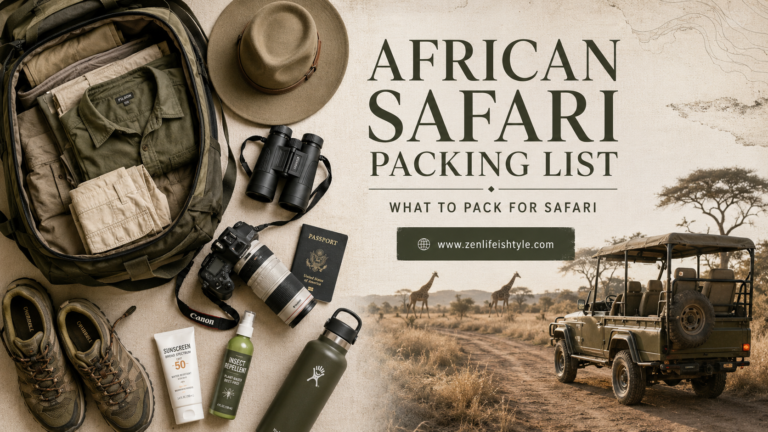
Pack light and practical. Neutral clothes are best for safari, and layers are useful because early mornings can be cold before the day becomes warm. Bring binoculars, a camera, sunscreen, insect repellent, and any personal medication you need. If you are using small safari aircraft, pack in soft-sided luggage because weight and space limits are usually strict.
During game drives, respect your guide and the wildlife. Stay quiet at sightings, do not stand unless allowed, and never ask guides to drive too close to animals. Good safari experiences depend on patience, respect, and safe behaviour.
If you add cultural visits, choose ethical experiences that support local communities and do not feel staged or exploitative. Cultural visits with Maasai or Samburu communities can be meaningful when they are respectful and locally managed.
Finally, avoid overpacking your itinerary. Kenya has many beautiful parks, but trying to see too many in a few days can make the trip tiring. It is usually better to spend enough time in fewer places.
Before travelling, check visa, vaccination, health, and travel rules. English and Swahili are widely spoken in Kenya, which makes communication easier for many visitors, but good planning still matters.
Final Thoughts
Kenya is one of Africa’s best safari destinations and a strong choice for travellers who want classic wildlife viewing, beautiful landscapes, experienced guides, and a good mix of safari styles. Whether you are planning your first safari or returning to East Africa, Kenya offers a wide range of parks, conservancies, lodges, tented camps, and wildlife experiences.
Choose the Masai Mara if you want a classic safari, open plains, big cats, and the chance to see the Great Migration during the right season. It is one of the most iconic safari areas in Africa and a strong choice for first-time safari travellers.
Choose Amboseli National Park if you want large elephant herds and dramatic views of Mount Kilimanjaro when the sky is clear. It is especially good for photography and classic game drives.
Choose Lake Nakuru if you want birding, flamingos, lake scenery, and better chances of seeing rhinos. It adds variety to a Kenya safari and works well as part of a multi-park itinerary.
Choose Samburu National Reserve if you want unique wildlife, dry northern landscapes, cultural experiences, and a safari that feels different from the Masai Mara. It is a great option for travellers who want something less typical.
Choose Ol Pejeta or Lewa if you are interested in rhinos, conservation, luxury lodges, and local conservation projects. These conservancies are excellent for travellers who want their safari to support wildlife protection.
The best time for a Kenya safari is usually the dry season from June to October, especially for wildlife viewing and game drives. If you want the Great Migration in the Masai Mara, August to November is commonly linked to migration viewing, although river crossings are never guaranteed.
A Kenya safari can be planned as a budget camping trip, a comfortable mid-range safari, or a high-end luxury safari with private conservancies and fly-in transfers. For most travellers, the best Kenya safari is not about visiting the most parks. It is about choosing the right parks for the kind of wildlife, comfort, pace, and budget that suits you. The best Kenya safari is the one planned around your wildlife goals, budget, travel season, and preferred style of travel.
FAQs
Is Kenya good for a first safari?
Yes, Kenya is one of the best countries for a first safari. It has strong wildlife viewing, experienced guides, and famous safari areas such as the Masai Mara, Amboseli National Park, and Lake Nakuru National Park. The Masai Mara is excellent for a classic safari, Amboseli is famous for elephants and Kilimanjaro views, and Lake Nakuru is good for birds and rhinos.
What is the best safari park in Kenya?
The Masai Mara is usually considered the best safari park in Kenya for a classic safari and the Great Migration. It is known for open plains, big cats, and excellent wildlife viewing. Amboseli National Park is best for elephants and Mount Kilimanjaro views, while Lake Nakuru is best for birding, flamingos, and rhino sightings.
When is the best time to go on a Kenya safari?
The best time to go on a Kenya safari is usually from June to October, during the dry season. This period is good for wildlife viewing because animals are easier to spot around water sources. For the Great Migration in the Masai Mara, August to November is commonly linked to migration viewing, depending on weather, grass, and animal movement.
Can you see the Big Five in Kenya?
Yes, Kenya is home to the Big Five: lion, leopard, elephant, buffalo, and rhino. However, sightings depend on where you go, the season, your guide, and luck. The Masai Mara is strong for lions, leopards, and buffalo, Amboseli is excellent for elephants, and places like Ol Pejeta, Lewa, and Lake Nakuru are better for rhinos.
How many days do you need for a Kenya safari?
You can do a short 3-day Masai Mara safari, but 5 to 7 days is better for a stronger Kenya safari. This gives you more time for game drives and a better chance of wildlife sightings. If you want to combine parks, you can plan Masai Mara with Amboseli, Lake Nakuru, Samburu, or Ol Pejeta.
Is a Kenya safari expensive?
A Kenya safari can be affordable or expensive depending on your travel style. Budget camping safaris are the cheapest option, while mid-range lodges offer more comfort. Luxury lodges, private conservancies, fly-in safaris, and hot air balloon rides can increase the cost significantly.
Can you combine Kenya safari with beach?
Yes, many travellers combine a Kenya safari with a beach holiday. Popular options include Masai Mara + Diani Beach, Tsavo + Kenya coast, or Amboseli + Diani Beach. This works well for honeymooners, families, and travellers who want both wildlife and Indian Ocean relaxation.
Is the Great Migration guaranteed in Kenya?
No, the Great Migration is not guaranteed. The migration is seasonal, and the famous Mara River crossings depend on rainfall, grass conditions, and animal movement. Even during migration season, crossings can happen on different days or in different locations. The Masai Mara still offers excellent wildlife viewing even if you do not see a river crossing.